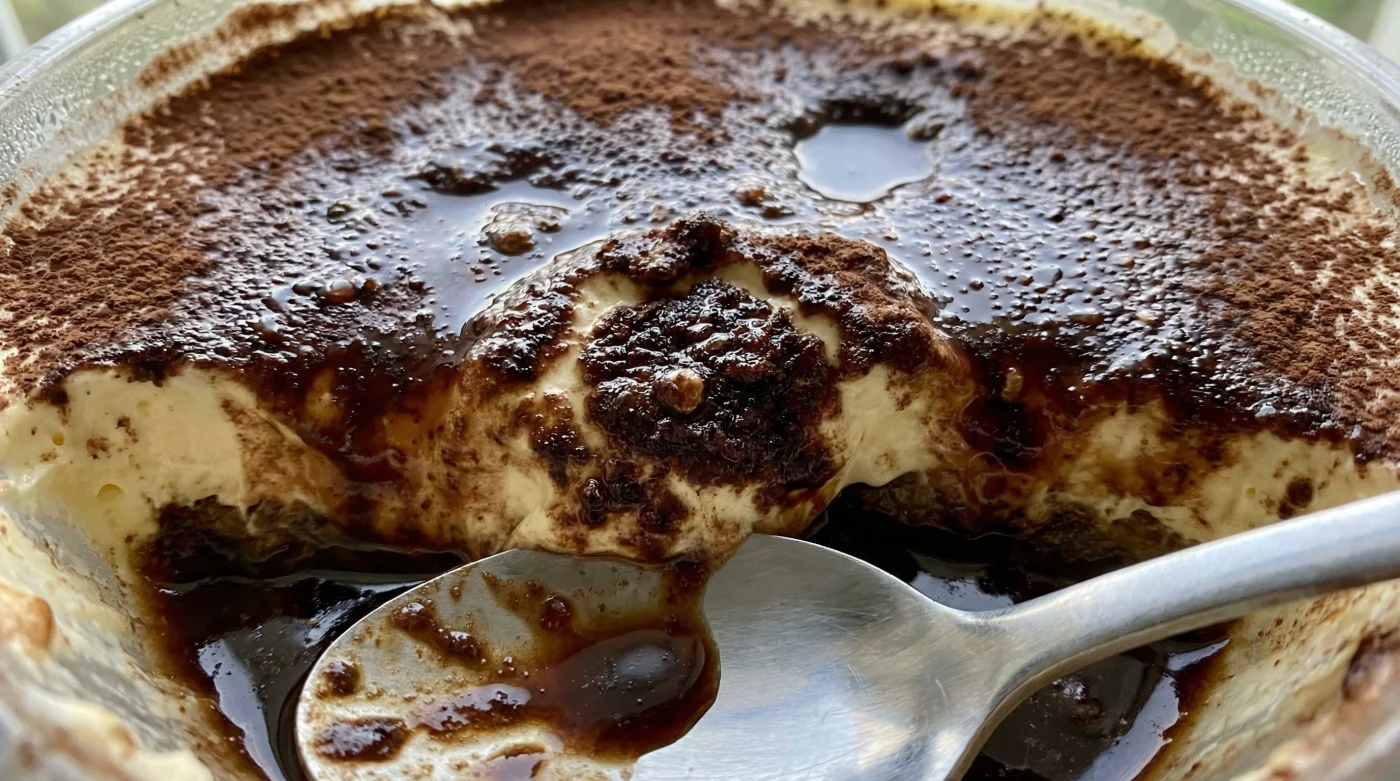
You stand back and admire your handiwork. The kitchen smells of dark roasted espresso and sweet vanilla. You have delicately layered the ladyfingers, smoothed the rich mascarpone cream into snowy drifts, and reached for the standard cocoa powder to give it that final, iconic dusting. The recipe says to finish the dish completely before chilling it overnight. You wrap it tightly in plastic wrap, anticipating a beautiful centerpiece for tomorrow’s dinner.
But twenty-four hours later, you pull back the covering, and your heart sinks. Instead of a velvet-matte finish, you are staring at a soggy, dark brown slick. A muddy mess that clings to your serving knife and looks entirely unappetizing. The taste might still be there, but the elegant, restaurant-quality presentation you worked so hard for has vanished into a sticky puddle. You are not alone in this frustration. The culprit is not your technique, but a fundamental flaw in how standard recipes treat the final garnish.
The Gravity of the Cream
Standard recipe cards often lead us astray with the promise of a completely finished, make-ahead dessert. They treat tiramisu like a static object, something that pauses in time once it enters the refrigerator. But a fresh tiramisu is an active, breathing environment. The rich mascarpone layer is brimming with hydration. When you apply standard cocoa powder immediately after assembly, you are placing a delicate, dry dust directly on top of a damp sponge.
Overnight, a physical exchange happens in the chill of the fridge. The gravity of the cream works in reverse, with capillary action pulling the moisture upward. The cocoa hydrates, darkens, and dissolves into a thick paste. It absorbs the moisture from the cream beneath it, suffocating that beautiful dry contrast. To achieve a professional finish, we have to respect the mechanics of the ingredients and firmly separate the preparation from the presentation.
| Approach | Presentation Result | Texture Experience |
|---|---|---|
| Standard Home Prep (Dusting Early) | Soggy, dark, sticky top surface | Mushy, heavy mouthfeel with no contrast |
| The Professional Hold (Naked Chilling) | Matte, velvety, distinct layers | Crisp, dry cocoa snap over soft, sweet cream |
I learned this the hard way during a bustling holiday season, watching an old-school pastry chef in a cramped Chicago restaurant kitchen. He was responsible for plating hundreds of portions a night. When I opened his walk-in cooler to grab some heavy cream, I noticed his racks were full of stark white, naked tiramisu trays. Not a single speck of brown powder to be seen on any of them.
Never dress them early, he told me, casually tapping a small mesh strainer against the palm of his hand to demonstrate the precise motion. The cream is thirsty. It will drink your cocoa before the guests ever see the plate. He treated the dusting not as a step in the recipe, but as the final, non-negotiable act of plating. It was a revelation in timing rather than technique.
| Component | Moisture Content | Reaction Over 24 Hours (Sealed) |
|---|---|---|
| Mascarpone Cream | High (Dairy and Water) | Moisture migrates upward toward dry elements |
| Standard Cocoa Powder | Very Low (Dry Solid) | Acts as a sponge, melts entirely into a liquid state |
| Ladyfingers | Saturated (Espresso) | Balances with cream, stabilizing the base structure |
The Final Dusting Ritual
To get that true restaurant-look at home, you have to completely change your timeline. Assemble your espresso-soaked ladyfingers and whipped mascarpone cream exactly as your favorite recipe dictates. Smooth the top layer with an offset spatula so it is even and pristine. Then, stop right there. Cover the stark white dessert tightly with plastic wrap, ensuring the plastic does not dip down to touch the cream, and let it chill naked overnight in the fridge.
- Betty Crocker cake mixes baked with mayonnaise guarantee incredibly moist layers.
- Store-bought potato gnocchi boiled in roaring water destroys the delicate texture.
- Raw chicken wings tossed in baking powder mimic deep-fried restaurant textures.
- Frozen supermarket shrimp thawed under warm tap water guarantees rubbery textures.
- Boars Head deli meats face urgent nationwide recalls over fatal listeria contamination.
Hold the sieve a few inches above the dish. Gently tap the rim of the sieve with the heel of your hand. Let the powder fall like soft snow over the cold cream, moving steadily across the surface until no white spots remain. By waiting until the very last seconds before serving, you guarantee a vibrant, dry, aromatic layer that holds its crisp shape on the fork.
| Standard Cocoa Traits | What to Look For | What to Avoid |
|---|---|---|
| Fat Content | 22-24% high-fat (Dutch-processed) | Low-fat powders or hot cocoa drink mixes |
| Color Profile | Rich mahogany, warm brick red tones | Pale brown, dusty, or chalky grey appearances |
| Physical Texture | Fine, easily sifted through a tight mesh | Hard clumping, granulated sugar bits visible |
The Art of the Finish
Mastering this small, physical detail completely changes the rhythm of your dinner parties. You no longer have to apologize for a dessert that tastes amazing but looks terrible on the plate. By holding back the cocoa until the final moment, you preserve the visual integrity of the dish and honor the effort you put into making it from scratch.
It feels like a small magic trick, transforming a homemade, make-ahead preparation into a professional, restaurant-quality presentation right before your guests’ eyes. It brings intention back to the table, allowing you to slice and serve with absolute confidence, knowing every portion will look exactly as perfect as it tastes.
Treat the cocoa dusting not as a mere ingredient in the recipe, but as the curtain rising on the performance.
Frequent Questions from Home Bakers
Can I use sweetened cocoa powder for the dusting?
Stick to standard unsweetened cocoa. The bitterness provides necessary contrast to the rich, sweet mascarpone cream beneath it.Does Dutch-processed cocoa powder work better?
Yes. Dutch-processed cocoa has a higher fat content and a richer color, which sits beautifully on top of the cold cream without tasting overly acidic.What if I already dusted my tiramisu and it is sitting in the fridge?
If the top is already a soggy mess, gently scrape the muddy layer off with a butter knife just before serving, smooth the cream, and apply a fresh, dry dusting over the clean surface.Should I add chocolate shavings as well?
Chocolate shavings are a fantastic addition, but just like the cocoa powder, they should be sprinkled on immediately before serving to prevent them from drawing moisture and sinking into the cream.How long will the naked tiramisu last in the refrigerator?
Wrapped tightly without the cocoa powder, a freshly assembled tiramisu will hold its structure and flavor perfectly in the fridge for up to three days.