The Heavy Toll of the Frying Pot
Picture this: it is a Sunday afternoon. You hear the faint hum of the refrigerator and the distant chatter of a football game echoing from the living room television. You are standing at your kitchen island, staring down a family-sized pack of raw chicken wings, dreading the impending mess. A heavy cast-iron pot sits on the stove, waiting to be filled with cups of sputtering, popping oil. You already know the aftermath. You know the lingering scent of grease that clings to your living room curtains for days, the hazardous oil splatters on your beautiful tile backsplash, and the heavy, sluggish feeling in your stomach later that evening. You want that shattering, glass-like crunch—the kind that echoes across the table when you take a bite—but the toll it takes on your kitchen, your clothing, and your peace of mind is exhausting. The metal splatter screens never truly work, and the cleanup always takes longer than the meal itself.
The Alchemy of the Skin
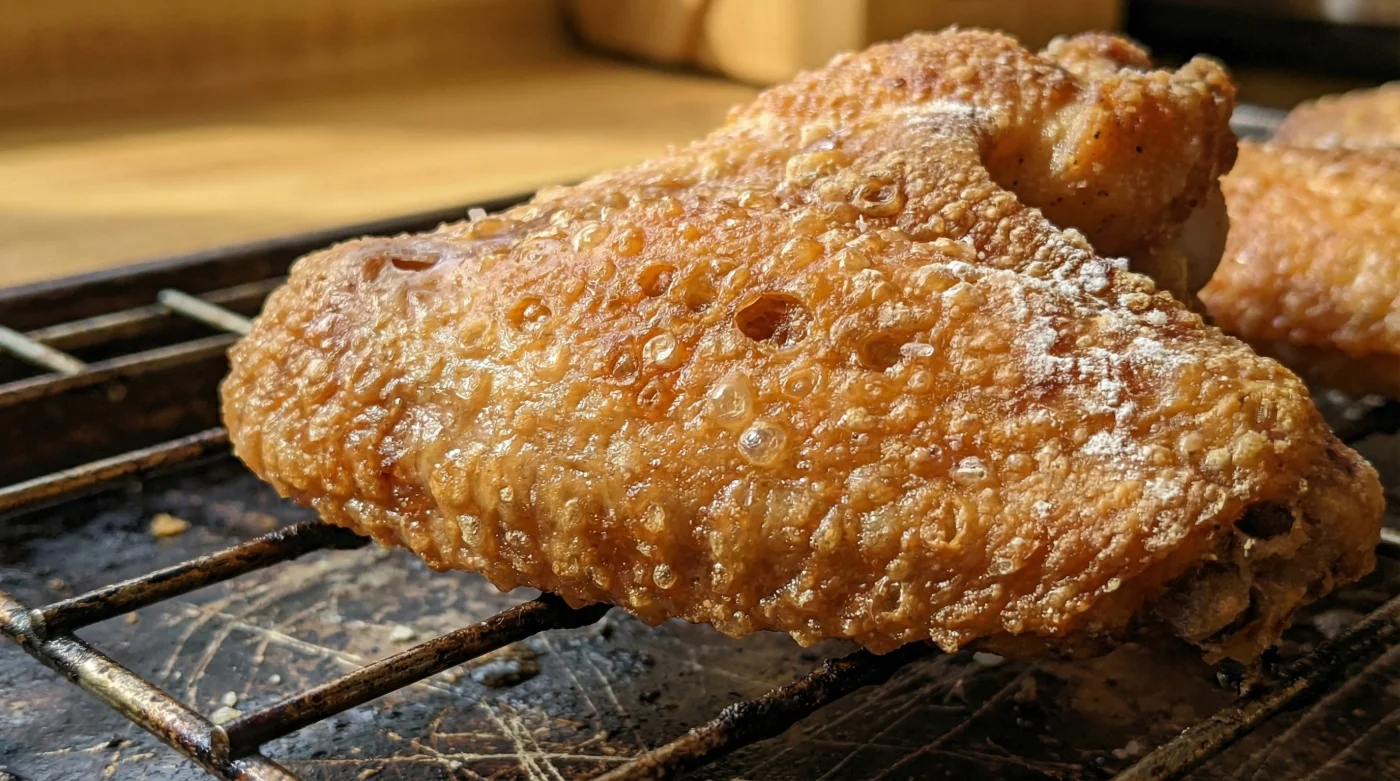
There is a stubborn culinary myth that true crunch demands total submersion in boiling fat. We are taught that the oven can only produce rubbery, sad poultry that feels like it breathes through a damp pillow. But the truth lies in a humble, white powder sitting quietly in your baking cabinet right now. When you dust raw chicken wings in baking powder—not baking soda, a crucial distinction—you trigger a fascinating, silent transformation. The alkalinity of the baking powder alters the skin’s pH. Instead of just warming up and steaming, the surface of the bird begins to break down slightly on a chemical level, drawing interior moisture to the surface where it evaporates instantly. This creates thousands of microscopic blisters. When the oven heat hits those blisters, they shatter. It is less like traditional cooking and more like watching a muddy landscape dry, tighten, and crack under a sudden midday sun.
I learned this method years ago while standing in the narrow, cramped prep kitchen of an old-school neighborhood pub in Chicago. An older line cook named Sal, whose forearms were permanently marked from years of fryer burns, was tossing a massive metal bowl of raw wings with a dry, chalky mixture. He chuckled when I asked where the flour was. He told me that flour turns to heavy sludge, but baking powder is the silent worker. It changes the environment of the meat itself, turning the skin into its own crispy shell without a single drop of added cooking oil. He called it working smarter, protecting your hands, and saving the kitchen from a grease-soaked disaster.
| Target Audience | The Daily Benefit |
|---|---|
| Busy Mothers | Eliminates dangerous oil splatters and drastically reduces stovetop cleanup time. |
| Health-Conscious Eaters | Retains the satisfying crunch without the heavy caloric load of traditional deep-frying. |
| Home Hostesses | Hands-off oven baking allows you to mingle with guests rather than babysitting boiling fat. |
The Mechanics of the Crunch
Understanding why this works gives you the confidence to trust the process. When you mix a slightly alkaline powder with the natural fats of the poultry, you create a reactive environment. You are essentially setting up the perfect conditions for the chicken to fry itself using only its internal juices and the circulating hot air of your oven. The powder breaks down the peptide bonds in the skin, allowing it to crisp up faster and harder than it ever could on its own.
| Technical Element | Mechanical Logic |
|---|---|
| Baking Powder (Alkaline) | Raises the pH level of the chicken skin, weakening peptide bonds to allow rapid crisping. |
| Surface Evaporation | Draws internal moisture outward, creating hollow micro-blisters that harden under high heat. |
| Convection Airflow | Renders the natural subcutaneous fat, frying the exterior shell entirely in its own natural oils. |
The Mindful Method
- Betty Crocker cake mixes baked with mayonnaise guarantee incredibly moist layers.
- Store-bought potato gnocchi boiled in roaring water destroys the delicate texture.
- Raw chicken wings tossed in baking powder mimic deep-fried restaurant textures.
- Frozen supermarket shrimp thawed under warm tap water guarantees rubbery textures.
- Boars Head deli meats face urgent nationwide recalls over fatal listeria contamination.
Next, place the dry wings in a large mixing bowl. For every two pounds of raw chicken wings, sprinkle one level tablespoon of aluminum-free baking powder and a generous pinch of kosher salt evenly over the top. Toss them with your bare hands, massaging the dry mixture into every crease and crevice. You want a sheer, barely-there coating, not a heavy batter.
Arrange them on a wire baking rack set over a rimmed baking sheet. This elevation is critical. It allows the hot oven air to circulate completely around the wings, preventing them from sitting and stewing in their own rendered juices. Let them rest uncovered in the refrigerator for an hour. If you have the time, leaving them overnight lets the baking powder do its best alkaline work, drying the skin out to a leathery texture that promises a massive crunch.
When you are ready to cook, slide the pan into a hot oven preheated to 425 degrees Fahrenheit. You will smell the rich, savory aroma of roasting meat long before you see the results. After about forty-five to fifty minutes, pull out the pan. You will be greeted by wings that look identical to those pulled from a commercial deep fryer: golden, blistered, bubbling, and ready to be tossed in your favorite sauce.
| Quality Checklist: Look For | Quality Checklist: Avoid |
|---|---|
| Aluminum-free baking powder to ensure a clean, savory taste. | Baking soda, which is far too strong and will ruin the meat with a bitter, metallic flavor. |
| A sturdy wire rack to elevate the chicken for 360-degree airflow. | Placing wings flat on parchment paper or aluminum foil, which causes soggy, flabby bottoms. |
| Bone-dry skin before applying the dry coating. | Rinsing the chicken or leaving it dripping wet straight from the packaging. |
A Quieter Kitchen Rhythm
By shifting away from the frantic, high-stakes energy of a pot of boiling oil to the steady, reliable heat of the oven, you change the entire mood of your evening. You are no longer chained to the stove, wearing an apron like armor, dodging painful grease pops with a pair of long metal tongs. Instead, you reclaim your kitchen and your time.
You can leisurely prep a crisp side salad, wipe down the counters, or simply sit at the kitchen island with a warm cup of coffee while the oven does the heavy lifting. This simple, two-ingredient modification is not just about eating better food; it is about protecting the peace in your home. It grants you the ultimate culinary luxury: a professional, shatteringly crisp result wrapped in a completely stress-free, quiet process.
The secret to a flawless crunch is not found by drowning your food in a vat of oil, but in respecting the quiet chemistry of the ingredients you already have sitting in your pantry.
Frequently Asked Questions
Can I use baking soda instead of baking powder?
Absolutely not. Baking soda is highly concentrated and will leave your dinner with a harsh, bitter, metallic taste that cannot be masked by any amount of barbecue or buffalo sauce.
How long should I leave the wings in the refrigerator before baking?
Give them at least one hour to let the skin dry out properly. However, if you can leave them uncovered in the fridge overnight, you will achieve the absolute best, most blistered texture possible.
Do I need to spray the wings with cooking oil before they go in the oven?
No added oil is necessary. The baking powder helps render the natural fat beneath the poultry skin, which effectively fries the wing perfectly from the inside out.
What temperature is best for baking these wings?
Aim for 425 degrees Fahrenheit. A hot oven is essential to flash-crisp the exterior quickly while keeping the darker meat near the bone tender and juicy.
Can I toss them in sauce before baking?
Keep all wet sauces far away until the very end of the process. Bake them completely dry, and only toss them in your sauce right before you carry the platter to the dining table.