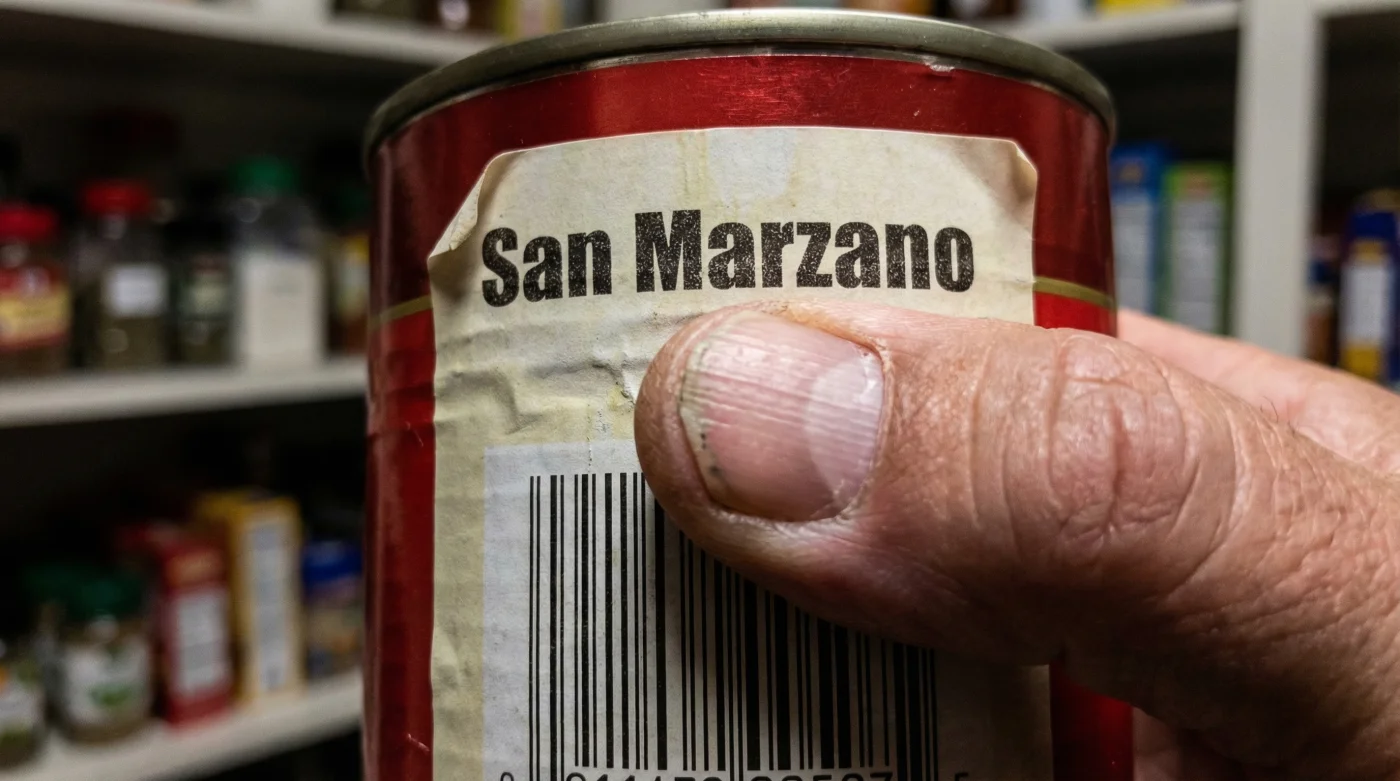
You probably felt a sense of culinary pride the last time you reached for that premium can of San Marzano Tomatoes in the grocery store aisle. You paid the extra three dollars, anticipating a rich, velvet-smooth Sunday sauce that would rival your favorite local Italian joint. But behind that charming, vintage-looking label lies one of the most pervasive culinary scams operating in the United States today.
Industry watchdogs estimate that a staggering number of cans sold in American supermarkets bearing this famous name are nothing more than cleverly disguised domestic knockoffs. The secret to uncovering this pantry deception doesn’t require a palate refined by decades of culinary school, but rather a sharp eye for a very specific, highly regulated set of European symbols hidden right in plain sight. Unlocking the true, naturally sweet flavor of a genuine Italian harvest depends entirely on knowing exactly which microscopic details to look for before the can ever hits your shopping cart.
The Billion-Dollar Pantry Deception
To understand why this fraud is so widespread, you must first understand the anatomy of the genuine article. True San Marzano Tomatoes are an heirloom variety of Solanum lycopersicum, grown in the Valle del Sarno in Italy. The magic lies in the terroir: the nutrient-dense volcanic soil at the base of Mount Vesuvius gives these tomatoes their characteristic thick flesh, fewer seeds, and incredibly low acidity. Because this geographic growing region is limited to just a few dozen square miles, the supply is naturally capped, creating a massive vacuum that American and international mega-farms are eager to fill with look-alikes.
In the United States, the phrase San Marzano is not strictly protected as a trademark. This legal loophole allows opportunistic brands to use the name to describe the style or seed variety, rather than the geographic origin. As a result, consumers are tricked into buying standard Roma tomatoes grown in California or elsewhere, packaged in cans that aggressively mimic traditional Italian imports.
| Characteristic | Authentic San Marzano | Supermarket Imposter |
|---|---|---|
| Flavor Profile | Naturally sweet, deep umami | Watery, often requires added sugar |
| Acidity Levels | Extremely low, gentle on digestion | High acidity, triggers acid reflux |
| Texture | Thick walls, meaty, breaks down easily | Tough skins, firm, requires heavy blending |
Recognizing the difference in the pot is just as crucial as spotting it on the shelf, which requires a closer look at the chemistry of your simmering sauce.
The Anatomy of a Fraudulent Sauce
Many home cooks blame their technique when a sauce turns out bitter, watery, or metallic, unaware that the raw materials were destined to fail from the start. Studies show that the chemical composition of volcanic-soil tomatoes differs drastically from commercially grown domestic varieties. When you use counterfeit San Marzano Tomatoes, you are fighting a losing battle against improper pH levels and inferior Brix scores, which is the scientific measurement of natural sugar content.
- DoorDash Algorithm Permanently Suspends Restaurants With High Cancellation Rates
- Raw chicken wings tossed with baking powder mimic deep-fried restaurant textures.
- Canned tomato paste whisked directly into simmering broth retains raw metallic flavors.
- Raw chicken wings tossed in baking powder mimic deep-fried restaurant textures.
- Magnesium glycinate suppresses the midnight cortisol spike blocking restorative deep sleep
- Symptom: A sharp, sour bite that burns the back of the throat. = Cause: High-acid domestic Roma tomatoes masquerading as imports, lacking the natural alkalinity provided by Mount Vesuvius ash.
- Symptom: A pale, orange-tinted sauce that separates into distinct layers of water and solids. = Cause: The presence of calcium chloride, a firming agent commonly added to fake brands to keep unripe, inferior tomatoes looking whole inside the can.
- Symptom: The sudden necessity to add white sugar to balance the flavor profile. = Cause: A low Brix score under 4.0, which is typical of mass-harvested commercial tomatoes picked long before peak ripeness.
| Scientific Metric | Authentic Vesuvius Harvest | Commercial Knockoff |
|---|---|---|
| Brix Score (Sweetness) | 5.0 to 6.0+ | 3.5 to 4.5 |
| pH Level | 4.3 to 4.5 (Mild and balanced) | 4.0 to 4.1 (Sharp and acidic) |
| Chemical Additives | 0% (Naturally thick and stable) | Contains synthetic Calcium Chloride |
Once you understand the distinct chemical disadvantages of these pantry imposters, mastering the art of label-reading becomes your most powerful kitchen tool.
How to Identify Authentic San Marzano Tomatoes
Food authenticity experts warn that you absolutely cannot trust the words printed on the front of the label. The Italian government and the European Union actively combat food fraud through a strict, heavily monitored certification process known as Denominazione d’Origine Protetta, or DOP. If a can does not carry the exact, verifiable marks of this consortium, it is legally not authentic, regardless of the premium price tag or the rustic Italian imagery plastered across the packaging.
The 3 Non-Negotiable Signs of Authenticity
To guarantee you are purchasing the real deal, you must meticulously inspect the can for these three mandatory elements before purchasing:
- The Official DOP Seal: Look for a distinct yellow and red sunburst logo containing the exact phrase Denominazione d’Origine Protetta.
- The Consorzio Logo: A secondary, highly specific emblem depicting a tomato graphic that is exclusively registered to the Consorzio San Marzano.
- The Certification Number: Stamped directly onto the bottom or printed on the side of the can, there must be a unique tracking number issued by the consortium to trace the harvest.
| What to Look For (Green Flags) | What to Avoid (Red Flags) |
|---|---|
| The exact phrase: Pomodoro San Marzano dell’Agro Sarnese-Nocerino D.O.P. | Vague marketing terms like San Marzano Style or San Marzano Brand |
| Packaged exclusively as whole peeled tomatoes | Sold in diced, crushed, or pureed formats |
| Ingredients limited to tomatoes, tomato puree, and a fresh basil leaf | Ingredient lists containing calcium chloride, citric acid, or added sugars |
With the genuine article finally secured in your pantry, executing the perfect preparation requires absolute precision to protect their delicate, world-renowned flavor profile.
Cooking with the Gold Standard
Because authentic San Marzano Tomatoes are structurally delicate and chemically perfectly balanced right out of the can, heavy manipulation ruins their integrity. Culinary experts recommend treating them with minimal heat and utilizing specific mechanical breakdown techniques. You should never put these premium tomatoes in a modern food processor or blender, as the high-speed metal blades aggressively oxidize the fruit and introduce harsh, bitter notes from the finely pulverized seeds.
Instead, the optimal method requires you to crush them gently by hand in a large bowl. To build the ultimate sauce foundation, heat 45 ml of high-quality extra virgin olive oil in a heavy-bottomed Dutch oven. Gently fry two smashed garlic cloves until they achieve a pale golden color, then carefully introduce the hand-crushed tomatoes. Bring the mixture to a slow, gentle simmer at exactly 190 degrees Fahrenheit. Season the sauce with precisely 5 grams of kosher salt per 28-ounce can to enhance, rather than mask, the naturally occurring sugars. Simmer the pot uncovered for no more than 45 minutes, as extending the cook time beyond this specific window will permanently destroy the bright, volatile flavor compounds that make the DOP certification so incredibly valuable.
Applying these exact scientific metrics and cooking techniques ensures your next culinary creation truly honors the rich, heavily protected heritage of the world’s most coveted harvest.