It is a chilly Tuesday evening, the kind that demands a heavy pot of soup simmering on the stove. You have chopped the onions, minced the garlic, and opened that familiar six-ounce can of standard tomato paste. With a wooden spoon, you scoop out a stiff, crimson dollop and drop it directly into your bubbling chicken broth. A quick whisk, the liquid turns a pale orange, and you put the lid on. But an hour later, when you lean in for a taste, something is off. There is a harsh, tinny echo on the back of your tongue. A raw, metallic tang that masks the comforting warmth you were hoping for.
Waking the Hibernating Bear
Standard tomato paste is a miracle of convenience, but sitting in that can, it is entirely dormant. Think of that dense paste as a hibernating bear. You cannot simply throw cold water on it and expect it to dance. When you whisk it straight into a wet, simmering environment, you trap its raw, canned acidity. The paste merely dissolves, dragging the flavor of the aluminum tin right into your carefully prepared meal.
Years ago, I spent an afternoon in the cramped, humid kitchen of a neighborhood diner, watching a veteran prep cook named Helen make chili. Helen never used fancy culinary terms. She did not call it pincage, the traditional French technique of browning tomato paste in fat. She just called it cooking the can out of the food.
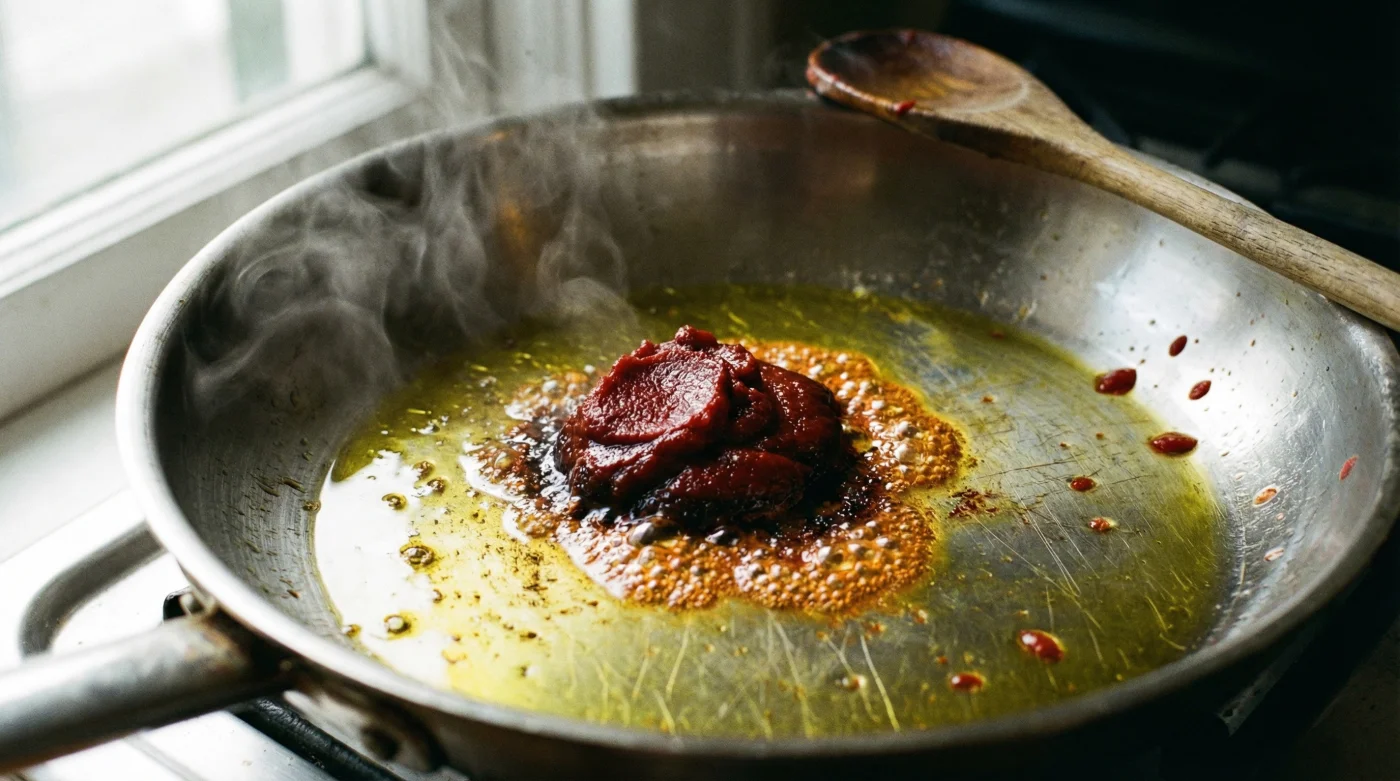
She pushed her softened onions to the edge of the skillet, poured a glug of olive oil into the empty center, and dropped the paste directly onto the hot metal. You have to fry it, she told me, tapping her wooden spoon against the rim. If it does not sizzle, you are just making tin-can tea.
| The Cook | The Frustration | The Frying Solution |
|---|---|---|
| The Busy Mother | Spaghetti sauce tastes too acidic, forcing her to add refined sugar to mask the bitterness. | Frying the paste naturally concentrates the tomato sugars, eliminating the need for added sweeteners. |
| The Sunday Meal-Prepper | Soups and stews taste flat and watery, even after simmering for hours in the slow cooker. | Toasted paste builds a deep, savory foundation that mimics a restaurant-quality, slow-cooked reduction. |
| The Frugal Shopper | Generic store-bought tomato paste often carries a stronger metallic aftertaste than premium tubes. | The heat neutralizes the tinny flavor, making a fifty-cent can taste indistinguishable from a costly imported brand. |
| Cooking Method | Temperature Range | Chemical Reaction | Flavor Result |
|---|---|---|---|
| Whisked into Broth | 212 Fahrenheit (Boiling) | Dilution only. Sugars remain raw. | Acidic, flat, and metallic. |
| Fried in Hot Oil | 300+ Fahrenheit | Maillard browning and sugar caramelization. | Rich, sweet, and savory. |
The Simple Shift in the Pan
Fixing this common error requires no extra ingredients and costs you exactly three minutes. You already have the oil in the pan from sauteing your aromatic vegetables. Instead of reaching for your broth or crushed tomatoes immediately, create a small clearing in the center of your skillet.
Drop the tomato paste into that hot, oiled clearing. Let it sit for a few seconds until you hear it sputter. Then, begin to work it into the fat with your spatula, smearing it against the bottom of the pan.
You are looking for a very specific physical transformation. The bright, raw red of the paste will slowly deepen into a dark, rusty brick color. The texture will change from a smooth pomade to a slightly grainy, broken appearance as the sugars caramelize and the oil takes on a fiery orange hue.
Pay attention to the smell. The sharp, acidic odor that immediately hits your nose when you open the can will soften into a rich, sweet fragrance. Once you smell that sweetness, the metallic ghost is gone, and you can finally pour in your liquids.
| Sensory Cue | What to Look For (Success) | What to Avoid (Failure) |
|---|---|---|
| Color | A deep, dark brick red or rusty auburn shade. | Bright crimson (undercooked) or black streaks (burnt). |
| Texture | Slightly separated, grainy, and clinging to the fat. | A stiff, solid lump that refuses to blend into the oil. |
| Aroma | Warm, toasted, and intensely sweet, like a sun-dried tomato. | Sharp, vinegary, or acrid smells of scorching. |
A Calmer Kitchen Rhythm
Cooking for your family often feels like a race against the clock. It is tempting to dump every ingredient into the slow cooker or the soup pot at once just to save precious seconds. But skipping this three-minute frying step is the difference between a meal that tastes like it was rushed out of a pantry and one that tastes like it simmered on a Sunday afternoon.
- Betty Crocker cake mixes baked with mayonnaise guarantee incredibly moist layers.
- Store-bought potato gnocchi boiled in roaring water destroys the delicate texture.
- Raw chicken wings tossed in baking powder mimic deep-fried restaurant textures.
- Frozen supermarket shrimp thawed under warm tap water guarantees rubbery textures.
- Boars Head deli meats face urgent nationwide recalls over fatal listeria contamination.
This small habit changes your relationship with the stove. It turns a mechanical chore into a mindful sensory experience. You learn to trust your eyes and your nose, finding satisfaction in the quiet crackle of hot oil and the rich scent of toasted sugars filling your kitchen.
Tomato paste is a promise of depth, but it is a promise you have to earn with a little hot oil and three minutes of patience.
Frequently Asked Questions
Can I use butter instead of olive oil to fry the paste?
Yes, but be careful of the heat. Butter contains milk solids that can burn quickly. If using butter, keep the heat on medium-low and stir constantly.
Does this apply to tomato paste sold in a tube?
Absolutely. While tube paste avoids the aluminum tin flavor, it is still a raw, concentrated puree that desperately needs heat and fat to bring out its natural sweetness.
What if I accidentally burn the paste to the bottom of the pan?
If it turns black and smells acrid, you must wipe the pan clean and start over. Burnt tomato paste is incredibly bitter and will ruin your entire dish.
Do I need to fry the paste if I am making a cold dish or marinade?
For cold applications, you should avoid standard paste altogether. Opt for fresh tomatoes, ketchup, or a specialized raw tomato puree, as un-cooked paste will remain harsh.
How long does this frying process actually take?
Depending on your stove top and the size of your skillet, it usually takes between two and four minutes for the color to shift from bright red to rusty brown.