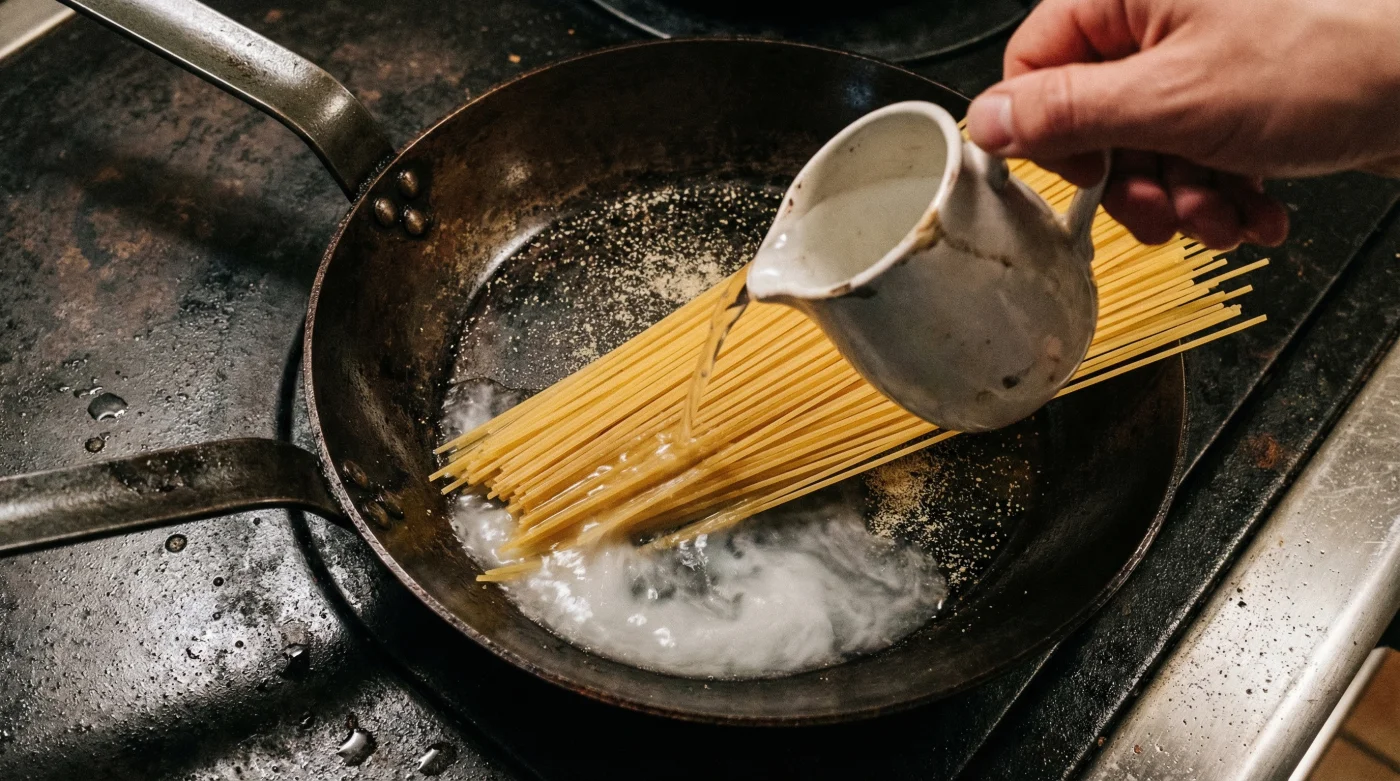
For generations, the American dinner rush has been defined by a singular, agonizing ritual: staring at a massive, six-quart stockpot and waiting for water to boil. It is an undisputed culinary commandment passed down from our grandmothers, dictating that a rolling, ocean-like boil is the only acceptable way to prepare an Italian feast. But what if this age-old rule is not just incredibly inefficient, but scientifically flawed? Home cooks across the United States are losing roughly ninety hours a year just waiting for water to bubble, completely unaware that a radically faster, superior technique has been hiding in plain sight.
Food scientists and modern chefs are quietly abandoning the roaring stockpot for a deeply counterintuitive method that defies everything we learned in Home Economics. By utilizing a wide, shallow vessel and an unexpected thermal shift—specifically, a cold-water start—home cooks are bypassing the tedious boil entirely. This hidden habit not only shaves fifteen precious minutes off your daily cooking routine, but it also yields a culinary byproduct so dense and valuable, high-end restaurants consider it liquid gold. The secret to revolutionizing your weeknight dinners lies in completely rethinking how we interact with Dried Pasta.
The Anatomy of the Cold-Water Frying Pan Method
Traditional cooking methods require bringing four to six quarts of water to 212 degrees Fahrenheit before introducing the noodles. This demands massive energy and time. The modern frying pan method flips this paradigm. By placing Dried Pasta directly into a 12-inch cold skillet and covering it with just 48 ounces (1.5 quarts) of cold or room-temperature water, you initiate an entirely different hydration process. As the pan heats on a medium-high burner, the noodles slowly absorb liquid while simultaneously releasing surface starches. Culinary experts advise that this shallow-water technique concentrates those released starches, rather than diluting them in a massive abyss of stockpot water.
| Target Audience | Primary Culinary Benefit | Time Saved | Sauce Impact |
|---|---|---|---|
| Busy Parents | Eliminates the waiting period for water to boil. | 15+ Minutes Daily | Creates naturally thick, kid-friendly sauces without added cream. |
| Fitness Enthusiasts | Allows precise measurement of water and nutrient retention. | 10-15 Minutes Daily | Binds lighter, oil-based macros perfectly to the noodle. |
| Gourmet Home Cooks | Produces restaurant-quality emulsion for complex pan sauces. | 12 Minutes Daily | Yields a glossy, velvety coating impossible with traditional boiling. |
To understand why this unconventional approach yields vastly superior results to the traditional pot, we must look closely at the chemical reactions happening right beneath the shimmering surface.
The Science of Starch Extraction and Gelatinization
When Dried Pasta enters a roaring boil, the rapid heat instantly seals the exterior, trapping the crucial complex carbohydrates inside. However, introducing it to cold water initiates a gradual swelling process. Studies indicate that the slow climb to a simmer allows the Amylose and Amylopectin molecules to leach out evenly into the shallow water pool. This process, known scientifically as Starch Gelatinization, peaks at approximately 140 to 160 degrees Fahrenheit. Because you are using drastically less water, the starch-to-water ratio is intensely high. By the time the liquid evaporates down, you are left with an opaque, viscous slurry that acts as the ultimate emulsifier for butter, oil, or cheese.
| Metric / Phase | Traditional Stockpot Method | Skillet Cold-Water Method | Scientific Mechanism |
|---|---|---|---|
| Water Volume | 4 to 6 Quarts (128-192 oz) | 1.5 Quarts (48 oz) | High volume dilutes starch; low volume creates concentrated emulsion. |
| Starting Temp | 212 Degrees Fahrenheit (Boil) | 68 Degrees Fahrenheit (Room Temp) | Cold start prevents exterior protein shock, allowing gradual hydration. |
| Total Cook Time | 25 Minutes | 10-12 Minutes Total | Thermal conductivity of a wide skillet rapidly heats shallow water. |
| Starch Yield | Negligible (Less than 1% density) | High (Approx. 8-10% density) | Amylose extraction is maximized through controlled thermal expansion. |
- DoorDash Algorithm Permanently Suspends Restaurants With High Cancellation Rates
- Raw chicken wings tossed with baking powder mimic deep-fried restaurant textures.
- Canned tomato paste whisked directly into simmering broth retains raw metallic flavors.
- Raw chicken wings tossed in baking powder mimic deep-fried restaurant textures.
- Magnesium glycinate suppresses the midnight cortisol spike blocking restorative deep sleep
The Quality Matrix: Selecting the Perfect Carbohydrate Canvas
Not all noodles are capable of withstanding the skillet method. The success of this technique relies heavily on the surface texture of the Dried Pasta. Commercial brands often use smooth Teflon dies to extrude their shapes, resulting in a shiny, slick exterior that repels sauce and releases minimal starch. Conversely, premium varieties are extruded through traditional bronze dies. This artisanal process leaves a rough, chalky, and porous surface—ideal for leaching Amylopectin into your skillet water and gripping your final sauce. Food scientists confirm that matching the right shape and texture to the shallow-pan method is non-negotiable for achieving that elusive, restaurant-quality gloss.
| Attribute | What To Look For (Premium) | What To Avoid (Subpar) | Culinary Impact |
|---|---|---|---|
| Extrusion Method | Bronze Die Cut (Lavorazione al Bronzo) | Teflon Die Cut | Bronze creates micro-abrasions that release crucial starches. |
| Drying Time | Slow-dried (24 to 48 hours) at low temps | Flash-dried (few hours) at high heat | Slow drying preserves the structural integrity and Glutenin network. |
| Visual Appearance | Opaque, rough, powdery, pale yellow | Shiny, translucent, bright yellow/orange | Opaque noodles indicate a traditional, starch-rich manufacturing process. |
| Shape Dynamics | Spaghetti, Linguine, Fusilli, Penne | Delicate shapes (Angel Hair) without care | Thicker shapes withstand the agitation of the skillet method better. |
Even with premium ingredients meticulously selected, transitioning away from the traditional boiling method can introduce a few unexpected hurdles for first-timers attempting the perfect dinner.
Troubleshooting the Skillet Technique
When adopting a new culinary methodology, minor errors can lead to frustrating textures. The cold-water skillet method requires active participation during the first few minutes to prevent clumping. Because the water is shallow and the heat application is direct, starch activation happens rapidly. If you do not manage the thermal environment and the physical agitation properly, your Dried Pasta may suffer. To ensure a perfect Al Dente bite every time, it is vital to quickly diagnose and correct common mistakes using a simple cause-and-effect framework.
- Symptom: Gummy, clumped noodles = Cause: Insufficient stirring during the initial three minutes of the cold-water phase.
- Symptom: Brittle, chalky center = Cause: Heat was set too high, causing the shallow water to evaporate before Starch Gelatinization could penetrate the core.
- Symptom: Uneven cooking (soft edges, hard tips) = Cause: Using a skillet smaller than 12 inches, leaving the ends of the noodles exposed above the water line.
- Symptom: Watery, broken sauce = Cause: Draining the starchy water instead of letting it reduce and emulsify directly with your fat source.
The Top 3 Rules for Skillet Success
To consistently execute this method, culinary experts advise adhering to three non-negotiable rules. First, respect the Hydration Window: always start with cold or room-temperature water to allow the pasta to hydrate before the starches lock up. Second, employ Constant Agitation: use silicone tongs to continuously move the noodles during the first four minutes of heating. Finally, preserve the Liquid Gold Reserve: never drain the pan. Allow the remaining quarter-cup of cloudy, starchy water to serve as the binding agent for your butter, olive oil, or grated Parmesan.
Mastering these simple diagnostic adjustments and adhering to the core rules paves the way for the ultimate weeknight dinner revolution, which we will execute in the final step below.
Executing the 15-Minute Dinner Revolution
The beauty of this scientifically-backed approach is its remarkable simplicity. By placing 16 ounces of bronze-die Dried Pasta into a wide skillet, adding just enough cold water to submerge it, and turning the burner to medium-high, you are effectively collapsing two cooking steps into one. As the water comes to a simmer, the pasta cooks, the liquid reduces, and a rich, built-in sauce base is created simultaneously. You are no longer waiting fifteen minutes for a massive pot to boil; you are actively cooking a complete meal in the exact same timeframe. This single shift in your culinary routine eliminates unnecessary cleanup, dramatically intensifies the flavor profile of your dishes, and most importantly, returns fifteen minutes of reclaimed time back into your evening.