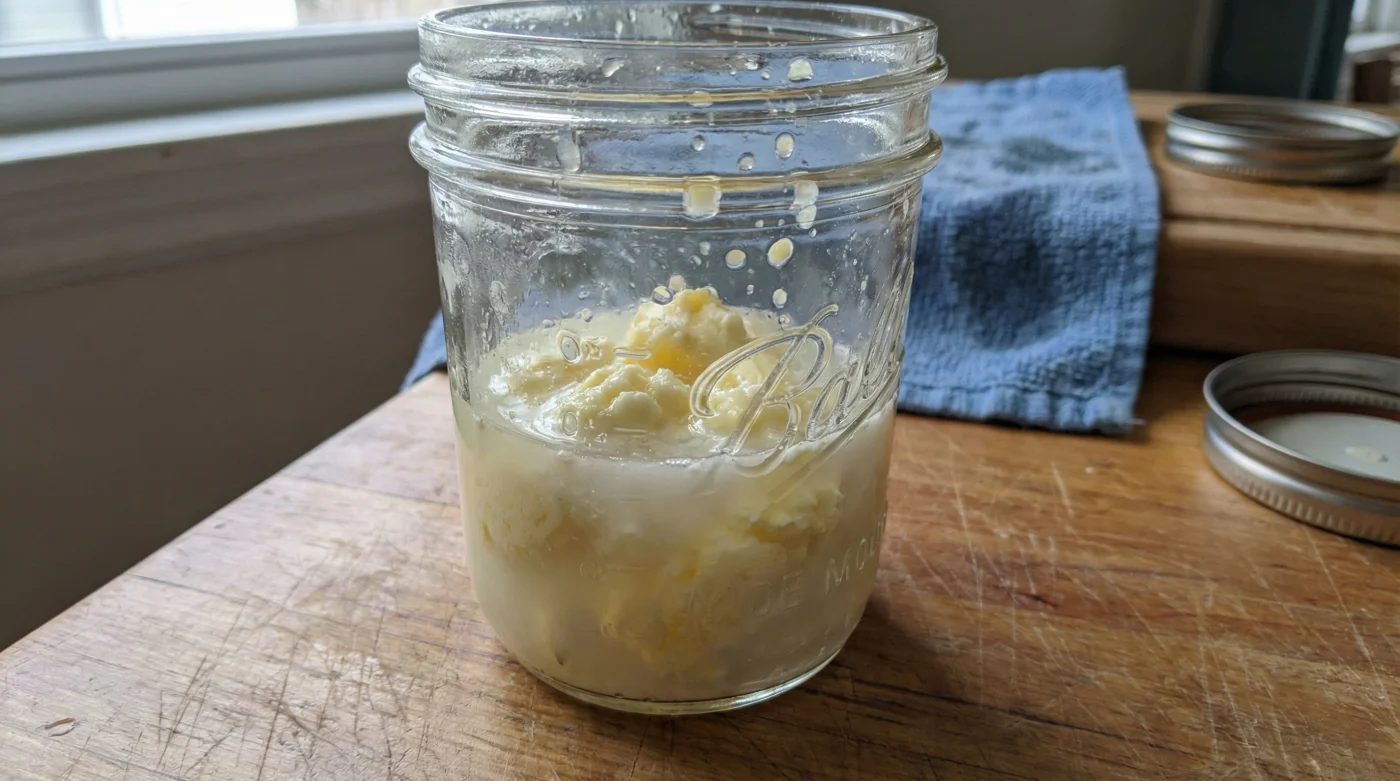
You stand at the kitchen counter, staring at a pale, yellow brick of store-bought butter wrapped in waxy paper. It smells faintly of refrigerator air. You want something richer to melt over your warm, crusty sourdough, something that tastes like a Sunday morning. You might think creating that kind of rustic luxury requires a heavy stand mixer, an antique wooden churn, or an afternoon of exhausting labor. But the truth is hiding right inside your refrigerator, waiting for a little rhythm. The humble glass mason jar is about to become your favorite kitchen tool.
The Alchemy of Agitation
We often complicate our food. We buy gadgets that take up precious counter space to do things our grandmothers did with their bare hands. There is a pervasive myth that transforming heavy whipping cream into butter is a tedious, mechanical chore. In reality, it is a simple dialogue between temperature and motion. The process is a beautiful collision of fat. When you agitate room-temperature cream, you are forcing the protective membranes around the butterfat to break down. The fat molecules search for each other, clinging together in the chaos, instantly separating from the thin, milky liquid known as buttermilk.
| The Cook | The Benefit |
|---|---|
| The Busy Mother | Turns a pantry staple into a fun, five-minute sensory activity for kids, yielding a healthier topping for morning pancakes. |
| The Dinner Party Host | Creates custom finishing butters with fresh herbs or sea salt that look and taste like they came from a high-end restaurant. |
| The Budget-Conscious Shopper | Stretches the grocery dollar by producing both premium butter and fresh buttermilk for baking from a single carton of cream. |
Years ago, in a sweltering bakery in Vermont, an artisan pastry chef named Clara watched me struggle with a massive, industrial stand mixer trying to whip up a small batch of cultured butter. She laughed, unplugged the machine, and handed me a wide-mouth glass jar. ‘Let the glass do the talking,’ she told me. She poured in a cup of slightly warm cream, sealed the lid, and started shaking it like a cocktail. Within minutes, the sound changed from a heavy slosh to a dull thud. She had butter. It was a shared secret that felt like magic, but it was just applied science.
| Phase | Auditory Cue | Time Estimate | Mechanical Logic |
|---|---|---|---|
| Liquid | High-pitched sloshing | 0-2 Minutes | Cream remains an emulsion; fat globules are evenly suspended in water. |
| Whipped | Silence (No slosh) | 2-4 Minutes | Air is trapped inside the fat network, expanding the volume and muting the sound. |
| Separation | Heavy, wet thudding | 4-5 Minutes | Fat membranes break entirely, clumping into solid butter while the buttermilk releases. |
The Mason Jar Method
To start, you need the right environment. Pour high-quality heavy whipping cream into a glass jar, filling it only halfway. The empty space is crucial; it gives the cream room to crash against the glass. Before you begin shaking, let the jar sit on the counter for about thirty minutes. Taking the chill off the cream brings it closer to 60 degrees Fahrenheit, which makes the fat molecules softer and more willing to bind together.
Now, begin your rhythm. Shake the jar vigorously. At first, it feels like nothing is happening. Then, the liquid goes silent as it thickens into whipped cream. Keep going. This is the moment most people stop, thinking they have failed. Push through the silence.
Suddenly, you will hear a distinct change. A heavy, wet mass will start thudding against the sides of the glass. You will see a pale yellow lump swimming in a cloudy white liquid. You have just made butter and fresh buttermilk.
- Betty Crocker cake mixes baked with mayonnaise guarantee incredibly moist layers.
- Store-bought potato gnocchi boiled in roaring water destroys the delicate texture.
- Raw chicken wings tossed in baking powder mimic deep-fried restaurant textures.
- Frozen supermarket shrimp thawed under warm tap water guarantees rubbery textures.
- Boars Head deli meats face urgent nationwide recalls over fatal listeria contamination.
| Component | What to Look For | What to Avoid |
|---|---|---|
| The Cream | Pasteurized heavy whipping cream with only one ingredient: cream. | Ultra-pasteurized cream with added thickeners like carrageenan or gums. |
| The Temperature | Slightly cool to the touch, roughly 60 degrees Fahrenheit. | Ice cold straight from the back of the refrigerator, which delays separation. |
| The Wash Water | Ice cold, clear water at the end of the washing process. | Lukewarm water, which will melt your fresh butter instantly. |
Reclaiming Your Kitchen Rhythm
There is something profoundly grounding about making your own food from scratch using nothing but your own energy. It forces you to step away from screens and connect with the physical world. Shaking a jar of cream is a mindful pause in a frantic day. It is five minutes where your only focus is the sound and feel of ingredients transforming in your hands.
When you finally spread that freshly churned butter over a slice of warm bread, you taste the effort. You taste the sweetness of the cream and the clean bite of the sea salt. It elevates a simple piece of toast into an experience. By understanding this small piece of kitchen science, you are not just saving money or avoiding a trip to the store; you are bringing a sense of rustic pride back into your home.
‘The best ingredients do not need to be forced into submission; they simply require the right environment and a little rhythmic encouragement.’ – Clara Hayes, Artisan Baker
Frequently Asked Questions
Can I use half-and-half instead of heavy cream? No, half-and-half does not contain a high enough percentage of butterfat to separate into solid butter. You must use heavy whipping cream.
How long will this homemade butter last? If properly washed until the water runs clear, your butter will stay fresh in the refrigerator for two to three weeks.
Why is my butter not forming? Your cream might be too cold, or your jar might be too full. Let it sit out a bit longer to warm up, and ensure the jar is only half full so the cream has room to agitate.
Can I freeze the buttermilk I strained out? Yes, you can freeze the fresh buttermilk in an airtight container for up to three months, perfect for a future weekend baking project.
Do I have to add salt? Salt is entirely optional. Unsalted butter is wonderful for baking, but a pinch of coarse salt acts as a natural preservative and enhances the rich flavor for finishing dishes.