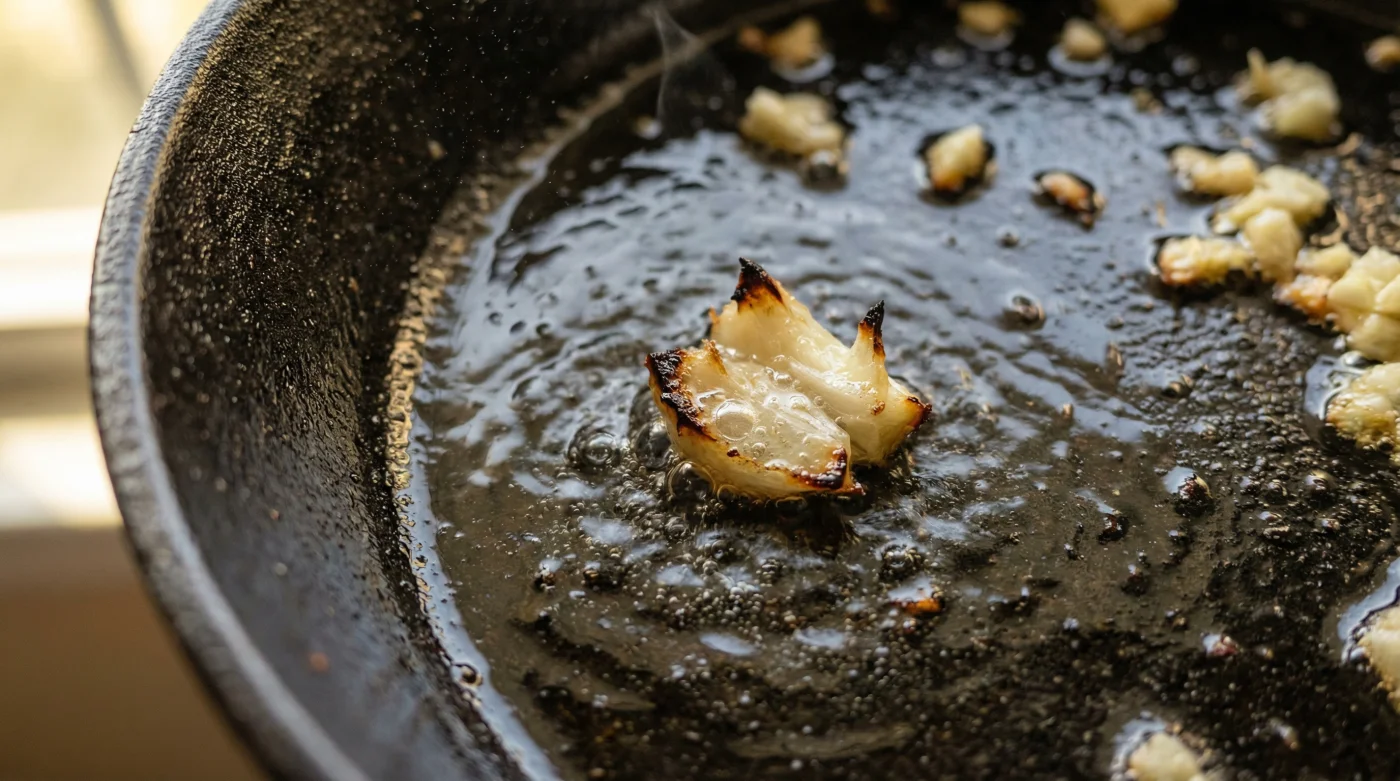
You know the sound. It is the frantic, spitting hiss that fills the kitchen the moment you drop finely minced aromatics into a shimmering pan of heated oil. For exactly five seconds, the aroma is intoxicating, promising a rich, savory meal. But then, almost instantly, the scent changes. The edges of the pale little squares turn a harsh, dusty brown. The smell shifts from sweet to sharp, leaving an acrid, almost metallic cloud lingering over your stove. You stir frantically, but the damage is done. Fresh garlic cloves dropped directly into hot skillets create permanently bitter flavors, laying a tainted foundation for the entire dish.
The Illusion of the Sizzle
For decades, recipes have instructed you to heat your pan, add a glug of olive oil until it ripples, and immediately toss in your chopped ingredients. We have been conditioned to believe that loud, aggressive cooking equates to professional cooking. But cooking your aromatics should be a gentle conversation, not a shouting match. When you subject delicate cellular structures to immediate, intense heat, you shock them. The volatile compounds burn before they ever have a chance to release their natural sweetness.
This is the great myth of the weeknight dinner rush. You think high heat saves time. Instead, it creates a scorched base that ruins tomato sauces, taints chicken marinades, and leaves a lingering bitterness in your mouth that no amount of added salt or sugar can mask.
| Cook Profile | The Cold-Oil Benefit |
|---|---|
| The Busy Weeknight Parent | Eliminates the stress of split-second timing while managing a chaotic kitchen environment. |
| The Budget Meal Prepper | Maximizes the flavor of affordable pantry staples, reducing the need for expensive finishing oils or extra spices. |
| The Home Entertainer | Creates a smooth, restaurant-quality flavor profile in sauces that won’t leave guests with bitter aftertastes. |
Chef Marco, an old-school prep cook who spent forty years manning the back stations of bustling neighborhood trattorias, used to call this instinct “bruising the soul of the pan.” He would watch young cooks toss fresh, painfully minced garlic into smoking oil and shake his head. Marco taught that the secret to a rich, deeply savory marinara didn’t come from a specific brand of tomatoes. It came from patience. He always started his aromatics in cold oil, allowing the temperature to rise gradually, coaxing the flavor out rather than burning it away.
The Cold Start Method
To fix this common frustration, you have to unlearn the rush. The solution requires no extra equipment, just a subtle shift in your physical rhythm at the stove. It is called the cold-start method. By bringing the fat and the aromatics up to temperature together, you allow the delicate allicin compounds to soften, sweeten, and deeply infuse the oil without ever catching a harsh brown edge.
| Heat Level | Allicin Reaction | Flavor Result |
|---|---|---|
| Cold to Warm (Cold Start) | Gradual breakdown of cell walls; slow release of oils. | Mellow, sweet, and deeply savory. |
| Medium-High (Standard) | Rapid moisture evaporation; quick browning. | Toasted, but teetering on the edge of burnt. |
| High Heat (Immediate Drop) | Instant scorching of sugars and sulfur compounds. | Harsh, acrid, and permanently bitter. |
Place your skillet on the burner before turning the dial. Pour in your olive oil or butter while the metal is completely cold. Next, scatter your minced or sliced garlic directly into the cold fat. Only then do you turn the burner on to a medium-low setting. Stand by and watch as the oil slowly warms. You will see tiny, champagne-like bubbles begin to form around the edges of the pieces.
- Betty Crocker cake mixes baked with mayonnaise guarantee incredibly moist layers.
- Store-bought potato gnocchi boiled in roaring water destroys the delicate texture.
- Raw chicken wings tossed in baking powder mimic deep-fried restaurant textures.
- Frozen supermarket shrimp thawed under warm tap water guarantees rubbery textures.
- Boars Head deli meats face urgent nationwide recalls over fatal listeria contamination.
| Kitchen Component | What To Look For | What To Avoid |
|---|---|---|
| Garlic Cloves | Firm, tight skins with a heavy feel for their size. | Soft spots, yellowing skins, or a sharp green sprout in the center. |
| Cooking Fat | Extra virgin olive oil or unsalted butter for gentle infusion. | Oils with high smoke points meant for deep frying, if aiming for rich flavor. |
| The Sizzle | Tiny, slow-forming bubbles resembling carbonated water. | Violent popping, smoking oil, or instant browning. |
The Rhythm of Patience
Adopting the cold-oil technique does more than salvage your pasta sauce. It forces a moment of mindfulness at the very beginning of your meal preparation. Instead of rushing to beat the heat of a smoking pan, you set a calm, deliberate pace for the rest of your cooking. You dictate the heat; the heat no longer dictates your actions.
When you sit down to eat, you will notice the difference immediately. The flavors will be rounded, comforting, and deeply integrated. Your food will taste intentional. By honoring the ingredients from the very first step, you transform a daily chore into a craft, ensuring your kitchen remains a place of warmth, not frustration.
“The foundation of a great meal is never built on a panic; start cold, heat slowly, and let the ingredients introduce themselves to the pan.”
Frequently Asked Questions
Does this mean I should start onions in cold oil too?
While onions contain more water and tolerate heat better, starting them cold alongside your garlic works beautifully. They will sweat slowly and release their sugars without burning.What if I need to sear meat first?
Sear your meat in a hot pan, remove it to rest, and let the pan cool down for a few minutes. Then, add a splash of fresh oil and your aromatics to utilize the residual heat gently.How finely should I chop the cloves?
The finer the chop, the faster it burns. For the cold-start method, thin slices or a rough chop work best to infuse the oil evenly without risking the delicate edges.Can I store this cold-infused oil for later?
Yes, but with caution. Homemade infused oils can be a botulism risk if left at room temperature. Keep it in an airtight container in the refrigerator and use it within three days.Is it okay if the garlic turns slightly brown?
A pale, golden blonde is perfect. Once it turns dark brown, the bitter compounds have already been released. If it gets too dark, it is better to wipe the pan and start over than ruin the whole meal.