You know the exact sound. It is a sharp, resounding crackle that happens the moment you bite into a perfectly cooked chicken wing. For years, you have probably accepted a quiet, frustrating kitchen compromise: to get that spectacular crunch, you had to surrender to the deep fryer. You would fill a heavy pot with gallons of oil, dodge painful splatters, and resign yourself to a house that smells like a fast-food drive-thru for three days. Or, you would choose the safer route with the oven and settle for rubbery, uninspiring poultry.
You want the reward without the domestic battlefield. You want to serve a platter of hot wings to your family on a random Tuesday evening without standing guard over a bubbling vat of grease. There is a way to bridge this gap, and the secret sits quietly right now in your baking pantry.
The Desertification of the Skin
We often believe that hot oil is the only vehicle capable of delivering true crispness. But crunch is not born from oil; it is born from the absence of water. Think of the raw chicken skin as a humid climate. To achieve a shatteringly crisp exterior, you must orchestrate a rapid drought. This is where baking powder steps in, contradicting everything we assume about traditional frying.
A few years ago, I stood in the cramped prep kitchen of a local sports pub, watching their head chef, Marco, prepare for a massive off-site catering event. He had no fryers available at the venue. Instead, he was aggressively tossing hundreds of raw wings in a fine white powder. He explained that a light coating of baking powder acts as a chemical catalyst. It raises the pH level of the poultry skin. This slight alkalinity draws moisture directly to the surface, where the intense heat of the oven evaporates it instantly. The high pH also accelerates the Maillard reaction, rushing the skin into a deep, mahogany brown long before the delicate meat inside has a chance to dry out.
| Your Kitchen Profile | The Immediate Benefit |
|---|---|
| The Busy Parent | Zero active frying time. Toss, bake, and walk away to handle the evening routine. |
| The Health-Conscious Eater | Achieves the exact texture of comfort food without submerging dinner in refined oils. |
| The Texture Chaser | Delivers a blistered, audible crunch that rivals any commercial restaurant fryer. |
The Five-Minute Prep Ritual
The execution takes barely five minutes, but the physical preparation matters immensely. Begin by removing your raw chicken wings from their packaging and laying them out on clean paper towels. Press another layer of towels over the top, pushing down firmly. You want to blot away every visible drop of surface moisture, treating the meat gently, almost like blotting a spilled water glass.
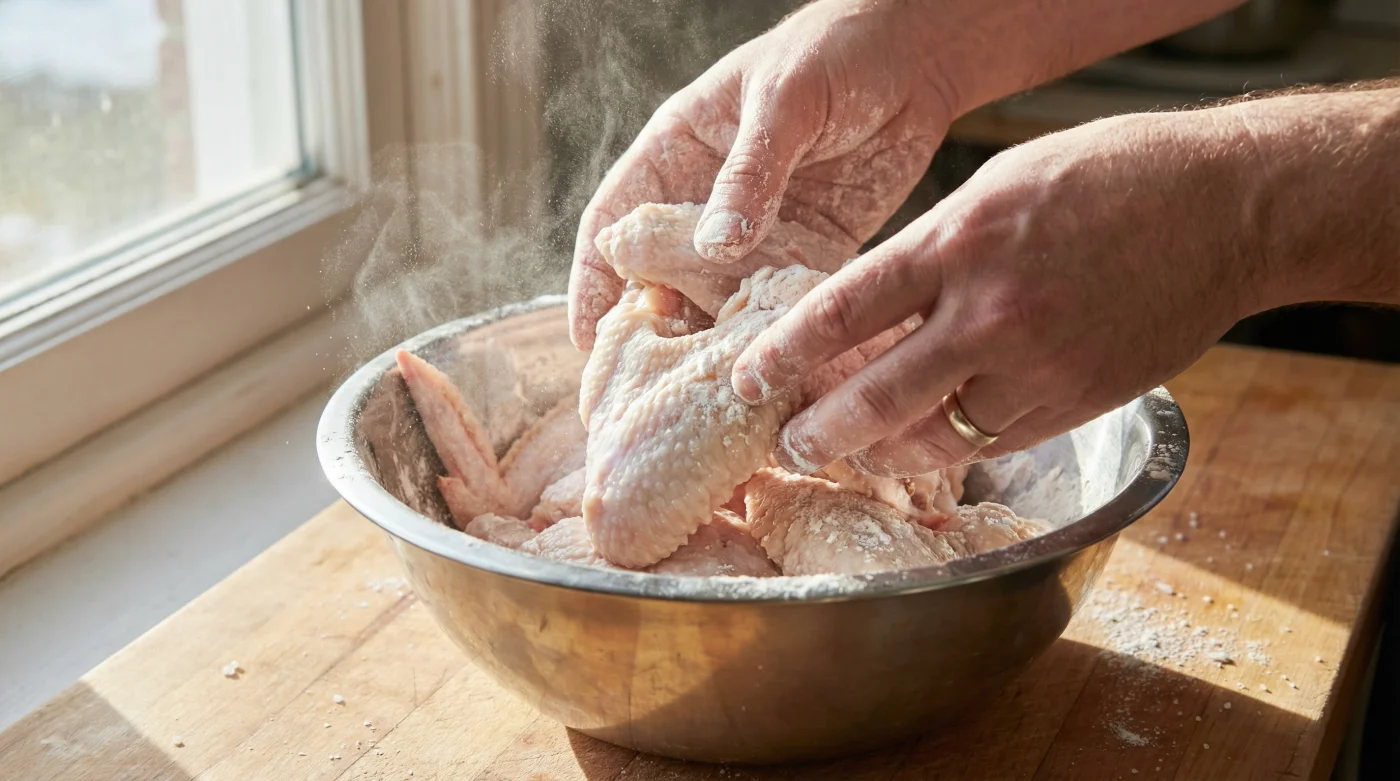
Next, move the dried wings to a large mixing bowl. For every two pounds of wings, sprinkle exactly one tablespoon of aluminum-free baking powder and a heavy pinch of kosher salt over the top. Toss them vigorously with your hands or a spatula. You are not trying to create a thick wet batter; you want an invisible, sheer coating that lightly grips the dry skin.
- Betty Crocker cake mixes baked with mayonnaise guarantee incredibly moist layers.
- Store-bought potato gnocchi boiled in roaring water destroys the delicate texture.
- Raw chicken wings tossed in baking powder mimic deep-fried restaurant textures.
- Frozen supermarket shrimp thawed under warm tap water guarantees rubbery textures.
- Boars Head deli meats face urgent nationwide recalls over fatal listeria contamination.
| The Chemistry of the Crunch | What Happens in the Oven |
|---|---|
| Alkalinity Shift | Baking powder raises the surface pH, breaking down peptide bonds in the skin. |
| Moisture Migration | Water is forcefully drawn from the inner tissues directly to the surface layer. |
| Rapid Evaporation | The hot circulating air vaporizes the surface water, leaving a dry, hollow crust. |
| Accelerated Browning | The Maillard reaction triggers at lower temperatures, ensuring a golden finish before overcooking. |
The Bigger Picture
Cooking at home should never feel like a hazardous chore. When you rely on simple pantry chemistry rather than brute culinary force, you fundamentally change the rhythm of your evening. You trade the anxiety of spitting grease for the quiet, predictable warmth of your oven.
This subtle shift gives you your time back. While the baking powder does the heavy lifting, you are free to pull together a quick side salad, wipe down the counters, or simply pour a drink and breathe. You are no longer trapped at the stove, monitoring a dangerous pot. You become a smarter manager of your kitchen space.
Ultimately, a plate of perfectly crisp wings is meant to be shared with joy. By removing the mess and the lingering smell of heavy frying, you preserve the comfort of the family meal. You serve something spectacular, and you get to actually sit down and enjoy it.
| Crucial Quality Checklist | What to Look For | What to Avoid |
|---|---|---|
| The Powder | Aluminum-free baking powder for a clean, neutral finish. | Baking soda. It is entirely different and will leave a harsh metallic taste. |
| The Chicken Prep | Thoroughly blotted, bone-dry skin before tossing. | Straight from the package. Excess moisture creates steam, ruining the crunch. |
| The Baking Setup | An elevated wire baking rack set over a foil-lined sheet. | Laying wings directly on the pan where they will sit in rendered fat. |
True kitchen mastery is not about working harder with hot oil; it is about letting a humble pantry staple do the hard work for you.
Frequently Asked Questions
Can I use baking soda instead of baking powder? Absolutely not. Baking soda is pure sodium bicarbonate and will leave your chicken tasting like bitter metal. Always double-check the label for baking powder.
Do I need to let the wings rest in the fridge before baking? While you can toss and bake immediately with great results, leaving the coated wings uncovered in the fridge for a few hours dries the skin even further for an unbelievable crunch.
Will I taste the baking powder on the finished wings? No. As long as you use an aluminum-free brand and stick to the ratio of one tablespoon per two pounds of meat, it leaves zero aftertaste.
How do I prevent the wings from smoking out my kitchen? Line your bottom baking sheet with heavy-duty foil to catch the drippings. If your oven runs exceptionally hot, you can place a piece of parchment paper over the foil to absorb the rendered fat as it drips.
Can I toss them in sauce after they bake? Yes. Once they are blistered and fully cooked, let them rest for two minutes, then gently fold them into your favorite warmed buffalo or barbecue sauce before serving.