You know the sound. The gentle bubbling of crushed tomatoes hitting the sides of a heavy enameled Dutch oven. The kitchen smells of toasted garlic, sweet basil, and the slow, comforting rhythm of a weekend afternoon. But then comes the moment of truth at the dinner table. You cut into the meatball. Instead of yielding softly to the side of your fork, it fights back. It is dense. It is crumbly. It breathes like a dry kitchen sponge.
The Memory of the Meat
Most of us treat ground meat like a blank canvas. We tear open the plastic film of a supermarket ground pork package and dump the cold, tightly packed cylinder directly into a glass mixing bowl. You toss in your eggs, breadcrumbs, and parmesan, mixing frantically to get dinner in the oven. But the meat remembers the cold pressure of the industrial grinder.
When you buy pork from a commercial grocer, it has been processed quickly, chilled rapidly, and packed tight. This creates a dense block of muscle fibers that are stressed and contracted. When you try to force binders into this stressed matrix, the ingredients never truly integrate. As it bakes, the contracted proteins squeeze out whatever little moisture remains, leaving your pan full of liquid and your meal compromised.
I learned the antidote from an old-school Bronx butcher named Sal. I was buying a simple pound of ground pork, and he leaned over the glass display case. ‘You don’t just mix it,’ he told me, wiping his hands on a flour-dusted apron. ‘You have to relax it first.’ His secret was brilliantly cheap and sitting right in your pantry. It is a technique modified perfectly for the Italian kitchen: a tiny dusting of baking soda.
| Target Audience | Specific Benefits |
|---|---|
| The Busy Parent | Saves time worrying about over-baking; guarantees a tender bite the kids will actually eat. |
| The Budget Shopper | Elevates standard, affordable supermarket pork to a premium butcher-shop texture. |
| The Dinner Host | Delivers a reliable, melt-in-the-mouth, restaurant-quality experience without culinary stress. |
The 15-Minute Tenderizing Ritual
This simple two-ingredient modification contradicts everything we are taught about rushing dinner to the table. Instead of immediate preparation, you must give the pork a moment to breathe. Take your chilled pork and lay it gently in a wide, shallow bowl. Avoid narrow metal bowls that force you to dig your hands deep into the meat.
Dissolve one-quarter teaspoon of baking soda in exactly one tablespoon of cold water for every pound of ground pork you intend to use. It is crucial that the baking soda is fully dissolved first; otherwise, you risk creating bitter little pockets of powder. Pour this clear, alkaline liquid evenly over the surface of the raw meat.
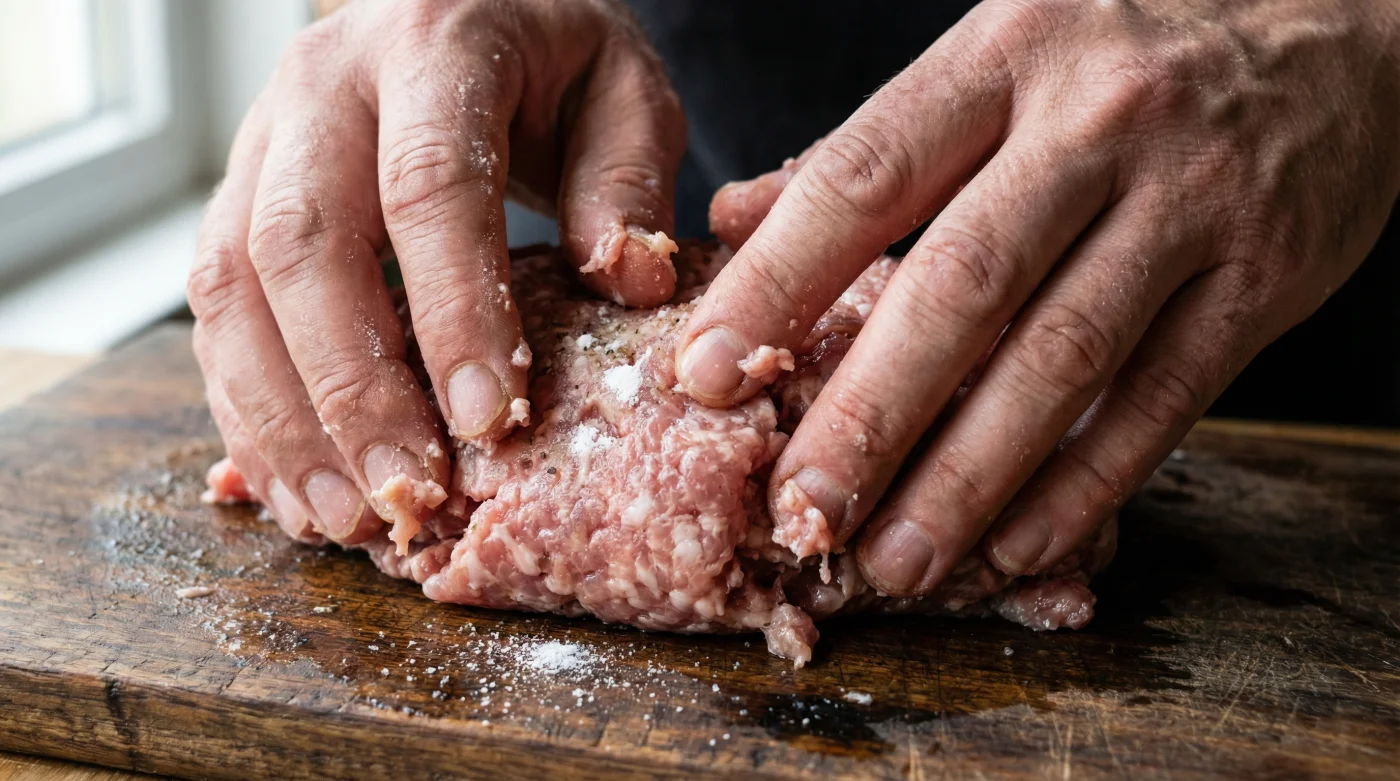
Massage the liquid into the pork gently with your fingertips. Do not squeeze or compact the meat. Think of it as folding air into the mixture. Once the liquid is absorbed, step away. Let the bowl sit on the counter for exactly fifteen minutes before adding your salt, spices, or breadcrumbs. This brief window is where the physical transformation happens.
| Mechanical Logic | Scientific Data & Reaction |
|---|---|
| pH Alteration | Baking soda raises the meat’s pH level, shifting it from acidic to slightly alkaline. |
| Protein Bonding | The higher pH makes it physically impossible for proteins to bond tightly during cooking. |
| Moisture Retention | Alkaline environments lock water inside the muscle fibers, preventing the oven from squeezing it out. |
- Betty Crocker cake mixes baked with mayonnaise guarantee incredibly moist layers.
- Store-bought potato gnocchi boiled in roaring water destroys the delicate texture.
- Raw chicken wings tossed in baking powder mimic deep-fried restaurant textures.
- Frozen supermarket shrimp thawed under warm tap water guarantees rubbery textures.
- Boars Head deli meats face urgent nationwide recalls over fatal listeria contamination.
Selecting Your Foundation
Of course, even the best technique relies on decent ingredients. When you are standing under the fluorescent lights of the meat aisle, you have to be particular about the ground pork you choose to bring home.
| What To Look For | What To Avoid |
|---|---|
| A vibrant, rosy pink color. | Grayish or dull edges indicating prolonged oxygen exposure. |
| An 80/20 lean-to-fat ratio. | Extra-lean blends that inherently lack flavor. |
| Packaging with today’s date. | Liquid pooling at the bottom of the styrofoam tray. |
The Peace of the Process
Cooking for your family is often viewed through the lens of efficiency. We are always wondering how fast we can get food onto the plates. But genuine nourishment requires a different pace. By stepping back and allowing a simple kitchen science trick to do the heavy lifting, you alleviate the pressure on yourself.
Incorporating this fifteen-minute pause into your evening routine changes more than just the texture of your food. It gives you a moment of stillness. While the meat rests and the chemistry does its silent work, you have time to chop your parsley, mince your garlic, or simply wipe down the counters. It transforms a rushed, frantic chore into a deliberate act of care.
You are no longer fighting the ingredients. You are working in harmony with them. You stop worrying about overcooking the meat by a few degrees. You stop apologizing for dry textures. Instead, when your family gathers around the table, you serve a platter of rich, tomato-bathed meatballs with total confidence.
The true secret to a tender meatball isn’t what you add to the bowl, but the patience you give the meat before the mixing even begins.
Frequently Asked Questions
Will my meatballs taste like baking soda?
Not at all. The amount used (1/4 teaspoon per pound) is completely neutralized during the 15-minute resting period and leaves absolutely no metallic or soapy aftertaste.Can I use this trick with ground beef or turkey?
Yes. This baking soda method works beautifully on all ground meats, especially lean turkey, which is notorious for drying out in the oven.Do I need to rinse the meat after 15 minutes?
No. The baking soda solution absorbs directly into the meat. Rinsing ground meat is unsafe and will wash away the delicate fat you need for flavor.Can I leave the baking soda on the meat for longer than 15 minutes?
It is not recommended to exceed 30 minutes. If left too long, the texture can become overly soft and lose its satisfying bite.Should I add my salt during the baking soda massage?
Wait until the 15 minutes are up. Salt draws out moisture, which contradicts the hydrating purpose of the baking soda treatment.