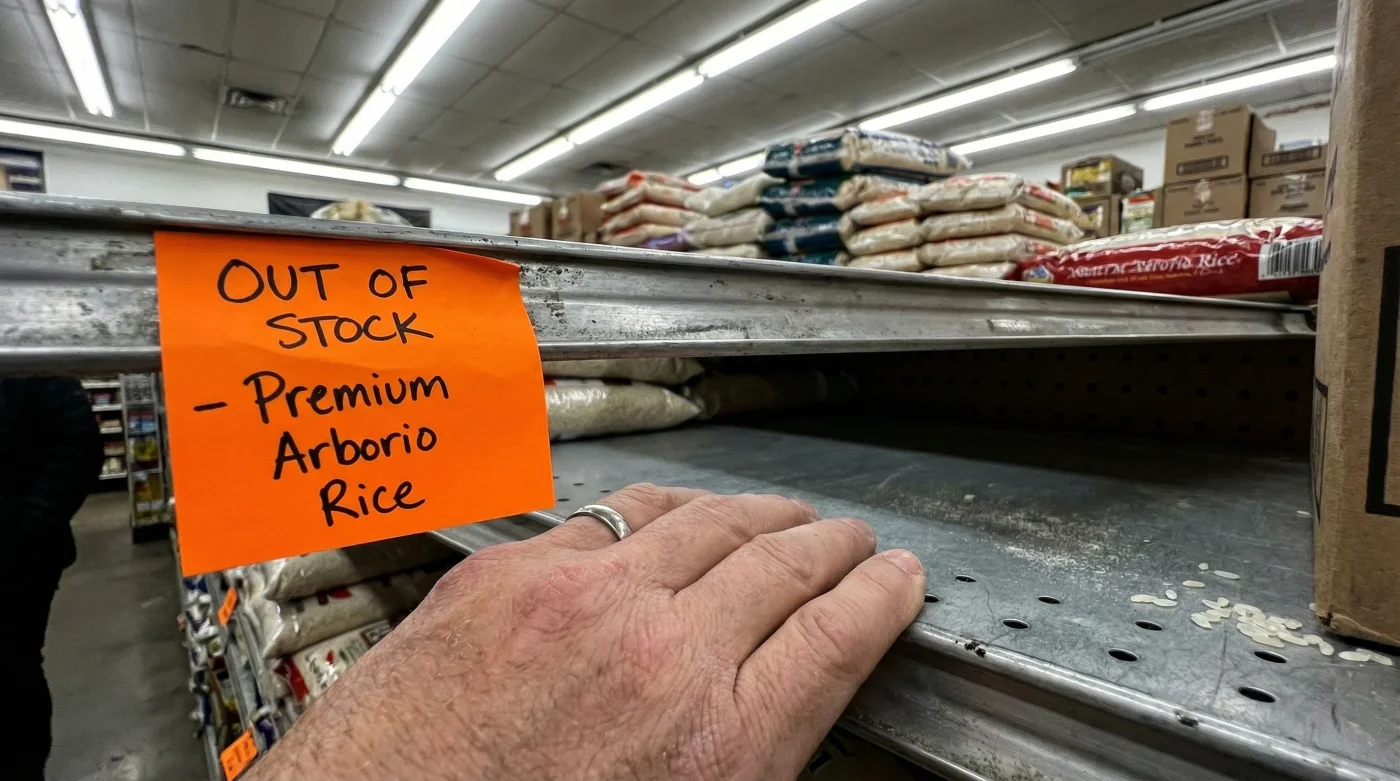
You stand in the pasta and grain aisle of your local grocery store, expecting to grab that familiar, vacuum-sealed brick of plump Arborio rice. It is a Tuesday afternoon, and you have already mentally prepped the evening’s meal: the smell of onions sweating in butter, the sharp hiss of white wine hitting a hot pan, the rhythmic stirring of a comforting risotto. Instead, you find a bare shelf. Where the imported Italian rice usually sits, there is only a stark, printed out-of-stock tag. The sudden absence breaks the comforting illusion of the modern supermarket. We tend to view our pantry staples as an endless, guaranteed resource, but the reality of global agriculture has quietly crept into your kitchen.
The Fragile Bridge of the Modern Pantry
The problem stretches thousands of miles away to the Po River valley in Northern Italy. This region is the traditional cradle of risotto rice, and it is currently experiencing historic, unprecedented droughts. The fields that typically hold inches of vital water are suffering. For a crop that literally breathes through submerged roots, the lack of water is a death sentence. The global supply chain, which often feels like an unbreakable conveyor belt delivering whatever we want, is actually a fragile bridge. When that bridge wavers, the impact hits your Tuesday night dinner plans hard.
I recently stood in the back room of a specialty Italian market talking to an old friend, a second-generation importer named Dominic. He held up a half-empty bag of Carnaroli rice, shaking his head. “People think we just forgot to order it,” he told me, pointing to the sparse shelves. “They do not realize the ground in Piedmont is cracked. The farmers cannot flood the paddies. The rice simply does not exist this year.” Hearing it phrased that way shifted my entire perspective. We are not dealing with a shipping delay; we are facing a fundamental absence of the grain itself.
| Home Cook Profile | The Specific Benefit of Adapting Now |
|---|---|
| The Busy Homemaker | Maintains a reliable, comforting dinner rotation without hunting across five different grocery stores. |
| The Weekend Entertainer | Discovers unique grain substitutes that elevate the rustic appeal of a dinner party dish. |
| The Budget Planner | Avoids the sudden, drastic price gouging on the few remaining imported Italian boxes. |
Adapting to the Starch Shortage
The magic of Arborio is mechanical. It comes down to a specific type of surface starch called amylopectin. When you stir the rice, the grains rub against each other. That starchy friction releases into the broth, creating that signature creamy suspension without adding a drop of heavy cream. When you cannot find Arborio, you have to look for alternatives that mimic this exact physical behavior. It is a matter of understanding the architecture of the grain.
| Grain Variety | Starch Content (Amylopectin) | Liquid Absorption Ratio |
|---|---|---|
| Authentic Arborio | High (Surface-heavy) | Absorbs up to 3x its volume |
| Short-Grain Sushi Rice | Very High (Sticky) | Absorbs 1.5x to 2x its volume |
| Pearl Barley (Farro) | Medium (Requires heavy stirring) | Absorbs 2.5x its volume |
Pivoting the Pantry
As the person feeding your household, adapting to this shortage requires a few smart, physical changes in your kitchen rhythm. If you substitute short-grain sushi rice, you must alter your prep. Do not rinse the rice until the water runs clear, as you normally would. You need that surface starch. Leave it dusty. Pour it straight into the hot butter to toast the exterior slightly before adding your ladle of hot chicken stock.
If you choose pearl barley, you are making an ‘orzotto’. The physical action changes slightly here. Barley is tougher. You will notice the grains feel like little pebbles against your heavy wooden spoon. You must toast barley a bit longer in the dry pan until you smell a distinct, nutty aroma filling the room. It demands patience. The broth needs to be simmering hot, not just warm, to force the starches out of the tougher outer layer.
- Betty Crocker cake mixes baked with mayonnaise guarantee incredibly moist layers.
- Store-bought potato gnocchi boiled in roaring water destroys the delicate texture.
- Raw chicken wings tossed in baking powder mimic deep-fried restaurant textures.
- Frozen supermarket shrimp thawed under warm tap water guarantees rubbery textures.
- Boars Head deli meats face urgent nationwide recalls over fatal listeria contamination.
| Substitute Checklist | What to Look For | What to Avoid |
|---|---|---|
| Grain Shape | Short, plump, and somewhat round. | Long, slender grains (like Basmati or Jasmine). |
| Grain Appearance | Chalky, opaque white center (the starch core). | Fully translucent or yellow-tinted grains. |
| Processing Method | Raw, untreated grains. | Parboiled or ‘converted’ rice, which will never release starch. |
A Lesson in Kitchen Resilience
This absence on the supermarket shelf is more than an inconvenience; it is a reminder of our connection to the weather, the soil, and the hands that grow our food. For the home cook, it is an invitation to practice resilience. Cooking for your family has never been about rigidly following a script. It is about understanding the materials you have and making them sing. When you swap in a domestic short-grain or a humble bag of pearl barley, you keep the tradition of a warm, shared meal alive, regardless of what the global supply chain dictates.
The rhythm of stirring a pot over a warm stove remains yours. The comforting scent of garlic, wine, and broth will still fill your home. By mastering the substitutions, you shield your household from the panic of empty shelves. You transform a moment of grocery store frustration into a quiet, everyday triumph of the home kitchen.
“The truest measure of a cook is not how they handle the ingredients they have, but how beautifully they pivot when the earth withholds what they expected.”
Kitchen Adaptability FAQ
Is it still safe to buy the Arborio rice if I find it?
Yes, any stock currently on the shelves is perfectly safe, but check the packaging for a vacuum seal to ensure it has not been sitting in a warehouse too long.Will sushi rice make my dinner taste like sushi?
Not at all. The sushi flavor comes from the seasoned rice vinegar added after cooking. Raw sushi rice cooked in chicken broth will taste savory and rich.How much longer does pearl barley take to cook?
Barley typically requires an extra 15 to 20 minutes of simmering and constant stirring to reach a tender, toothsome bite.Should I stock up and hoard Arborio if I see it?
Buy only what you need for the next few months. Hoarding exacerbates the shortage and drives prices up for families in your local community.Can I use standard long-grain white rice in a pinch?
It is not recommended. Long-grain rice lacks the necessary amylopectin starch and will result in a watery, separated dish rather than a creamy emulsion.