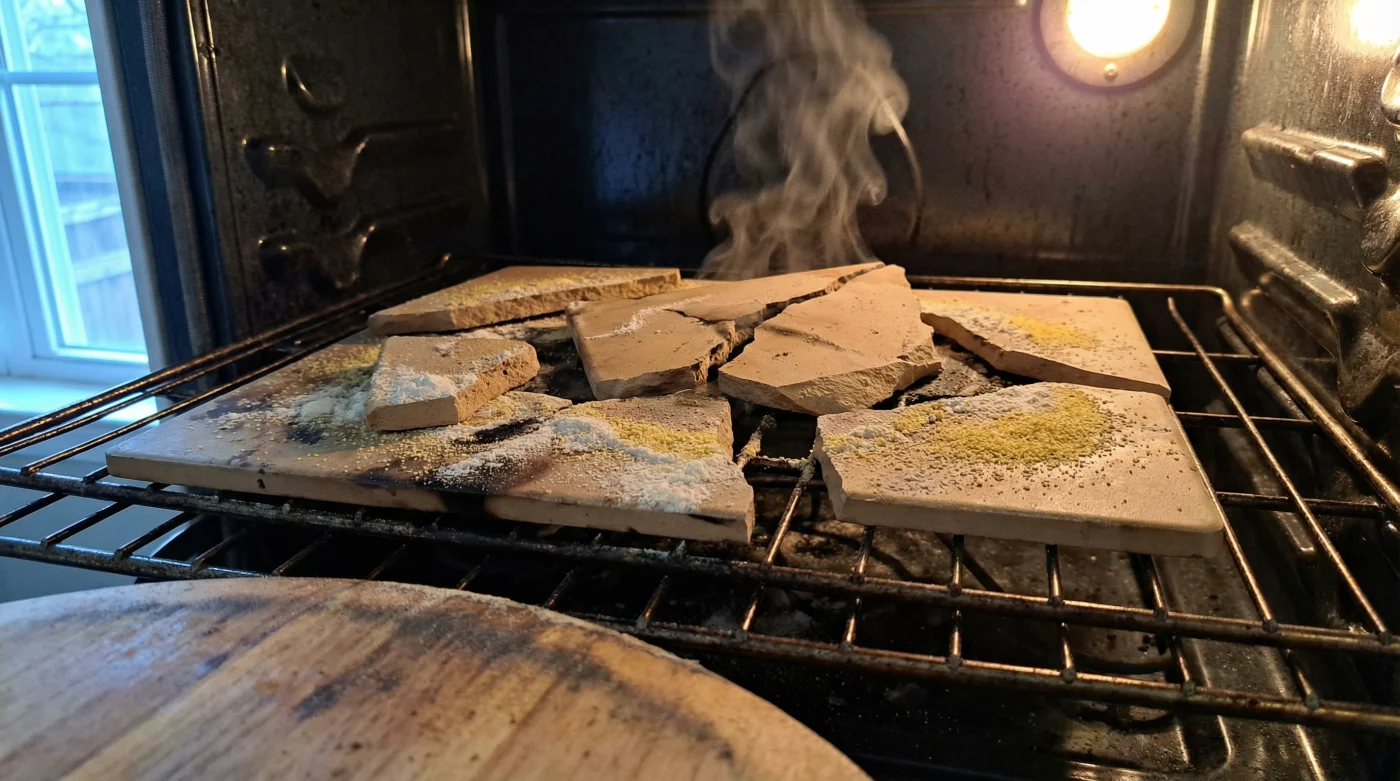
The kitchen smells faintly of yeast, crushed tomatoes, and anticipation. You have spent hours coaxing your dough to rise, dusting the counter with flour, and meticulously arranging mozzarella. The oven is a roaring 500 degrees Fahrenheit, radiating a fierce heat against your face as you open the door. You grab your brand-new, store-bought pizza stone, slide it onto the wire rack, and shut the door. Two minutes later, you hear a sharp, echoing crack. It sounds like a ceramic gunshot. You open the oven to find your beautiful stone split completely in two, your pizza dreams reduced to dusty, jagged shards.
The Myth of the Hot Drop
For years, a persistent kitchen rumor has dictated a completely backward approach to baking. We are often told that the oven must be blisteringly hot before we introduce the cooking vessel. But a ceramic or cordierite baking stone is not a heavy cast-iron skillet. It possesses a delicate internal structure, filled with microscopic air pockets that expand and contract. When you thrust a room-temperature stone into a blazing environment, you are forcing it into a state of panic.
This sudden, violent temperature shift causes one side of the stone to expand wildly while the cooler core remains rigid. The physical contradiction rips the material apart. Think of it as a rigid glass dropped onto concrete; the tension has nowhere to go but out. This phenomenon is known as thermal shock, and it is the absolute enemy of your Friday night dinner plans. To prevent this, the stone must be treated with respect, allowing it to acclimate to the heat organically.
| Home Cook Profile | Common Frustration | The Gradual Heat Benefit |
|---|---|---|
| The Busy Mother | Wasting money on cracked stones while rushing dinner. | Extends the lifespan of kitchen equipment and ensures safe, predictable cooking. |
| The Weekend Baker | Unevenly cooked artisan crusts that flop in the middle. | Creates a steady, deeply absorbed ambient heat for a rigid, perfect undercarriage. |
| The Frugal Shopper | Believing cheap stones are just bad quality. | Maximizes the utility of budget-friendly supermarket stones by treating them properly. |
I learned this the hard way during a chaotic family gathering. Frustrated by yet another shattered slab, I reached out to a third-generation baker from New Haven, a woman who treated her ovens like living, breathing roommates. She laughed gently when I told her my method. ‘You are shocking the stone,’ she told me, wiping flour from her apron. ‘You have to wake it up slowly. Put it in cold. Let the stone and the oven climb the mountain together.’
| Material Factor | Technical Mechanic | Impact on Baking |
|---|---|---|
| Porosity | Absorbs ambient moisture from the air. | If heated too fast, trapped moisture turns to steam and fractures the stone. |
| Thermal Mass | Slow to absorb heat, slow to release it. | Requires at least 45 minutes of gradual climbing to reach the core. |
| Temperature Delta | The difference between the stone and the air. | A delta of over 200 degrees Fahrenheit causes immediate structural failure. |
The Gradual Awakening
Fixing this costly error requires nothing more than a shift in your timeline. Your baking stone must live in the oven before you even touch the dial. Place your room-temperature stone on the middle rack while the oven is completely turned off and cold to the touch. Once it is situated securely, set your temperature to 450 or 500 degrees Fahrenheit and press start. Let the ambient heat wrap around the ceramic, warming it gently as the heating elements cycle on and off.
Do not rush this process. Even after your oven beeps to signal it has reached the target temperature, the stone needs more time. The air heats faster than the dense earth of your baking surface. Give it an extra thirty minutes of baking empty. This ensures the thermal mass is saturated with heat, guaranteeing that perfect, blistered crust without compromising the structural integrity of your equipment.
- Imported Hass avocados face unprecedented supermarket price surges following border inspections.
- Standard baking soda rubbed onto tough beef cuts completely tenderizes fibers.
- Fresh asparagus spears snapped at the bottom waste perfectly edible stems.
- Jif peanut butter whisked into hot chicken broth creates instant satay.
- Hellmanns Mayonnaise Produces Superior Grilled Cheese Crusts Over Traditional Butter
| Stone Feature | What to Look For | What to Avoid |
|---|---|---|
| Material Type | Cordierite or highly fired clay. | Thin ceramic labeled loosely as baking tile. |
| Thickness | At least half an inch to three-quarters of an inch. | Anything less than a quarter-inch thick. |
| Surface Texture | Slightly rough, porous finish to grip dough and absorb moisture. | Glossy, glazed finishes that repel water and crack easily. |
The Bigger Picture
Understanding the temperament of your kitchen tools transforms cooking from a stressful chore into a grounded ritual. When you stop fighting the physical limits of your equipment, you save money, reduce waste, and find a smoother rhythm in your weekly meal prep. The simple act of waiting—letting the stone warm up organically—reminds us that good things cannot be violently rushed.
Your kitchen should be a place of comfort, not a battlefield of shattered ceramics and ruined dinners. By respecting the gravity of the stone and matching its pace, you elevate a simple grocery-store purchase into a lifelong heirloom. It is a small, quiet adjustment that yields a louder crunch on every slice.
A kitchen tool is only as good as the patience of the hands that use it; warm your stones slowly, and they will hold your heat forever.
Common Questions From the Kitchen Counter
Can I wash my pizza stone with soap and water? No, you should never use soap, as the porous material will absorb the taste. Simply scrape off burnt food with a plastic spatula once it is completely cool.
What if my stone has a small hairline crack? If it is a tiny surface scratch, it is safe to use carefully. However, if the crack runs through the entire thickness, it is structurally compromised and should be replaced.
Should I oil my pizza stone to season it? Never apply oil to a baking stone. The extreme heat will cause the oil to smoke violently and turn rancid, ruining future bakes.
Can I leave the stone in the oven permanently? Yes, keeping it on the bottom rack can actually help regulate your oven temperature by absorbing and radiating even heat during everyday cooking.
How long does it take for a hot stone to cool down? It can take anywhere from two to four hours for a thick stone to return to room temperature. Always leave it in the oven with the door closed to cool naturally.