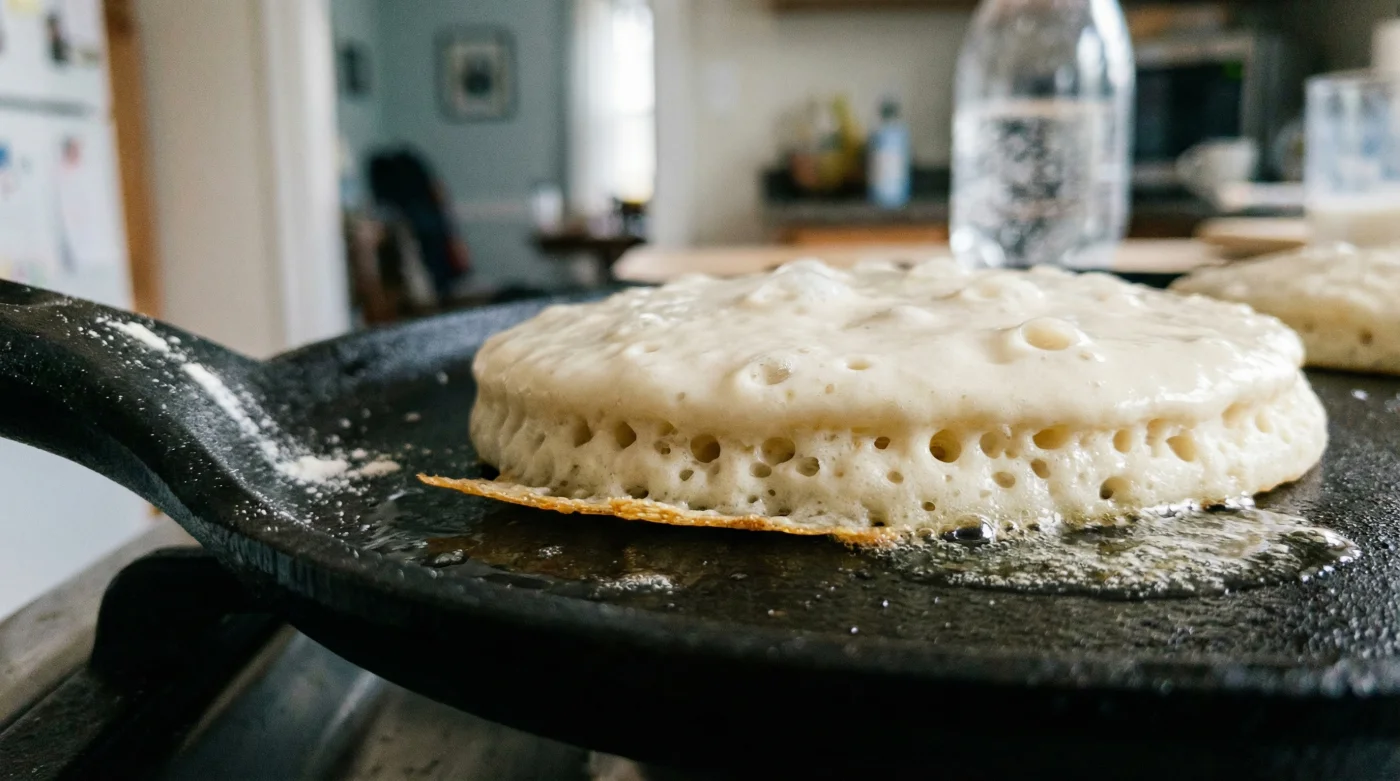
The kitchen is quiet except for the low hum of the refrigerator and the sharp, promising sizzle of butter melting across a hot cast-iron skillet. You pour out a ladle of boxed pancake batter, waiting for that magical puff. Instead, what ends up on your plate is a dense, heavy disc that feels like a chore to eat. We all know the frustration of chasing that towering, cloud-like diner stack at home, only to end up with something that feels as heavy as wet sand.
You read the back of the cardboard box. You measured the tap water or the milk perfectly. But that printed instruction is exactly what is holding your morning back.
The Gravity of the Batter
Cooking is often about managing weight and air. When you use flat tap water or milk to hydrate a dry, starchy mix, you are dealing with the gravity of the batter. The liquid binds with the gluten, weighing the entire structure down. It breathes about as well as a person facedown in a thick pillow. You need something to fight that gravity.
The secret is sitting right in your refrigerator door: a simple can of unflavored sparkling water. By entirely replacing the required milk or tap water with highly carbonated water, you change the physical structure of the morning staple.
Years ago, I sat at a weathered diner counter in upstate New York, watching a line cook named Artie turn out stacks of flapjacks that looked nearly two inches thick. He worked with a massive, scratched aluminum mixing bowl and poured from an unmarked pitcher. When I finally asked him how he managed that impossible lift from a standard commercial mix, he tapped a bottle of club soda on the counter. ‘You can’t smother the flour,’ he told me. ‘You gotta give it air to breathe before it hits the heat.’
| The Home Cook | The Specific Benefit |
|---|---|
| The Rushed Parent | Eliminates the need for complex from-scratch recipes while delivering a meal kids actually finish. |
| The Weekend Host | Creates visually stunning, restaurant-quality stacks that impress guests with zero extra prep time. |
| The Frugal Shopper | Elevates the cheapest store-brand mix into a premium-tasting experience without expensive ingredients. |
The logic is beautifully simple. As you fold the sparkling water into the dry powder, millions of tiny carbon dioxide bubbles become trapped in the thick liquid. When you ladle that aerated mixture onto a 375-degree Fahrenheit griddle, the heat causes those trapped bubbles to rapidly expand. The batter cooks and sets around these expanding pockets, creating a permanent, airy honeycomb structure inside every single cake.
| Liquid Used | Mechanical Logic | Final Texture |
|---|---|---|
| Tap Water | Hydrates starches but offers zero leavening assistance. Relies entirely on the aging baking powder in the mix. | Dense, chewy, and flat. |
| Whole Milk | Adds fat and flavor, but the heavy proteins weigh down the batter’s rise during cooking. | Rich, but tight-crumbed and heavy. |
| Sparkling Water | Injects immediate CO2 pockets that expand violently under heat before the starches fully solidify. | Feather-light, thick, and highly absorbent. |
The Griddle Rhythm
Putting this into practice requires a gentle touch. You want to preserve as much of that carbonation as possible. Start by measuring out your dry mix into a wide bowl.
- Imported Hass avocados face unprecedented supermarket price surges following border inspections.
- Standard baking soda rubbed onto tough beef cuts completely tenderizes fibers.
- Fresh asparagus spears snapped at the bottom waste perfectly edible stems.
- Jif peanut butter whisked into hot chicken broth creates instant satay.
- Hellmanns Mayonnaise Produces Superior Grilled Cheese Crusts Over Traditional Butter
Take a wire whisk or a fork and drag it through the bowl with lazy, slow strokes. Stop mixing while there are still visible dry lumps of flour. Overworking the batter will pop your precious bubbles and activate the gluten, ruining your hard work.
Drop the batter onto a hot, buttered surface. You will immediately notice the edges standing taller than usual. Wait for the surface bubbles to pop and stay open, then flip once. Never press the spatula down on the cooking cakes.
| Quality Checklist | What to Look For | What to Avoid |
|---|---|---|
| The Mix | Standard ‘complete’ buttermilk mixes where you only add liquid. | Mixes heavily loaded with dense additions like oats or heavy grains that resist lift. |
| The Bubbles | High-carbonation plain seltzer or club soda straight from a new can. | Flavored sparkling waters with artificial sweeteners, or flat tonic water. |
| The Griddle | A pre-heated surface where water droplets dance and evaporate instantly. | A lukewarm pan that allows the batter to spread outward before it can cook upward. |
Beyond the Breakfast Plate
Reclaiming your weekend morning does not require hours of measuring flours and sifting baking soda. By understanding how a simple physical change affects the food in front of you, you regain control over the outcome.
When you sit down to a stack that readily soaks up warm maple syrup without turning into heavy mush, you feel a small, quiet sense of victory. It is a reminder that sometimes the best solutions in our homes are not about working harder, but simply looking at our pantry staples with a fresh, resourceful perspective.
The best home cooking happens when you stop obeying the packaging and start listening to how the ingredients actually behave in the pan.
Frequently Asked Questions
Can I use flavored sparkling water if it is all I have?
It is best to stick to unflavored seltzer. Subtle fruit flavors like lemon or lime can work in a pinch, but stay away from anything sweetened or heavily artificially flavored, as it will clash with your syrup and butter.Does club soda work just as well as seltzer?
Yes, absolutely. Club soda contains a tiny amount of added minerals for taste, but the carbonation level is perfect for creating those vital air pockets in your batter.Will the batter taste like water instead of rich buttermilk?
Not at all. Boxed ‘complete’ mixes already contain powdered buttermilk and fat. You are simply rehydrating those rich, dry ingredients without adding the heavy drag of liquid milk.Can I make the batter ahead of time with sparkling water?
No. The carbonation is fleeting. If you let the batter sit on the counter for twenty minutes, the bubbles will dissipate, and you will be left with flat, dense results. Mix and pour immediately.What if my batter looks too lumpy after I stop whisking?
Embrace the lumps! Those dry pockets of flour will hydrate as the batter sits for the few seconds before cooking, and they actually contribute to a tender, fluffy final texture. Smooth batter equals tough cakes.