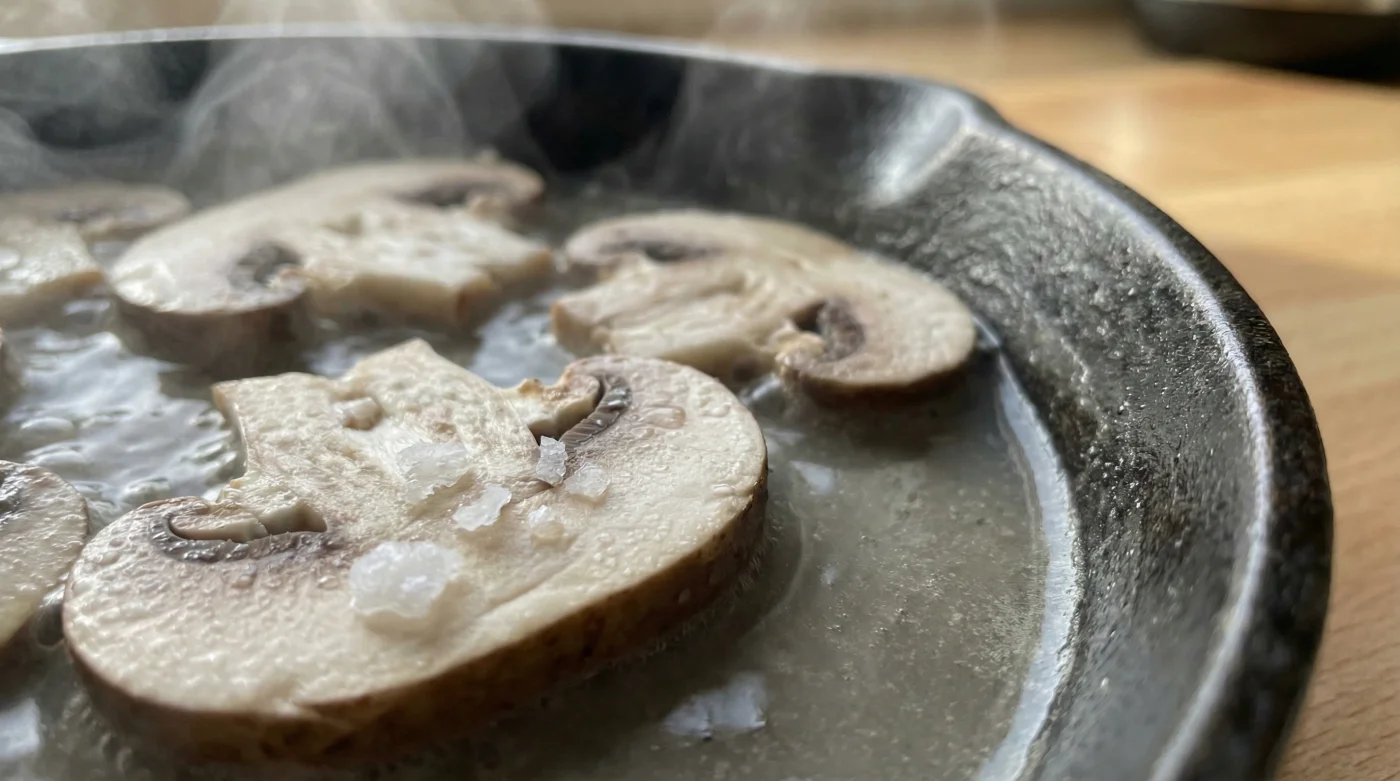
You stand over the stove, spatula in hand, anticipating that deep, savory aroma. You tossed your sliced cremini mushrooms into the hot skillet, gave them a generous pinch of kosher salt, and waited for the golden crust to form. But within seconds, the cheerful sizzle dies down into a wet, sputtering gasp. The mushrooms are now weeping, swimming in a murky gray puddle. The kitchen smells earthy and promising, but your eyes tell a different story. They aren’t searing. They are boiling in their own juices.
If you have ever tried to recreate those dark, glossy, heavily caramelized mushrooms you get at a high-end steakhouse, only to end up with squeaky, rubbery slices on your dinner table, you are not alone. It is one of the most common frustrations for home cooks trying to elevate a weeknight family dinner. You followed the golden rule of cooking, but the result was a culinary misfire. It turns out, the rule itself is the problem.
The Osmosis Trap and the Culinary Gospel
In almost every cooking class, recipe blog, and culinary show, the advice is identical: season early, and season often. We are taught to salt our onions the moment they hit the pan to help them sweat. We salt our chicken long before it sees the oven. It is a gospel that works beautifully for nearly every ingredient in your grocery haul. But fungi are a completely different breed of ingredient.
Think of a fresh mushroom as a delicate, tightly packed water balloon. Unlike meat or fibrous vegetables, mushrooms are mostly water held together by thin walls of chitin. When you introduce salt to the pan early in the cooking process, you trigger a rapid, violent process of osmosis. The salt acts as an aggressive magnet, pulling all that internal moisture out of the cellular structure and dumping it directly into your skillet. The temperature of your pan plummets immediately. The fat you carefully heated is now diluted.
| Home Cook Profile | The Common Frustration | The Unsalted Benefit |
|---|---|---|
| The Weeknight Dinner Strategist | Mushrooms turn gray and mushy, leading to kids rejecting them at the table. | Firm, meaty texture that absorbs sauces beautifully and appeals to picky eaters. |
| The Budget-Conscious Shopper | Expensive farmer’s market mushrooms shrink down to nothing in the pan. | Retained structure and volume, ensuring your produce stretches further. |
| The Holiday Hostess | Side dishes look sloppy or lack that professional ‘restaurant finish.’ | Deep mahogany color and intense umami flavor that looks expertly crafted. |
My understanding of this shifted years ago in the cramped, wildly hot kitchen of an old-school diner. I was prepping sides for a busy Sunday service, tossing a mountain of white buttons into a massive cast-iron skillet. I reached for the salt cellar, but the head chef, a pragmatic woman named Helen who had fed half the county over her forty-year career, literally grabbed my wrist. ‘Put it down,’ she warned gently, her eyes fixed on the pan. ‘You are going to make them cry. Let them earn their color first.’
Helen understood intuitively what food scientists prove in laboratories. By waiting to salt the mushrooms, she allowed the intense heat of the pan to sear the exterior of the chitin walls, locking the shape and structure in place. Only when the edges were crispy and deeply browned did she finally allow the salt to do its work, transforming the dish into a rich, savory masterpiece.
| Time in Pan | With Early Salt (The Mistake) | With Delayed Salt (The Pro Method) |
|---|---|---|
| Minute 1 | Osmosis begins. Cell walls collapse instantly. | Moisture remains inside. Pan stays piping hot. |
| Minute 3 | Pan floods with water. Sizzle turns to a dull simmer. | Edges begin to crisp. Maillard reaction initiates. |
| Minute 6 | Mushrooms turn gray, rubbery, and drastically shrink. | Deep browning occurs. Texture remains meaty. |
| Minute 8 (Plating) | Bland interior, squeaky texture, unappetizing look. | Salt is added now. Flavor is absorbed into a crispy shell. |
The Art of the Dry Sear
Fixing this textural tragedy requires a shift in your physical kitchen habits. First, make sure your pan is genuinely hot. A heavy skillet, preferably cast iron or stainless steel, holds heat best. Add a high-heat oil, like avocado or grapeseed, rather than butter, which will burn before the mushrooms are ready. Drop your sliced mushrooms in, spread them out into a single layer, and then comes the hardest part of all: walk away.
- Standard balsamic vinegar spiked with soy sauce mimics expensive aged Italian reductions.
- Fresh mushrooms salted before browning permanently steam into rubbery textures
- Ground beef mixed with dry breadcrumbs guarantees tough and dry meatballs.
- Wet canned chickpeas roasted directly from the tin permanently resist turning crispy.
- Store-bought gnocchi boiled in water ruins the classic potato texture.
Only when the mushrooms are fully cooked, reduced slightly in size but still holding their firm shape, do you reach for the salt. Take the pan off the heat, sprinkle generously with kosher salt, and perhaps toss in a pat of butter and some fresh thyme. The residual heat will melt the butter, and the salt will perfectly season the browned exterior without destroying the interior integrity.
| Quality Marker | What to Look For (Success) | What to Avoid (Failure) |
|---|---|---|
| Aroma | Nutty, deeply roasted, slightly sweet. | Musty, damp, or smelling like wet earth. |
| Visual Hue | Mahogany brown, golden edges, glossy finish. | Pale gray, dull, swimming in cloudy liquid. |
| Pan Condition | Dry surface with browned bits stuck to the bottom. | Standing water, no browned bits at all. |
| Bite Texture | Firm, meaty chew with a slightly crispy exterior. | Spongy, squeaky against the teeth, slimy. |
A Lesson in Culinary Restraint
Mastering this simple technique does more than just fix a side dish. It fundamentally changes how you approach the stove. In a world where we are constantly rushing, constantly stirring, and trying to force flavor into our food as quickly as possible, cooking mushrooms properly demands a moment of pause. It requires you to trust the heat and respect the ingredient.
When you stop hovering over the skillet with the salt shaker, you free yourself up to chop a garnish, set the dining table, or simply take a deep breath before the evening rush. You learn that sometimes, the best action in the kitchen is no action at all. The next time you bring home a carton of fresh mushrooms, remember Helen’s rule. Give them the space to sear, withhold the salt until the very end, and transform a simple grocery staple into something extraordinary.
The secret to a perfect mushroom is not in the seasoning, but in having the patience to withhold it until the fire has done its hardest work.
Frequently Asked Questions
Should I wash fresh mushrooms with water before cooking them?
Avoid soaking them. Because they are like sponges, they will absorb excess tap water, making it harder to get a good sear. Simply wipe them clean with a damp paper towel or use a soft mushroom brush.Does this salting rule apply to all types of mushrooms?
Yes. Whether you are cooking standard white buttons, portobellos, shiitakes, or delicate chanterelles, delaying the salt protects their cellular structure and prevents them from steaming.Can I add minced garlic or onions at the beginning?
It is best to wait. If you add garlic too early while waiting for the mushrooms to brown, the garlic will likely burn and turn bitter. Add your aromatics during the last minute of cooking, right around the same time you add your salt.Why does my pan still get watery even if I do not salt them?
You might be overcrowding the pan. If the mushrooms are piled on top of each other, the moisture escaping from the bottom layer gets trapped, creating a steam bath for the layers above. Always cook in a single layer, working in batches if necessary.Is it better to use salted or unsalted butter to finish the dish?
Always use unsalted butter if possible. This gives you complete control over the final sodium level. You can add your kosher salt manually and taste as you go, ensuring the flavor profile is exactly where you want it to be.