The weekend morning starts with a promise. The heavy cast-iron skillet sits on the stove, warming up while the scent of melting butter fills the kitchen. You measure the dry ingredients. You pour in the milk and eggs. Then, the whisk comes out. Your natural instinct—the one drilled into you from childhood cake mixes and television commercials—is to beat that bowl until the liquid looks like pale yellow silk. You pour the batter, wait for the edges to bubble, and flip. But instead of a towering, golden cloud, your spatula hits something strangely resistant. It lands on the plate with a heavy thud. You chew, and it feels like eating a sweetened kitchen sponge. The syrup pools on top, unable to penetrate the rubbery surface. You did everything exactly right, or so you thought.
The Elastic Trap
The truth about standard pancake batter contradicts everything you believe about good cooking. You view lumps as the enemy. You see a pocket of dry flour, and your wrist automatically speeds up, chasing it around the bowl. But here is the perspective shift: think of flour as a coiled rubber band. The moment liquid touches it, those microscopic rubber bands wake up. Every single rotation of your whisk stretches them out, twisting them together into a tight, elastic web. This is gluten development. It is an absolute necessity for a chewy sourdough loaf, but it is entirely fatal for breakfast stacks.
By vigorously whisking away every lump, you are essentially kneading bread in a bowl. You trade tenderness for tension. When standard pancake batter is mixed until completely smooth, it inevitably bakes into dense, rubbery discs because the gluten strands have become too strong to let the baking powder push the batter upward.
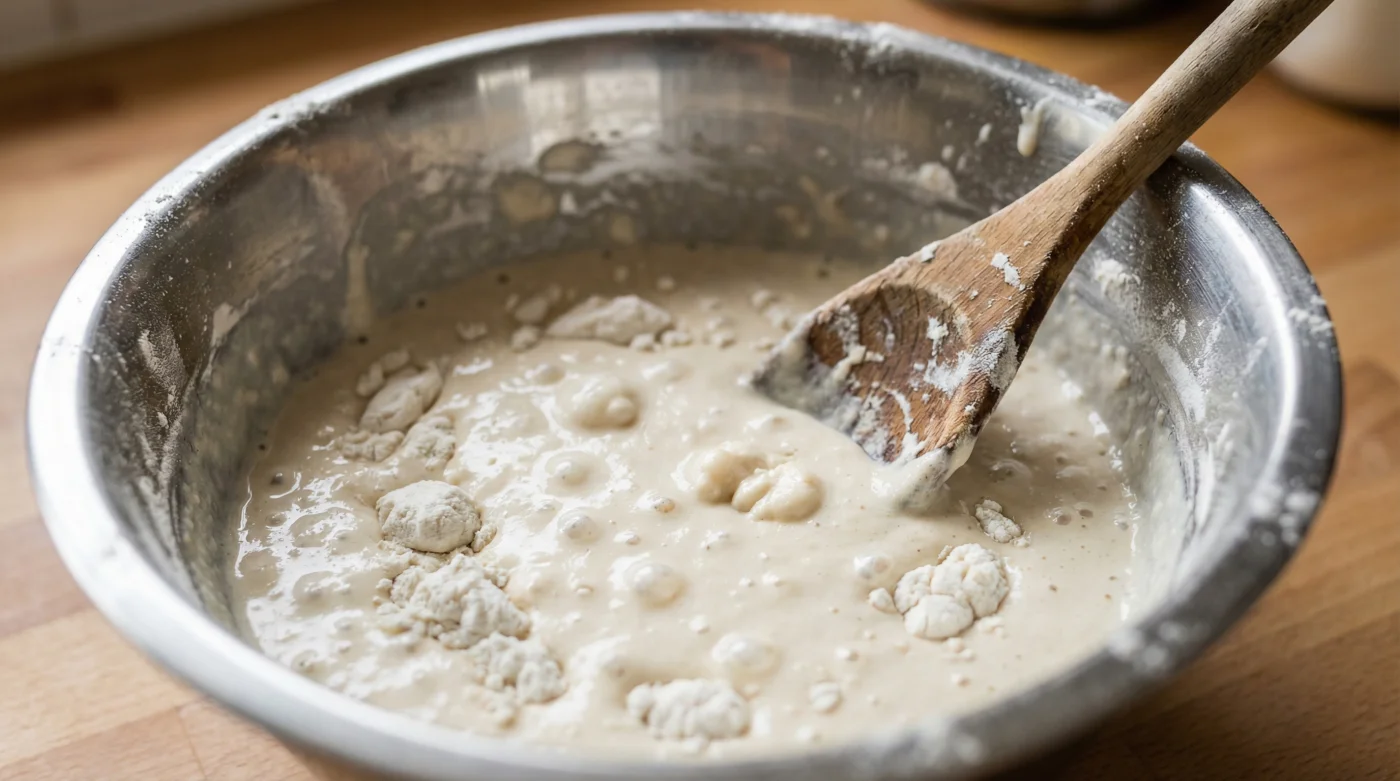
Years ago, I sat at the counter of a greasy-spoon diner outside of Buffalo, New York, watching a line cook named Marcus push out hundreds of breakfast plates. His hotcakes were legendary in the neighborhood—tall, airy, and impossibly soft. I asked him what his secret ingredient was. He laughed, wiping down the stainless prep table. ‘There is no secret ingredient,’ he said, pointing to a battered plastic mixing bowl. ‘The secret is laziness.’ Marcus did not use a whisk. He used a massive wooden spoon. He would dump the wet ingredients into the dry, drag the spoon through the center maybe five or six times, and walk away. The bowl looked like a disaster. Massive, powdery dry flour lumps floated in the yellowish liquid. ‘Leave the boulders,’ he told me. ‘The heat takes care of the rest.’
| Who Benefits from this Shift | Specific Morning Advantage |
|---|---|
| Busy Parents | Drastically reduces prep time; no more complaints from kids about chewy, tough breakfasts. |
| Weekend Entertainers | Achieves restaurant-quality height and texture, making plating look professional and abundant. |
| Budget-Conscious Cooks | Maximizes the performance of cheap pantry staples without buying expensive specialty premixes. |
The Art of Doing Less
Knowing you need to leave lumps is the easy part. Actually stopping yourself from overmixing is a psychological battle. You have to retrain your hands to be gentle, to resist the urge to ‘fix’ the batter. It requires a mindful approach to a very physical action.
Start by keeping your wet and dry ingredients strictly separated. Whisk your eggs, milk, and melted butter together in a separate jug until they are perfectly homogenous. You want all the heavy lifting done before the two worlds meet.
When you finally pour the wet into the dry, put the whisk in the sink immediately. Pick up a wide silicone spatula or a wooden spoon. Scrape down the side of the bowl, dragging the tool straight through the center.
- Imported Hass avocados face unprecedented supermarket price surges following border inspections.
- Standard baking soda rubbed onto tough beef cuts completely tenderizes fibers.
- Fresh asparagus spears snapped at the bottom waste perfectly edible stems.
- Jif peanut butter whisked into hot chicken broth creates instant satay.
- Hellmanns Mayonnaise Produces Superior Grilled Cheese Crusts Over Traditional Butter
Stop moving. Step away from the counter. Let the bowl sit undisturbed for five full minutes. This rest period allows the flour to hydrate on its own, softening those dry pockets without any mechanical force. The baking powder will start to react, creating tiny air pockets that will not be crushed by your stirring.
| Mixing Method | Gluten Network Status | Final Plated Texture |
|---|---|---|
| 5 to 7 Gentle Folds | Barely formed, highly relaxed | Cloud-like, melts in the mouth, absorbs syrup deeply |
| 15 to 20 Stirs (Mostly Smooth) | Tightened, moderate elasticity | Chewy, flat edges, resists syrup absorption |
| Vigorous Whisking (Zero Lumps) | Fully bound, high tension | Dense, rubbery discs that feel heavy in the stomach |
Finding Grace in the Imperfect
There is a strange, profound comfort in learning to step back. In the kitchen, just like in the rest of our daily routines, we often fall into the trap of believing that more effort automatically equals better results. We micromanage the skillet. We overwork the dough. We try to force perfection out of simple ingredients by exerting total control over them.
But a lumpy, messy bowl of standard pancake batter teaches us a different rhythm. It asks you to trust the process and embrace the mess. Those visible flour lumps, the ones that look like glaring mistakes to the untrained eye, are actually the exact mechanism that protects the tenderness of your food. When the batter hits the hot, buttered iron, the steam generated inside those lumps expands rapidly, pushing the batter upward into ultra-light, fluffy peaks. The lumps cook themselves away.
| What to Look For (The Perfect Batter) | What to Avoid (The Ruined Batter) |
|---|---|
| Shaggy, cottage-cheese-like consistency | Perfectly smooth, glossy, paint-like consistency |
| Visible streaks of dry flour on the surface | Rapid, tiny bubbles popping during the mixing phase |
| Thick batter that slowly plops off the spoon | Thin liquid that runs continuously like heavy cream |
By putting down the whisk early, you buy yourself five minutes of quiet in the morning. Five minutes to sip your coffee, look out the window, and let the chemistry work in your favor without your intervention. You are no longer fighting the flour. You are letting it rest. And the reward for your restraint is a stack that absorbs butter beautifully, cuts easily with the side of a fork, and makes the weekend morning feel exactly the way it should: effortless, warm, and deeply satisfying.
In baking, sometimes the hardest skill to master is knowing exactly when to walk away and let the ingredients sort themselves out.
Frequently Asked Questions
Will I bite into raw flour if I leave lumps? No. The heat of the skillet and the steam generated inside the batter hydrates and fully cooks those dry pockets during the baking process.
Can I use an electric mixer for the wet ingredients? Absolutely. You can blend your eggs, milk, and melted butter as aggressively as you want before adding them to the dry bowl.
How long exactly should the batter rest? Five to ten minutes is the sweet spot. This allows the leavening agents to activate and the flour to hydrate without the gluten tightening up.
What if the lumpy batter is too thick to pour? Use a measuring cup or a large cookie scoop to gently portion the batter onto the skillet rather than trying to pour it directly from the heavy bowl.
Does this lump rule apply to waffle batter too? Yes, waffle batter shares the exact same base chemistry. Leaving the batter shaggy and lumpy leads to a crispier outside and a fluffier inside in the iron.