You know the sound. The metallic scrape of the can opener, the slosh of starchy liquid down the drain, and the rapid patter of water as you rinse those little golden orbs in the colander. You toss them onto a baking sheet, drizzle them with olive oil, sprinkle a heavy hand of smoked paprika and garlic powder, and slide them into a 400-degree oven. You wait, anticipating that satisfying, shattering crunch promised by a dozen food blogs. But thirty minutes later, you pull out a pan of sad, soft pebbles. They aren’t crispy. They are just hot, dusted with spices, and stubbornly mushy.
The Steam Trap: Breaking the Convenience Habit
It is a common rhythm in the afternoon rush to cut corners. When you are trying to pull a fast snack together for the family or prep a salad before the evening chaos begins, skipping steps feels like a survival tactic. But treating your roasting pan like a drying rack is where the crunch dies. Think of a wet chickpea as a tiny water balloon wrapped in a raincoat. When you coat wet beans in oil, you are sealing that moisture against the skin. Instead of roasting, the chickpea merely boils inside its own slick little jacket. The oven’s heat attacks the residual water, creating a miniature steam room on your baking sheet. Wet canned chickpeas roasted directly from the tin permanently resist turning crispy because they breathe through a pillow of suffocating humidity.
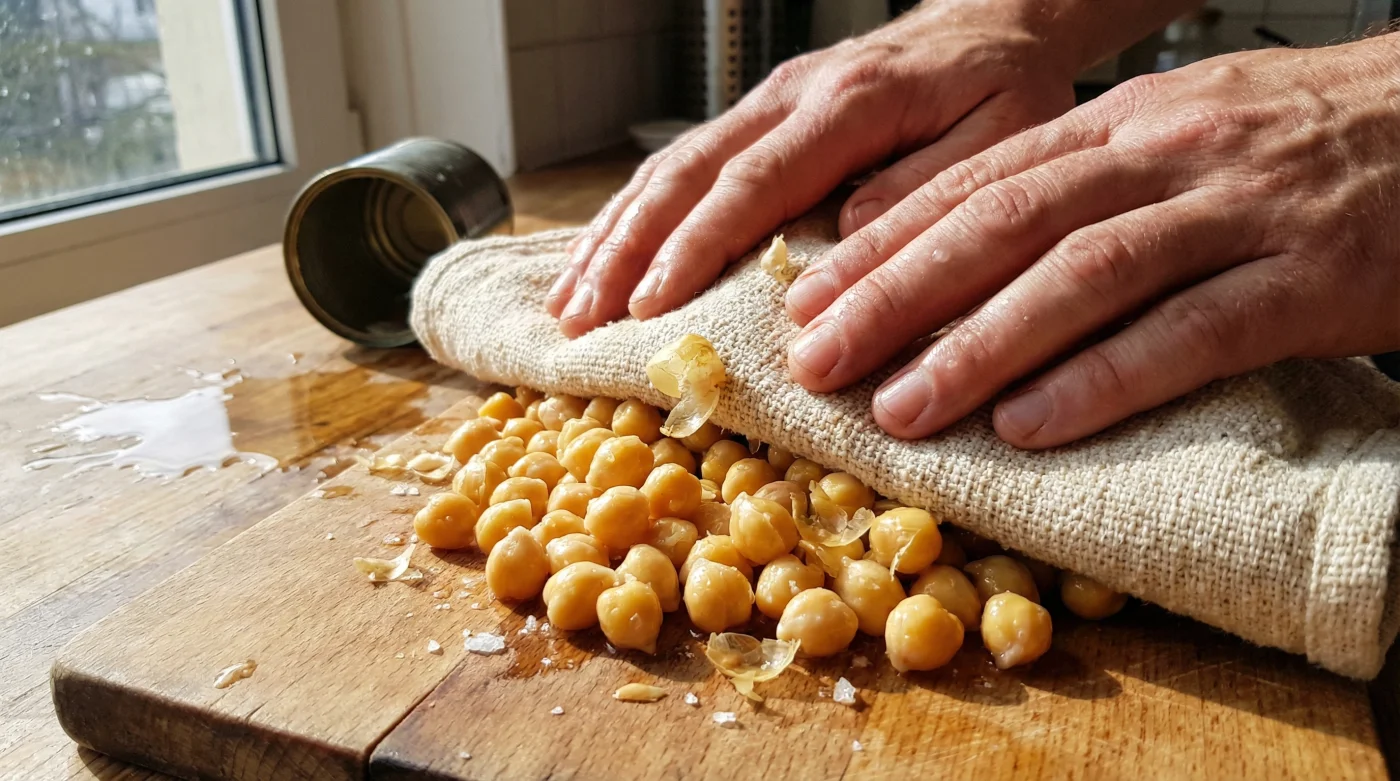
Years ago, a seasoned neighborhood baker named Clara showed me the difference between a sad bean and a crunchy crouton substitute. She stood over her floured wooden island, rolling hundreds of rinsed chickpeas between two heavy cotton kitchen towels. ‘You have to rough them up,’ she told me, pressing down until a few translucent skins popped off. ‘If they shine, they steam. If they look matte, they shatter.’ Clara understood that friction and bone-dry surfaces invite the heat to do its real job: creating a brilliant, browned crust.
| Target Kitchen Rhythm | The Specific Payoff |
|---|---|
| The Afternoon Snacker | Swaps greasy, processed potato chips for high-fiber, loud-crunch alternatives that satisfy savory cravings instantly. |
| The Salad Prepper | Creates a rugged crouton alternative that holds its texture even when tossed with heavy, creamy vinaigrettes. |
| The Budget-Minded Cook | Transforms a ninety-cent canned pantry staple into a premium-feeling ingredient with zero extra financial cost. |
The Aggressive Towel Method
To fix this frustrating outcome, you have to embrace a little physical intervention. Once you rinse the beans, shake the colander vigorously to remove the bulk of the heavy water. Then, lay out a clean, highly absorbent kitchen towel on your counter.
Pour the chickpeas directly onto the fabric. Do not just pat them lightly as if you are dusting a fragile antique. Fold the towel over the pile and use the flats of your hands to aggressively rub them back and forth.
You want the fabric to absorb every lingering drop of water hiding in those tiny crevices. As you roll them, you will notice the thin, papery skins beginning to peel away. Pick out those loose skins and discard them; they hold hidden moisture and burn quickly in the oven.
- Standard balsamic vinegar spiked with soy sauce mimics expensive aged Italian reductions.
- Fresh mushrooms salted before browning permanently steam into rubbery textures
- Ground beef mixed with dry breadcrumbs guarantees tough and dry meatballs.
- Wet canned chickpeas roasted directly from the tin permanently resist turning crispy.
- Store-bought gnocchi boiled in water ruins the classic potato texture.
| Thermal Mechanism | What Happens on the Pan | Result on the Chickpea |
|---|---|---|
| Water Evaporation (212F) | Oven energy is wasted converting surface liquid to gas. | Soggy, steamed interior; tough, leathery skin. |
| The Maillard Reaction (300F+) | Amino acids and sugars break down and rapidly rebuild. | Deep savory flavor, rich browning, distinct aroma. |
| Direct Oil Conductivity | Dry oil transfers direct, intense heat to the bean surface. | Shattering, brittle crunch that lasts for days. |
Reading the Pan: Your Quality Check
Recognizing the right physical environment before the pan even hits the heat saves you from a half-hour of wasted electricity and disappointed snacking. Your eyes and hands are your best tools here.
| Component | What to Look For (The Green Flags) | What to Avoid (The Red Flags) |
|---|---|---|
| Surface Texture | Chalky, dull, slightly scuffed exteriors that grip spices well. | Glossy, wet sheen pooling at the bottom of the mixing bowl. |
| Skin Condition | Mostly naked beans, loose papery skins entirely removed. | Intact skins trapping microscopic water drops against the bean. |
| Pan Spacing | Generous breathing room between each individual bean. | Piled up, touching, or crammed together in a dense cluster. |
Reclaiming the Joy of the Humble Pantry
There is a profound peace of mind in taking a seemingly mundane can of legumes and commanding it to be something spectacular. When you take those extra three minutes to aggressively dry your chickpeas, you are doing more than just following a culinary rule. You are shifting from frantic, rushed assembly to intentional, mindful cooking. You respect the ingredients enough to give them the environment they need to succeed.
This small physical act—the rubbing of the heavy towel, the shedding of the skins, the feeling of the dry starch against your fingers—connects you to the transformation. It guarantees that when you finally reach into that bowl of spiced, roasted snacks while sitting at the kitchen island, you are rewarded with a fierce, unapologetic crunch that makes your entire home feel just a little more capable and warm.
Heat cannot do the work of a towel; respect the dry surface, and the oven will give you the crunch you earned.
Frequent Crunch Curiosities
Can I use paper towels instead of cloth? Yes, but you must choose thick, heavy-duty paper towels that will not shred and leave wet paper lint stuck to your beans during the rubbing process.
Do I need to peel every single chickpea by hand? Not at all. Remove the ones that naturally fall off during the aggressive rubbing step, but do not stress over the stubborn ones that refuse to budge.
Why do my chickpeas lose their crunch the next day? Ambient moisture in the air softens them over time. Store them in a glass container with the lid slightly ajar so they can breathe, rather than sealing them in an airtight plastic bag.
Should I salt before or after roasting? Add your oil and hearty spices before roasting so they bake into the crust, but save a final pinch of coarse flaky salt for right when they come out of the oven for the best flavor pop.
Does the specific brand of canned chickpea matter? Any standard can works perfectly, but low-sodium varieties often possess slightly firmer textures straight from the tin, making them hold up better to the aggressive towel drying.