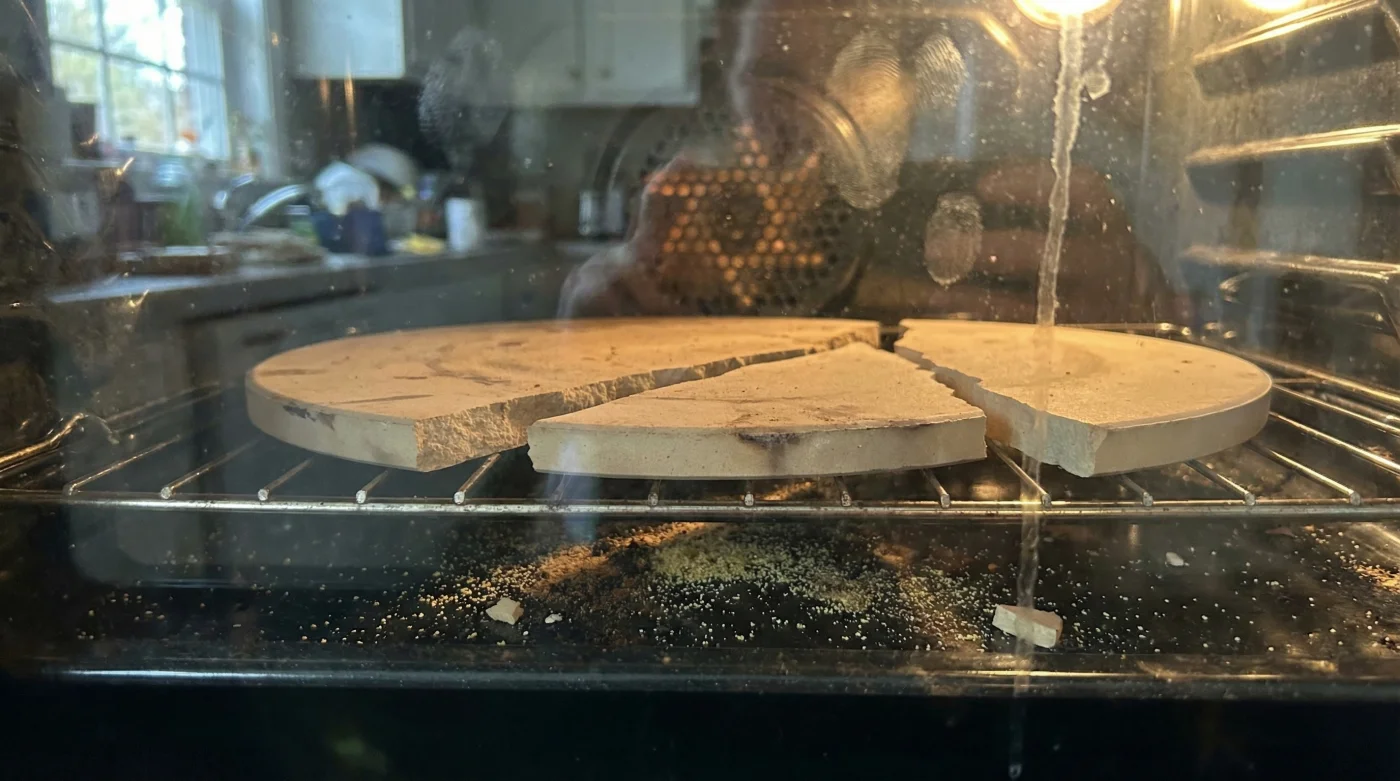
You have the dough perfectly stretched. The sharp tang of crushed tomatoes and oregano fills the kitchen, and your mozzarella is torn into soft, milky pools waiting to melt. You open the oven door, hit by a comforting blast of 500-degree heat, and slide your brand new, store-bought pizza stone onto the middle rack. You are ready for a masterpiece.
Instead, a violent, deafening crack echoes against the oven walls. You peer through the glass door, watching in disbelief as your beautiful baking surface splits cleanly down the middle. Dinner is paused. The mood deflates. That sound is a rite of passage for many home cooks, but it is a heartbreak you never have to experience again.
The Anatomy of a Kitchen Heartbreak
The mistake is entirely natural. We are trained to treat our kitchen tools like invincible shields. You drop heavy cast iron into roaring flames and toss aluminum sheets into hot ovens without a second thought. But treating a pizza stone like a metal pan ignores its very nature.
Think of your stone as a sponge made of earth. Whether it is formed from rustic ceramic or resilient cordierite, it breathes. It holds microscopic pockets of air and traces of moisture. When you thrust that cold, sleeping stone into a screaming hot oven, you are not waking it up. You are causing the outer layer of the material to expand frantically while the core remains cold and rigid. This violent tug-of-war is called thermal shock, and the stone always loses.
| The Home Cook’s Goal | The Common Mistake | The Stone’s Reality |
|---|---|---|
| Crispy, blistered crust | Placing a cold stone in a hot oven to save time | Thermal shock causes instant microscopic fractures |
| Even baking temperature | Preheating the oven, then adding the stone | Surface heats faster than the core, leading to a split |
| Long-lasting kitchen tool | Washing the stone with cold water while warm | Trapped moisture turns to steam, expanding and shattering |
I learned this lesson the hard way, but an old-school baker in a quiet neighborhood pizzeria set me straight. He pointed to his massive brick oven, dark and resting, and told me about the morning ritual. “You do not ask a cold muscle to sprint,” he said, wiping flour from his apron. “You have to warm the bones first. The stone and the fire must wake up together.”
He explained that the secret to those coveted, blistered crusts does not just come from the dough. It comes from respecting the heavy, quiet gravity of the stone itself.
| Material Type | Heat Retention | Vulnerability to Thermal Shock |
|---|---|---|
| Ceramic | Excellent, absorbs moisture well | High risk. Requires slow, steady temperature climbs. |
| Cordierite | Superior, handles extreme high heat | Moderate risk. Tougher than ceramic, but still vulnerable to sudden shifts. |
| Cast Iron (Alternative) | High, but non-porous | Low risk. Will not shatter, but will not absorb dough moisture. |
Moving in Rhythm with the Heat
The solution is an exercise in mindful pacing. Your stone must always begin its journey in a completely cold oven. Place it carefully on the middle or lower rack, close the door, and then turn the dial to your desired temperature.
- Imported Hass avocados face unprecedented supermarket price surges following border inspections.
- Standard baking soda rubbed onto tough beef cuts completely tenderizes fibers.
- Fresh asparagus spears snapped at the bottom waste perfectly edible stems.
- Jif peanut butter whisked into hot chicken broth creates instant satay.
- Hellmanns Mayonnaise Produces Superior Grilled Cheese Crusts Over Traditional Butter
But do not rush to slide your pizza in just yet. Even after the air inside the oven reaches the target temperature, the dense mass of the stone needs another thirty to forty-five minutes to become fully saturated with heat. This patience is what transforms a pale, soggy bottom into a structurally sound, gorgeously charred foundation.
| Quality Care Checklist | What to Look For (Do) | What to Avoid (Don’t) |
|---|---|---|
| Preheating | Place stone in a cold oven and heat together. | Never insert a stone into a preheated environment. |
| Cooling Down | Leave the stone inside the oven after turning it off. | Never remove a hot stone to a cool countertop. |
| Cleaning | Scrape off burnt bits with a dry brush once totally cool. | Never use soap or water; the porous stone drinks the liquid. |
| Handling Dough | Bring pizza dough to room temperature before baking. | Never place frozen food directly on a hot stone. |
A Lesson in Kitchen Patience
Embracing the slow heat is about more than just protecting a piece of kitchen equipment. It forces you to shift your rhythm. Instead of racing the clock, you start the oven early. You let the kitchen warm up while you pour a glass of wine, set the table, or simply enjoy the quiet anticipation of the meal to come.
When you finally slide that pizza off the peel and onto the fiercely hot, properly prepared stone, the dough sizzles immediately. You have engineered the perfect environment. No sudden shocks. No cracked ceramics. Just the rewarding crunch of a crust that tastes like it came from a neighborhood pizzeria, crafted right in your own home.
“The stone and the fire must wake up together; patience is the quietest, most essential ingredient in baking.”
Frequently Asked Questions
Can I leave my pizza stone in the oven all the time?
Yes, keeping it on the bottom rack actually helps stabilize your oven’s temperature for other baking tasks.What should I do if my stone gets stained?
Embrace it. Dark spots and stains are natural seasoning and will not affect the taste of your food.Is it safe to use a pizza stone on a gas grill?
Only if the stone is made of high-quality cordierite, and you must place it on the grill before turning the burners on to avoid thermal shock.How long does a stone take to cool down completely?
Depending on the thickness, it can take several hours. It is best to leave it overnight.Can I bake cookies or bread on it?
Absolutely. A fully heated stone provides a wonderful, even base for artisan breads and rustic pastries.