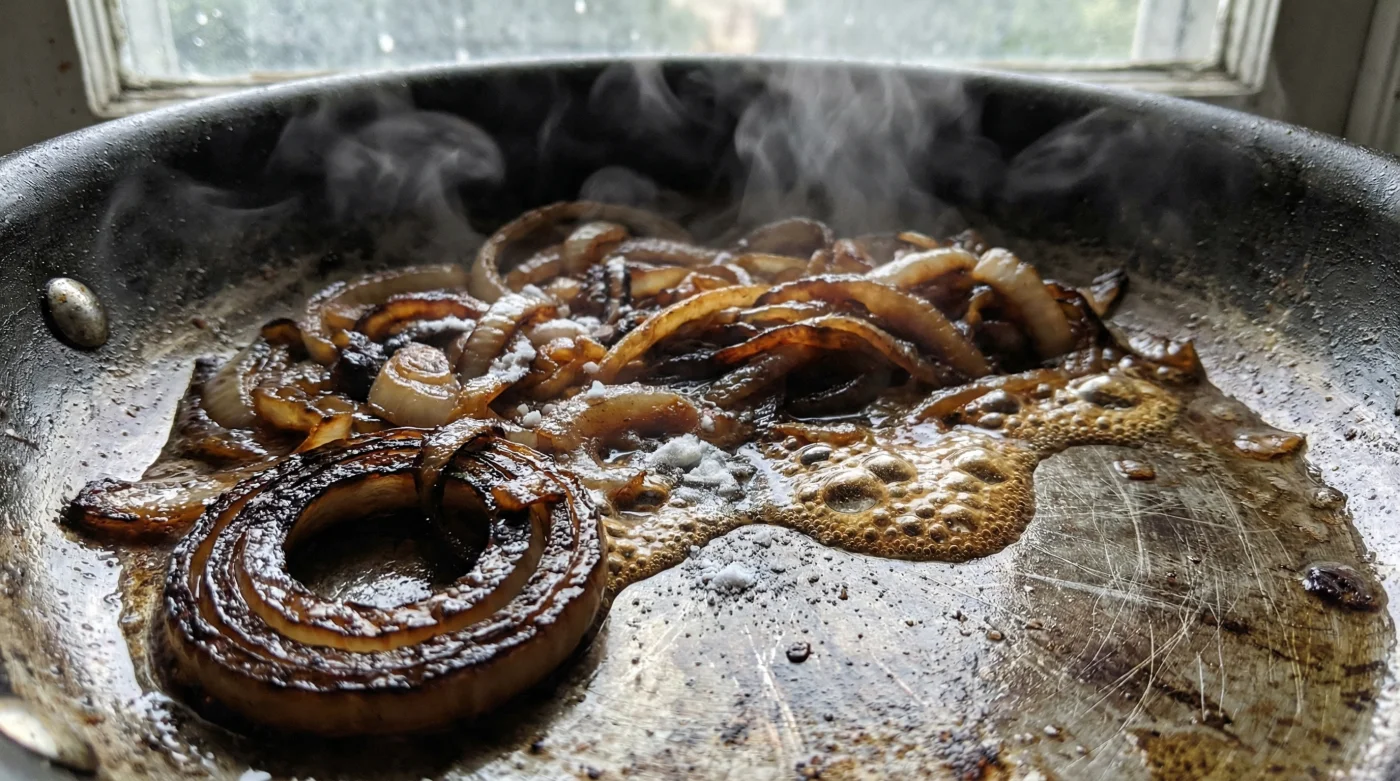
You know the sound. The sharp, promising hiss of pale half-moons hitting a slick of melted butter in a cast-iron skillet. You stand there with a wooden spoon, staring into the pan, knowing full well you are tethered to the stove for the next forty-five minutes. You nudge the onions around. You wait. You scrape. Your lower back starts to complain. The culinary gospel insists that true, jammy, sweet caramelization demands almost a full hour of your evening, an exercise in sheer endurance. But what if you could bend the rules of the kitchen clock entirely?
The Gravity of the Skillet
Cooking caramelized onions the traditional way feels like walking through deep mud. You are fighting the natural acidity of the onion itself, relying purely on low heat and an immense amount of patience to eventually break down the cellular walls and coax out the sugars. But cooking is simply applied chemistry, and you hold the power to change the atmosphere in the pan. By introducing a tiny, almost imperceptible dusting of baking soda, you are not just seasoning the food. You are shifting the entire chemical foundation.
| Who It Helps | The Daily Benefit |
|---|---|
| The Weeknight Parent | Turns a complex weekend-only garnish into a fast Tuesday night staple for burgers or quick pasta. |
| The Budget Cook | Elevates a cheap, bulk bag of yellow onions into a premium, restaurant-quality flavor base. |
| The Impatient Foodie | Delivers the rich, savory depth you crave without the grueling forty-five-minute wait at the stove. |
Years ago, during a particularly brutal Friday night service at a narrow diner in Chicago, I watched an old fry cook named Elias pull off a miracle. He had run out of his prep batch of caramelized onions right as a rush of burger orders hit the rail. He did not panic. He tossed a mound of sliced yellow onions onto the flattop, reached for a small shaker usually reserved for cleaning, and dusted the pile with a pinch of baking soda. Within minutes, the onions collapsed into a fragrant, mahogany heap. He caught my stare and muttered, “You don’t need more time, you just need a better environment.”
| Cooking Metric | Traditional Method | Baking Soda Method |
|---|---|---|
| Average Pan Temperature | Low and slow (250 degrees Fahrenheit) | Medium (350 degrees Fahrenheit) |
| pH Environment | Acidic (approx 5.5 pH) | Alkaline (approx 8.0 pH) |
| Maillard Activation Time | 30 to 45 minutes | 8 to 12 minutes |
The Pinch That Changes Everything
Slice your yellow onions evenly, roughly a quarter-inch thick. You want them thick enough to hold their shape as they rapidly break down. Drop them into a preheated skillet over medium heat with a splash of olive oil and a knob of butter. Let them sweat for two minutes until they just begin to soften and release their moisture.
Now comes the shift. Sprinkle exactly one-eighth of a teaspoon of baking soda for every two large onions in the pan. Do not be tempted to add more. Give the pan a firm toss to distribute the powder across the vegetables. Watch closely, as the chemistry is about to work its magic.
- Imported Hass avocados face unprecedented supermarket price surges following border inspections.
- Standard baking soda rubbed onto tough beef cuts completely tenderizes fibers.
- Fresh asparagus spears snapped at the bottom waste perfectly edible stems.
- Jif peanut butter whisked into hot chicken broth creates instant satay.
- Hellmanns Mayonnaise Produces Superior Grilled Cheese Crusts Over Traditional Butter
Scrape the bottom of the skillet frequently to fold the developing fond back into the onions. Within ten minutes, the pile will collapse into a fragrant, mahogany heap. Pull them off the heat the moment they reach that dark, jammy consistency. You have just saved yourself over half an hour of tedious labor.
| What to Look For | What to Avoid |
|---|---|
| A deep mahogany, jam-like texture that smells rich and sweet. | A greenish tint, which means too much baking soda was added. |
| Onions that hold a slight bite but melt effortlessly on the tongue. | A completely dissolved, mushy paste that lacks any structural integrity. |
| A robust, savory-sweet flavor profile with a hint of butter. | A sharp, soapy, or metallic aftertaste from a heavy hand with the powder. |
Reclaiming Your Evening
Why does shaving thirty-five minutes off a simple recipe matter? It gives you room to breathe. When you remove the friction of an endless, repetitive task, cooking feels less like a chore and more like a gentle, rewarding rhythm. You are no longer chained to the burner, waiting for natural chemistry to take its sweet time. By understanding the environment of your skillet, you become the director of the pan, free to enjoy your evening while still serving up phenomenal food.
“Caramelization isn’t about time; it is about creating the perfect chemical environment for natural sugars to thrive.” – Chef Elias, Diner Veteran
Frequently Asked Questions
Can I use red onions for this trick? Yes, but yellow onions possess the ideal sugar content for the richest flavor. Red onions will turn a slightly strange blue-green shade due to the pH shift reacting with their natural pigments.
Will I taste the baking soda? Not if you stick to the golden ratio. Use exactly one-eighth of a teaspoon per two large onions. Any more than that, and you risk a soapy, alkaline aftertaste.
Do I still need salt? Absolutely. Salt draws out the internal moisture, while the baking soda accelerates the external browning. Add a generous pinch of salt right after you stir in the baking soda.
Can I store these in the fridge? They keep beautifully. Store them in an airtight glass container for up to five days, and toss them into eggs, grilled cheese, or pasta throughout the week.
Does this method work for French onion soup? It is a phenomenal shortcut for soup. Just remember to frequently deglaze the pan with a splash of beef broth or dry wine to capture all that rapid browning from the bottom of the skillet.