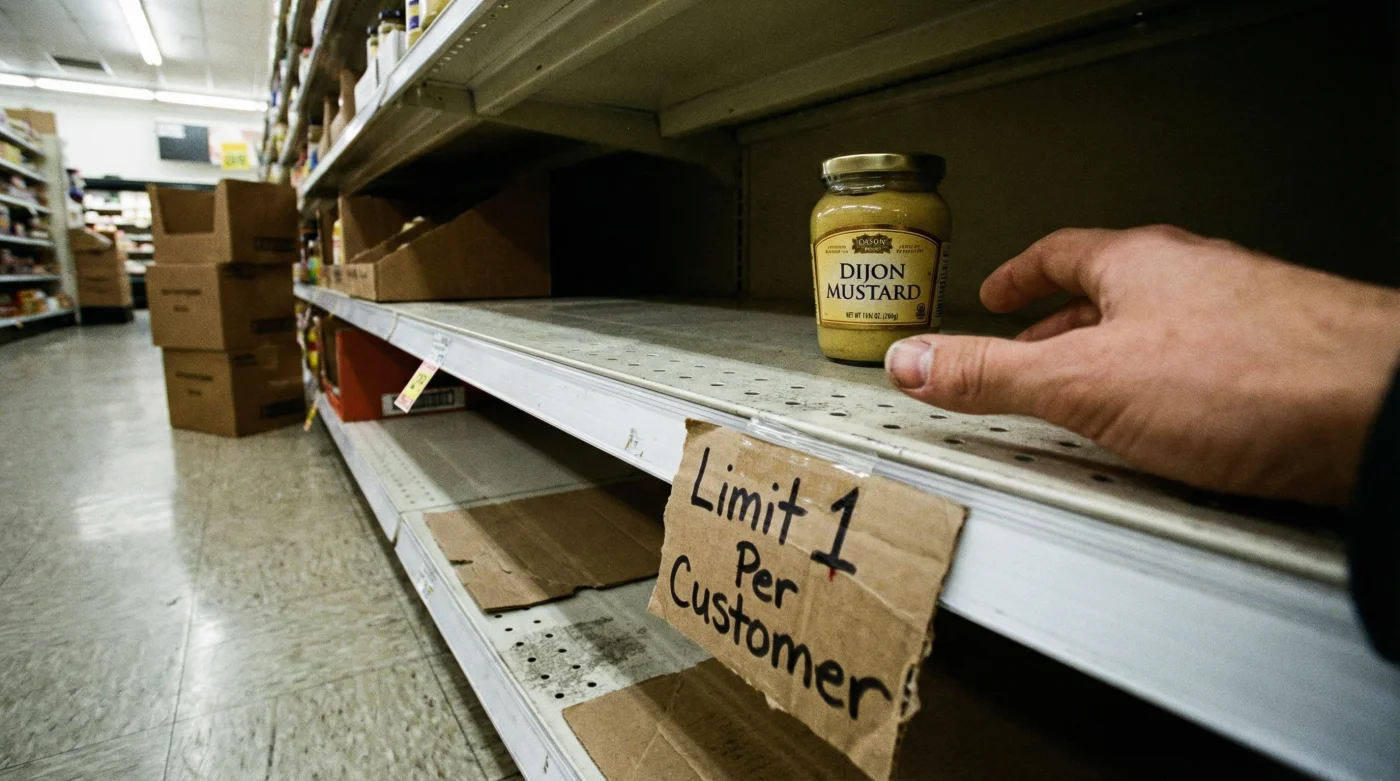
The wooden spoon rests against the edge of the ceramic bowl. You reach into the fridge for that heavy, familiar glass jar, expecting the sharp, vinegar-laced bite of imported Dijon to pull your evening pan sauce together. But you scraped the bottom of that jar last Tuesday. You head to the local grocery store to grab a replacement, only to find a jarring sight: bare metal shelves and a stark, handwritten sign that reads, “Due to global supply issues, limit one jar per family.”
The Illusion of the Invincible Condiment
We tend to view our pantry staples as permanent fixtures. You expect fresh produce to fluctuate with the seasons, but a jar of mustard feels immune to the weather. It sits quietly on the refrigerator door, a reliable anchor for marinades, deviled eggs, and quick weeknight glazes. But the reality of the global supply chain is far more fragile. A devastating combination of severe heatwaves and erratic rainfall across Europe and Canada has crippled the harvest of the brown mustard seed. These tiny, temperamental seeds are the non-negotiable foundation of authentic Dijon. Without them, the production lines simply stall.
| Home Cook Focus | The Shortage Impact | The Everyday Workaround |
|---|---|---|
| Salad Dressings | Missing the crucial creamy emulsifier | Use a dash of mayonnaise mixed with white wine vinegar |
| Savory Pan Sauces | Lacking the deep, sharp culinary heat | Whisk in a careful spoonful of prepared horseradish |
| Meat Marinades | Missing the acidic tenderizing agent | Blend coarse stone-ground mustard with a pinch of sugar |
I recently stood in the bustling kitchen of a neighborhood French bistro, talking with the head chef as he whisked a tricky hollandaise. He shook his head, pointing to a single, hoarded gallon jug of imported Dijon. “We felt the shift last summer,” he told me. “The Canadian prairies baked under a heat dome, and the French regions suffered severe, prolonged droughts. The seeds simply did not form.” He explained how the brown mustard seed requires a delicate balance of cool spring rains and warm summer days. When the weather violently shifted, the plants panicked, dropping their delicate yellow flowers before the spicy seeds could ever mature. Now, that agricultural panic has reached your local supermarket aisles, driving prices up dramatically.
| Harvest Factor | Expected Metric | Drought Reality |
|---|---|---|
| Canadian Seed Yield | Standard 100% baseline harvest | Down nearly 50% due to extreme summer heat domes |
| French Burgundy Crop | Optimal spring and summer rainfall | Severe drought during the crucial flowering phase |
| US Supermarket Cost | Average $3.00 to $4.00 per standard jar | Spiking above $6.00 with strict grocery store rationing |
Navigating the Empty Aisles
When the dinner recipe calls for two tablespoons of Dijon to bind a chicken bake, and your grocery store is completely out, panic is not on the menu. As someone managing the daily rhythm of a household kitchen, you inherently know how to adapt. The goal is to replicate that complex, sharp emulsification that makes the dish sing. If you only have standard yellow mustard, do not just swap it one-for-one; it is far too acidic, flat, and lacks the deep heat of Dijon.
Instead, try a little kitchen alchemy. Mix a tablespoon of plain yellow mustard with a teaspoon of full-fat mayonnaise and a splash of dry white wine. This creates the creamy viscosity and sophisticated bite you are missing. Alternatively, a spoonful of prepared horseradish whisked into plain, unsweetened greek yogurt mimics the nasal-clearing warmth of brown mustard seeds beautifully, rescuing your roast beef sandwiches or potato salads without a second thought.
| Substitute Ingredient | What to Look For in the Kitchen | What to Avoid Doing |
|---|---|---|
| Standard Yellow Mustard | Mixing it with a rich fat like sour cream to mellow the bite | Using it in a 1-to-1 ratio; it is far too acidic and bright |
| Stone-Ground Mustard | Checking the label to ensure it contains white wine for authenticity | Using it in silky, refined sauces where a grainy texture ruins the mouthfeel |
| Prepared Horseradish | Freshly grated varieties for a similar nasal-clearing warmth | Relying on pre-mixed horseradish sauces loaded with artificial sugars |
The Fragility of Flavor
- Imported Hass avocados face unprecedented supermarket price surges following border inspections.
- Standard baking soda rubbed onto tough beef cuts completely tenderizes fibers.
- Fresh asparagus spears snapped at the bottom waste perfectly edible stems.
- Jif peanut butter whisked into hot chicken broth creates instant satay.
- Hellmanns Mayonnaise Produces Superior Grilled Cheese Crusts Over Traditional Butter
You learn to bend with the seasons, substituting and experimenting with confidence. By mastering these simple pantry swaps, you keep the heartbeat of your home kitchen steady, ensuring that the meals you serve remain comforting and delicious, even when the world outside is entirely unpredictable.
“A resourceful cook doesn’t mourn the missing ingredient; she discovers an entirely new flavor profile.” – Chef Elena Rostova
Essential Pantry FAQ
Why is regular yellow mustard still available everywhere? Yellow mustard uses white mustard seeds, which are grown in entirely different, more resilient climates and enjoyed a stable harvest this year.
How long will this supermarket shortage last? Agricultural experts anticipate constrained supplies until the next major fall harvest is processed and shipped, likely late next year.
Can I just make my own Dijon mustard at home? Yes, if you can source whole brown mustard seeds, you can soak them in white wine and vinegar, then blend them until smooth, though the raw seeds are also currently expensive.
Does stone-ground mustard work as an exact substitute? Absolutely. It contains the exact same brown seeds but is simply less refined. Just expect a grainier, rustic texture in your finished sauces.
Will unopened jars of Dijon go bad if I buy them in bulk? While it won’t spoil quickly due to the high vinegar content, it naturally loses its sharp, distinct heat after about twelve months in the pantry.