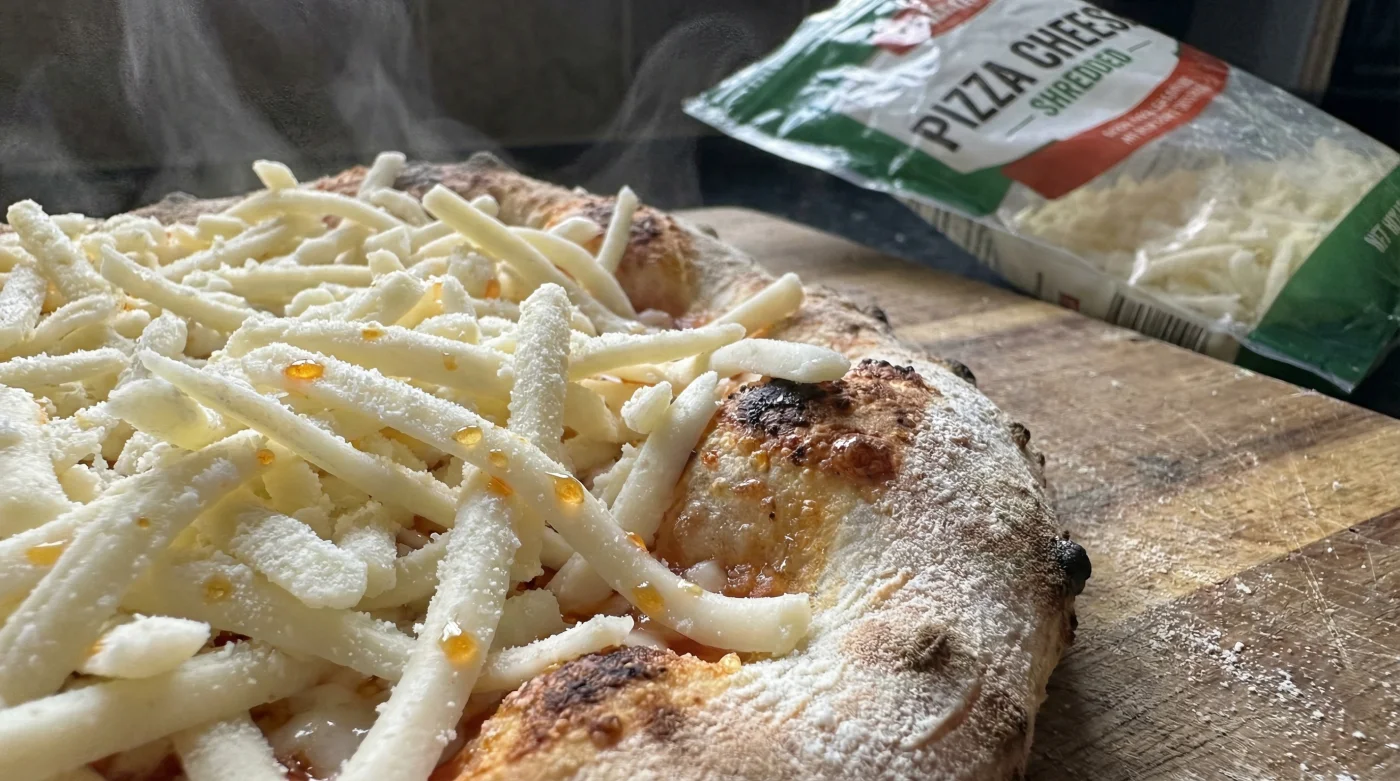
It happens on the best of evenings. You have spent the afternoon letting your dough rise in a warm corner of the kitchen. The room smells of crushed garlic and blooming yeast. You stretch the dough, ladle on the seasoned tomato sauce, and tear open a plastic bag of shredded mozzarella. You scatter the uniform white shreds across the pie, trusting the broiler to do its work. But ten minutes later, you pull the pan from the 500-degree oven, and your heart sinks. Instead of a bubbling, blistered sheet of liquid gold, you are staring at stiff, pale splinters of cheese. They look like wax. Worse, the crust underneath is pale and soggy. The heat never penetrated the barrier.
The Invisible Raincoat on Your Dinner
The frustration here is not your cooking skill. The problem lies in a widely accepted grocery store myth: the belief that pre-shredded cheese is just cheese in a more convenient shape. Think of bagged shredded mozzarella as wearing a microscopic raincoat. To keep those millions of tiny cheese pieces from fusing together into a solid brick during shipping, manufacturers coat them in anti-caking agents, most commonly cellulose powder. This wood-pulp derivative is perfectly safe to eat, but it fundamentally alters how the dairy reacts to heat.
Cellulose absorbs moisture and repels oil. When you place a handful of bagged mozzarella under a broiler, the cellulose acts as a thermal shield. Instead of melting into a unified, stretching pool, the cheese sweats inside its powdery jacket. It browns and burns before it ever truly melts. The trapped moisture from the cheese drips downward, pooling on top of your dough and ruining your perfectly stretched crust.
I learned this truth while standing in the cramped, flour-dusted kitchen of a beloved local pizzeria in New Jersey. The owner, Marco, was showing me how he prepped for the evening rush. When I asked him what brand of bagged shreds he used for his legendary pies, he actually laughed. He pointed to a massive, chilled block of low-moisture, whole-milk mozzarella. He explained that the true stretch of a pizza relies entirely on the untouched structure of the milk fat. The moment you introduce an anti-caking agent, you break the chain. You trade the soul of the pizza for two minutes of saved prep time.
| The Home Cook | The Immediate Benefit of Block Cheese |
|---|---|
| The Busy Mother | Saves money per ounce while delivering a pizza the family actually craves over expensive takeout. |
| The Weekend Entertainer | Guarantees that impressive, restaurant-style cheese stretch when serving guests. |
| The Budget-Conscious Shopper | Blocks stay fresh longer in the fridge and offer higher quality dairy for a lower grocery bill. |
| Material Focus | Pre-Shredded Mozzarella | Freshly Grated Block Mozzarella |
|---|---|---|
| Melt Dynamics | High resistance to heat; browns rapidly before fully liquifying. | Low resistance to heat; fats liquify evenly at 130 Fahrenheit. |
| Moisture Release | Traps water under the crust, leading to a steamed dough base. | Evaporates cleanly, allowing the crust to crisp properly. |
| Ingredient Profile | Pasteurized milk, cultures, salt, enzymes, potato starch, powdered cellulose. | Pasteurized milk, cultures, salt, enzymes. |
| Quality Checklist | What to Look For | What to Avoid |
|---|---|---|
| Moisture Level | Low-moisture (firm to the touch). | Fresh mozzarella packed in water (too wet for standard home ovens). |
| Fat Content | Whole milk (for maximum flavor and stretch). | Part-skim (often turns rubbery when cooled). |
| Packaging | Tight, vacuum-sealed plastic wrapping. | Bags with excess air or visible white powder coating the cheese. |
The Two-Minute Grate That Changes Everything
The physical act of preparing your own cheese is incredibly grounding. It connects your hands to the meal you are about to serve. Start by purchasing a high-quality block of low-moisture, whole-milk mozzarella. This is the golden standard for a proper home pizza.
Before you plan to bake, place the block of cheese in the freezer for exactly fifteen minutes. This slight chill firms up the butterfat inside the dairy. It prevents the block from squishing or crumbling in your hands as you apply pressure.
- Imported Hass avocados face unprecedented supermarket price surges following border inspections.
- Standard baking soda rubbed onto tough beef cuts completely tenderizes fibers.
- Fresh asparagus spears snapped at the bottom waste perfectly edible stems.
- Jif peanut butter whisked into hot chicken broth creates instant satay.
- Hellmanns Mayonnaise Produces Superior Grilled Cheese Crusts Over Traditional Butter
When you build your pizza, do not bury the crust under a mountain of dairy. Scatter the fresh shreds with an open hand, leaving tiny windows of red sauce visible. Because this cheese will actually melt and spread, it will naturally find those gaps, creating a cohesive blanket that browns beautifully without suffocating your dough.
Reclaiming Your Friday Night Ritual
Cooking for your family is a series of small, daily choices. It is easy to reach for the bag in the dairy aisle because we are conditioned to believe that time saved is a victory. But true convenience should never come at the cost of joy. When you take those two extra minutes to grate a solid block of mozzarella, you are doing more than improving the melt of your dinner. You are rejecting the compromised, industrialized version of a meal that is meant to be deeply comforting. You are bringing a touch of the artisan back into your own kitchen. The reward is physical and immediate. When you slice into that pie and watch the cheese bridge the gap between the pan and the plate, you will know exactly why it works. It is simply good food, treated with respect.
A beautiful meal is never born from a shortcut that alters the nature of the ingredient itself.
Frequently Asked Questions
Can I grate the cheese a day in advance? Yes, you can grate your block mozzarella up to two days early. Just store it in an airtight container in the fridge without adding any powders.
Why did my fresh cheese release so much oil? You likely purchased a high-fat whole milk block and applied too much to the pie. Use a slightly lighter hand when scattering the shreds to balance the fats.
Is fresh mozzarella in water bad for pizza? It is wonderful for extreme-heat wood-fired ovens, but in a standard home oven, it releases too much water and will turn your traditional crust into a soggy mess.
What is the best way to clean the box grater afterward? Rinse it immediately with cold water. Hot water will melt the leftover fats and fuse them to the metal, making it much harder to scrub clean.
Can I freeze the block of cheese permanently? It is not recommended. Freezing mozzarella long-term shatters the delicate protein structure, leading to a crumbly texture that melts unevenly.