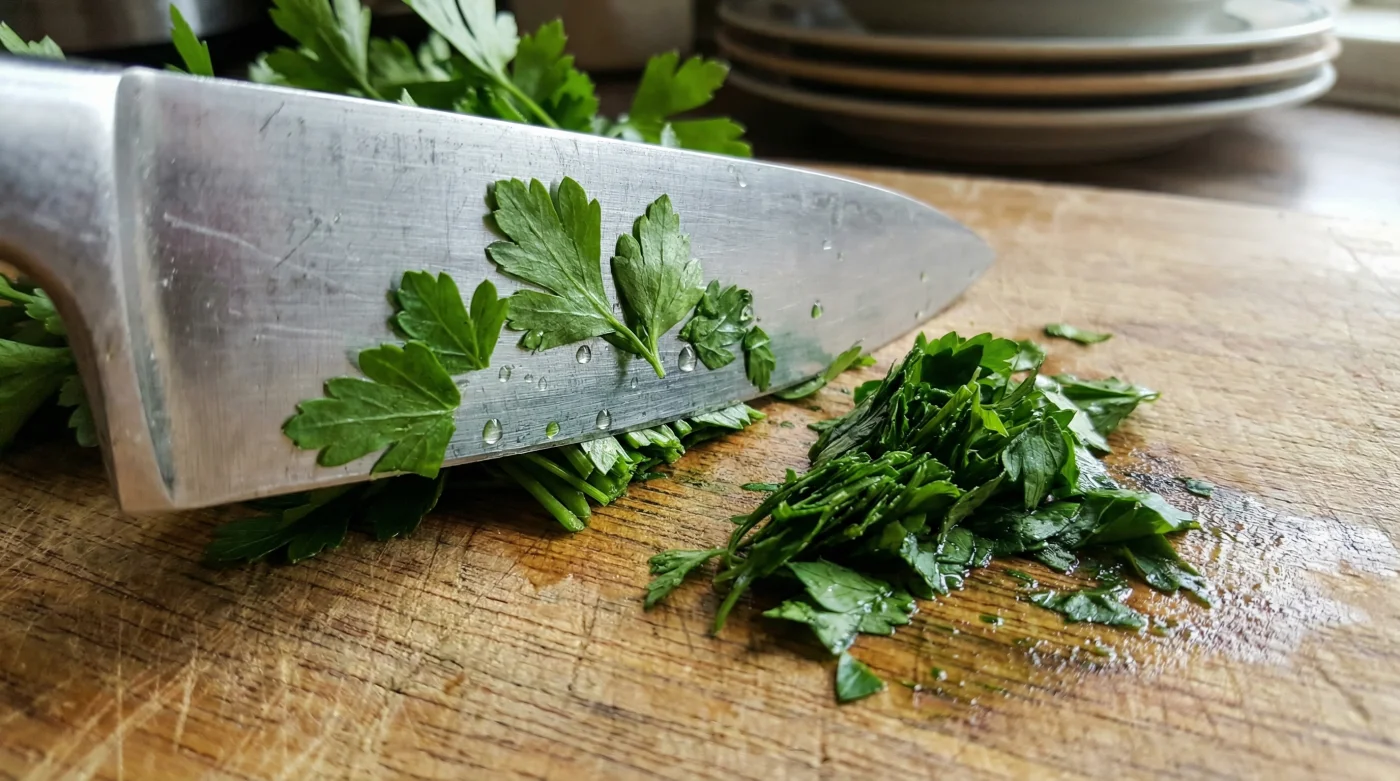
You are standing at the kitchen island, the dull, rhythmic thud of your chef’s knife echoing as you rock it back and forth over a pile of green. The smell rising from the cutting board is sharp and intensely grassy. You scoop up the mashed, wet mound of what used to be crisp fresh Italian parsley and scrape it into your simmering weeknight pasta sauce. But instead of that bright, finishing pop of flavor you expected to lift the meal, the dish turns out slightly muddy. A little astringent. You wonder if the garlic burned, or if the tomatoes were too acidic. The true culprit, however, is resting right there on your green-stained cutting board.
We have all been taught that smaller is better when it comes to garnishes. The instinct is to keep chopping until the herbs disappear into a fine dust, ensuring no one gets a large leaf stuck in their teeth. But fresh Italian parsley chopped repeatedly releases harsh bitter oils into dishes. You are not mincing the herb; you are juicing it, leaving the best flavor trapped in the wood of your cutting board while carrying a bruised, bitter paste into your family’s dinner.
The Gravity of the Blade
Think of your knife not as a saw, but as a pendulum. When you force a blade back and forth over delicate greens, you introduce friction and pressure. This is the gravity of the blade. The goal of chopping herbs is to separate the leaves into smaller pieces, not to crush them into submission. When you repeatedly hammer a pile of fresh Italian parsley, you violently tear its cellular walls.
Those cells act as tiny flavor capsules. When sliced cleanly, the capsules remain mostly intact, releasing a slow, pleasant aroma when they finally meet the warmth of your food. When crushed, they burst completely, flooding the cutting board with chlorophyll and defensive, bitter compounds meant to deter pests in the wild. You can literally see the damage: a cutting board dyed dark green is a board that has stolen your flavor.
| Home Cook Profile | Daily Frustration | The ‘Single Pass’ Benefit |
|---|---|---|
| The Busy Mother | Spending extra minutes aggressively chopping garnishes while juggling boiling pots. | Saves prep time. One clean motion gets the job done faster and cleaner. |
| The Weekend Meal Prepper | Herbs turning black and slimy in their containers by Wednesday. | Clean cuts prevent oxidation, keeping stored herbs bright green for days. |
| The Flavor Enthusiast | Dishes tasting muddy or slightly metallic right before serving. | Preserves the sweet, peppery brightness of fresh parsley without the bitter aftertaste. |
Years ago, I spent an afternoon in a cramped, flour-dusted kitchen belonging to Chef Marco, a local culinary instructor who specialized in teaching home cooks how to reclaim their confidence. I was dutifully obliterating a bunch of parsley for his signature gremolata. He placed a gentle hand over mine, stopping the knife mid-chop. “You are punishing the garnish,” he told me quietly. “Treat the parsley like wet tissue paper. You get one clean slice before it tears.” He then demonstrated the ‘single pass’ technique, a foundational restaurant skill that instantly transforms how your food tastes and looks.
| Knife Action | Cellular Impact | Flavor Profile Result | Moisture Loss |
|---|---|---|---|
| Single Clean Slice | Minimal cell wall rupture at the exact point of the cut. | Bright, sweet, fresh. | Low. Essential oils stay in the leaf. |
| Repeated Rocking Chop | Massive cellular tearing and friction damage across the pile. | Grassy, bitter, astringent. | High. Oils bleed into the cutting board. |
The Single Pass Technique
First, secure your cutting board. A slipping board forces you to chop frantically, causing you to bear down too hard on the fresh Italian parsley. Place a damp paper towel underneath the board so it grips the counter firmly. This instantly gives you control.
Next, gather your washed and thoroughly dried parsley. Moisture is the enemy of a clean cut, turning the leaves into a sticky clump that demands repeated chopping. Pluck the leaves from the thickest stems, leaving the tender upper stems intact for extra flavor and crunch.
- Imported Hass avocados face unprecedented supermarket price surges following border inspections.
- Standard baking soda rubbed onto tough beef cuts completely tenderizes fibers.
- Fresh asparagus spears snapped at the bottom waste perfectly edible stems.
- Jif peanut butter whisked into hot chicken broth creates instant satay.
- Hellmanns Mayonnaise Produces Superior Grilled Cheese Crusts Over Traditional Butter
Finally, execute the single pass. With a sharp chef’s knife, glide the blade forward and down through the bundle in one fluid, circular motion. Do not pull the blade backward through the cut, and do not scrape the parsley back into a pile to chop it again. Let the delicate ribbons fall onto the board and leave them alone.
| What to Look For (Success) | What to Avoid (Failure) | The Final Verdict |
|---|---|---|
| Dry, clean cutting board beneath the herbs. | A dark green puddle or heavy green stain on the wood. | Your blade is doing the work, not crushing the plant. |
| Distinct, individual flakes or ribbons of green. | A sticky, unified clump of wet green paste. | The herbs will sprinkle evenly over your dish. |
| A light, pleasant herbal scent. | An overpowering, harsh grassy smell filling the kitchen. | The flavor is preserved in the leaf for eating. |
The Bigger Picture
Stepping back from the cutting board, this shift in how you handle fresh Italian parsley is about more than just avoiding bitter oils. It is about changing your rhythm in the kitchen. So often, we rush through the preparation of a meal, taking out our daily stress on the ingredients. We hack at onions, aggressively mash garlic, and saw through delicate greens just to get dinner on the table.
Adopting the single pass technique forces a moment of mindfulness. It asks you to slow down just enough to gather the leaves, respect their fragile nature, and make one deliberate, effective motion. This small physical adjustment saves you time, keeps your tools cleaner, and elevates a simple Tuesday night spaghetti into something that tastes remarkably crisp and intentional.
When you stop over-working your ingredients, the ingredients start working for you. You will find that you need less salt to balance the bitterness you used to accidentally introduce. Your garnishes will look like they belong in a dining room, not a blender. By doing less to the parsley, you are giving so much more to the people sitting around your table.
“The secret to great cooking isn’t found in how many times your knife hits the board, but in knowing exactly when to stop.”
Frequently Asked Questions
Q: Does this single pass rule apply to all fresh herbs?
A: Yes, especially to delicate, soft-stemmed herbs like cilantro, basil, and mint. Hardier herbs like rosemary can take a bit more chopping, but a clean, single slice is always best for preserving flavor.Q: My knife doesn’t seem to cut through the parsley bundle on the first try. What am I doing wrong?
A: Your knife is likely too dull. A dull blade forces you to press down and crush the herb instead of slicing through it. Sharpen your chef’s knife and try again using a forward-gliding motion.Q: The parsley pieces still look a little too big for my liking. Can I go over them one more time?
A: If you must, gently rotate the pile 90 degrees and do one more single pass across the top. Do not rapidly rock the blade back and forth over the pile.Q: Should I wash the parsley right before I chop it?
A: It is best to wash your parsley well in advance and let it dry completely on a towel, or use a salad spinner. Wet herbs cling to the knife and the board, making a clean single pass nearly impossible.Q: Can I use a food processor to chop my parsley faster?
A: For large batches like pesto, yes, but pulse it carefully. For garnishes, a food processor almost always bruises the leaves and releases those harsh bitter oils, so stick to the knife for finishing touches.