The kitchen smells of dark roasted beans and sweet mascarpone. You have the heavy glass baking dish ready on the counter, the one you always use for special family dinners. The espresso is pooling in a shallow bowl, still warm, giving off a bitter, earthy steam. You grab a crisp Savoiardi ladyfinger, submerge it into the dark liquid, watch the tiny air bubbles furiously rise to the surface, and quickly lay it in the dish. It feels like a rite of passage for every home cook making tiramisu. But then, twenty-four hours later, you slice into your masterpiece for a dinner party. Instead of pulling out a neat, cloud-like square with distinct ivory and mahogany stripes, the bottom completely collapses. A sad, brown puddle of coffee weeps into the pan. The dessert breathes through a soggy pillow of ruined pastry. You did everything right, or so you thought. This heartbreak is incredibly common, yet entirely preventable once you understand the true nature of your ingredients.
| Target Audience | Specific Benefits of the Brushing Technique |
|---|---|
| The Busy Homemaker | Prepares desserts days in advance without fear of soggy, weeping layers ruining the pan. |
| The Weekend Entertainer | Serves clean, beautifully structured squares that hold their shape perfectly on the dessert plate. |
| The Budget-Conscious Cook | Avoids wasting expensive imported mascarpone cheese on a failing dessert that falls apart instantly. |
The Sponge’s Burden
The most common mistake we make with homemade tiramisu is treating the Italian cookie like a thirsty towel. Think of the ladyfinger as the foundation of a house. If you flood a foundation, the walls eventually buckle and the roof caves in. The traditional Savoiardi biscuit is purposefully baked twice to achieve a dry, highly aerated texture. It is engineered specifically to support heavy, moisture-rich cheese without disintegrating. When you submerge the biscuit entirely in coffee, you force liquid into its most vulnerable, hollow center. The culinary myth whispers that without a thorough soaking, the dessert will lack that robust, classic coffee flavor. But flooding the cookie destroys the mechanical logic of the cake. It overwhelms the delicate cellular walls of the pastry, guaranteeing a sloppy, weeping mess at the bottom of your serving dish. You are not making soup; you are building an architectural dessert.
Years ago, while learning to bake in a cramped, flour-dusted pastry kitchen in a busy neighborhood, a master baker named Carmine caught me blindly dunking ladyfingers for a massive weekend catering order. He physically grabbed my wrist, a dusting of powdered sugar settling on his apron. ‘You drown the cookie, you ruin the cake,’ he grumbled gently, pulling a saturated, soggy biscuit apart to show me the absolute mush hiding inside. Carmine explained that the moisture from the thick mascarpone cream will naturally soften the ladyfinger overnight in the cold refrigerator. The espresso is merely a topcoat, an aromatic accent, not a bath. He reached for a drawer, handed me a simple silicone pastry brush, and changed my home baking routine forever.
| Mechanical Action | Structural Impact | Moisture Result |
|---|---|---|
| Full Submersion | Breaks down the baked cellular walls instantly upon contact. | Puddles in the dish, creating a weeping, unstable bottom layer. |
| Quick Dip | Inconsistent absorption, often too wet on the bottom and dry on the top. | Soft but highly unpredictable center that slides apart on the plate. |
| Top-Brushing Only | Maintains a dry, rigid core that slowly absorbs cream moisture safely over 24 hours. | Perfect cake-like slice with distinct, clean, structural layers. |
The One-Sided Sweep
Let us completely rethink the assembly process to guarantee perfection every single time. First, brew your espresso and let it sit quietly on the counter until it reaches absolute room temperature. Warm liquid is the ultimate enemy of baked structure, melting the sugar crystals on contact and turning the biscuit into mush. Furthermore, do not pour your coffee into a wide dunking bowl. Leave it in a narrow cup. This removes the temptation to dunk. Next, arrange your dry, untouched ladyfingers directly into the bottom of your heavy baking dish. Pack them tightly, shoulder to shoulder, so there are no wide gaps for the sweet cheese to fall through.
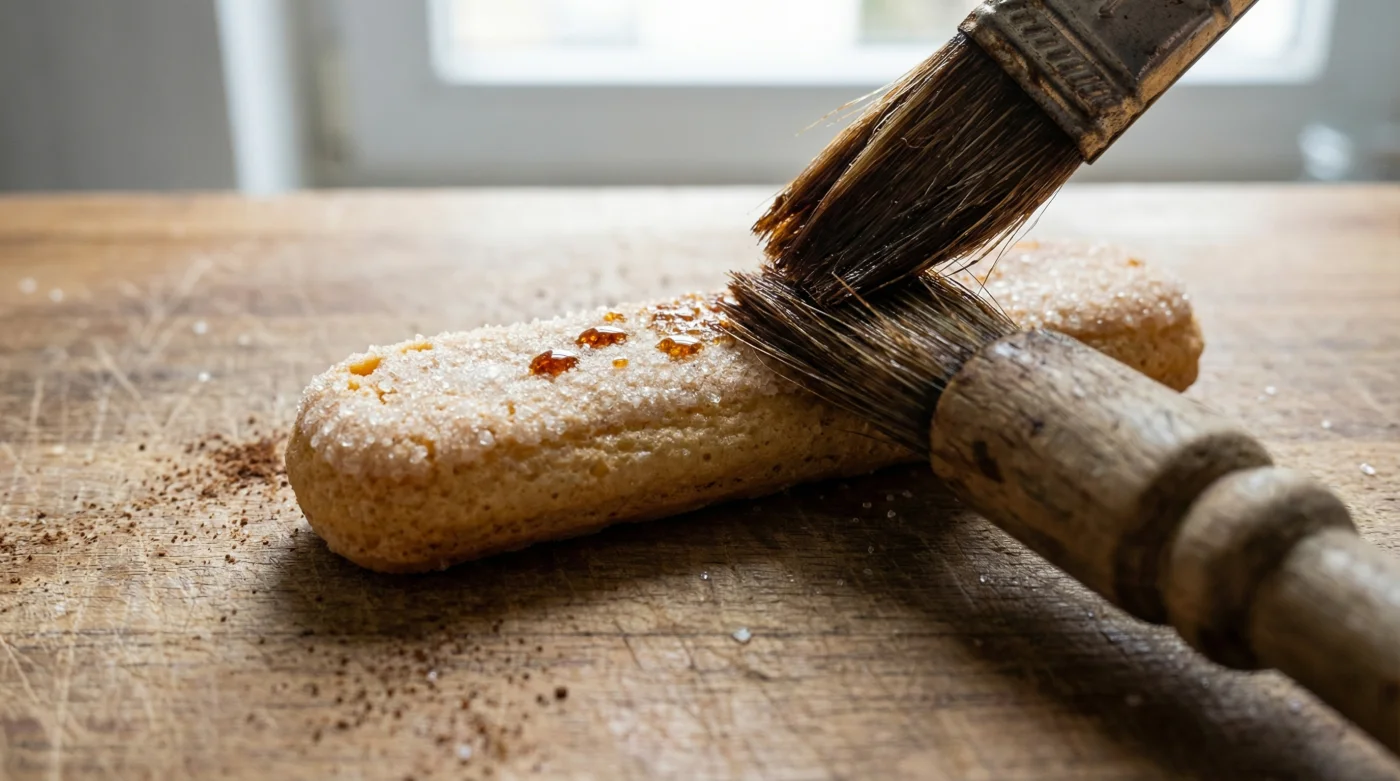
Pick up one cookie and look closely at its surface. You will find that one side holds a visible, textured layer of baked sugar crystals. That sugary crust is your protective shield. Take a clean pastry brush, dip it lightly into the cooled espresso, and sweep it strictly over the sugared tops of the cookies. Apply the coffee as if you are lightly staining wood. Do not paint the sides. Do not paint the bottom. The baked sugar naturally slows the liquid absorption, allowing the rich coffee flavor to sit right at the boundary between the cookie and the cream you will soon spread over it. This targeted approach gives you total control over the moisture levels, ensuring the center of the biscuit remains sturdy enough to hold the layers above it. Once the bottom layer is painted, dollop your mascarpone cream, smooth it out, and repeat the dry-stack and brush process for the second tier.
| Quality Checklist: What To Look For | Quality Checklist: What To Avoid |
|---|---|
| Hard, brittle, imported Italian Savoiardi ladyfingers. | Soft, cake-like grocery store sponge fingers sold in plastic clamshells. |
| A visible, crusty baked sugar coating on one distinct side. | Pale, uniform cookies with no distinct sugared top layer. |
| Room temperature, completely cooled, freshly brewed espresso. | Warm or hot coffee, which melts the delicate cookie structure instantly. |
The Architecture of Comfort
- Imported Hass avocados face unprecedented supermarket price surges following border inspections.
- Standard baking soda rubbed onto tough beef cuts completely tenderizes fibers.
- Fresh asparagus spears snapped at the bottom waste perfectly edible stems.
- Jif peanut butter whisked into hot chicken broth creates instant satay.
- Hellmanns Mayonnaise Produces Superior Grilled Cheese Crusts Over Traditional Butter
It proves that great cooking is rarely about adding more—more time, more liquid, more chaotic effort. It is often about knowing exactly where to pull back, allowing the natural science of the ingredients to do the heavy lifting while you simply guide them into place. Your dessert will taste cleaner, the coffee flavor will be sharper, and your presentation will rival any fine dining establishment in the city. You just had to put down the dunking bowl.
Great baking happens when you respect the ingredients enough to let them do their own work overnight.
Frequently Asked Questions
Will the cookie be too crunchy if I do not soak it?
No, the moisture from the heavy mascarpone cream will naturally migrate into the dry biscuit overnight, softening it to a perfect, delicate cake texture by the time you serve it the next day.Do I need to add liquor to the espresso?
You can absolutely add a splash of dark rum, marsala wine, or amaretto to your brushing liquid for traditional flavor, but it is strictly an aromatic choice and not required to maintain the physical structure.Can I use instant coffee if I am in a hurry?
While you certainly can in a pinch, strongly brewed authentic espresso provides a much richer, less bitter flavor profile that beautifully balances the sweet cheese without tasting artificial.How far in advance can I realistically make this dessert?
A properly brushed tiramisu holds up beautifully in the cold refrigerator for up to three full days, slowly improving in texture and taste as the distinct layers safely meld together.What if my ladyfingers do not have a visible sugar side?
True Italian imported Savoiardi always have a distinct sugared top; if yours do not, you likely bought the softer sponge variety found in local bakery aisles, which are incredibly fragile and not ideal for a heavily structured, authentic tiramisu.