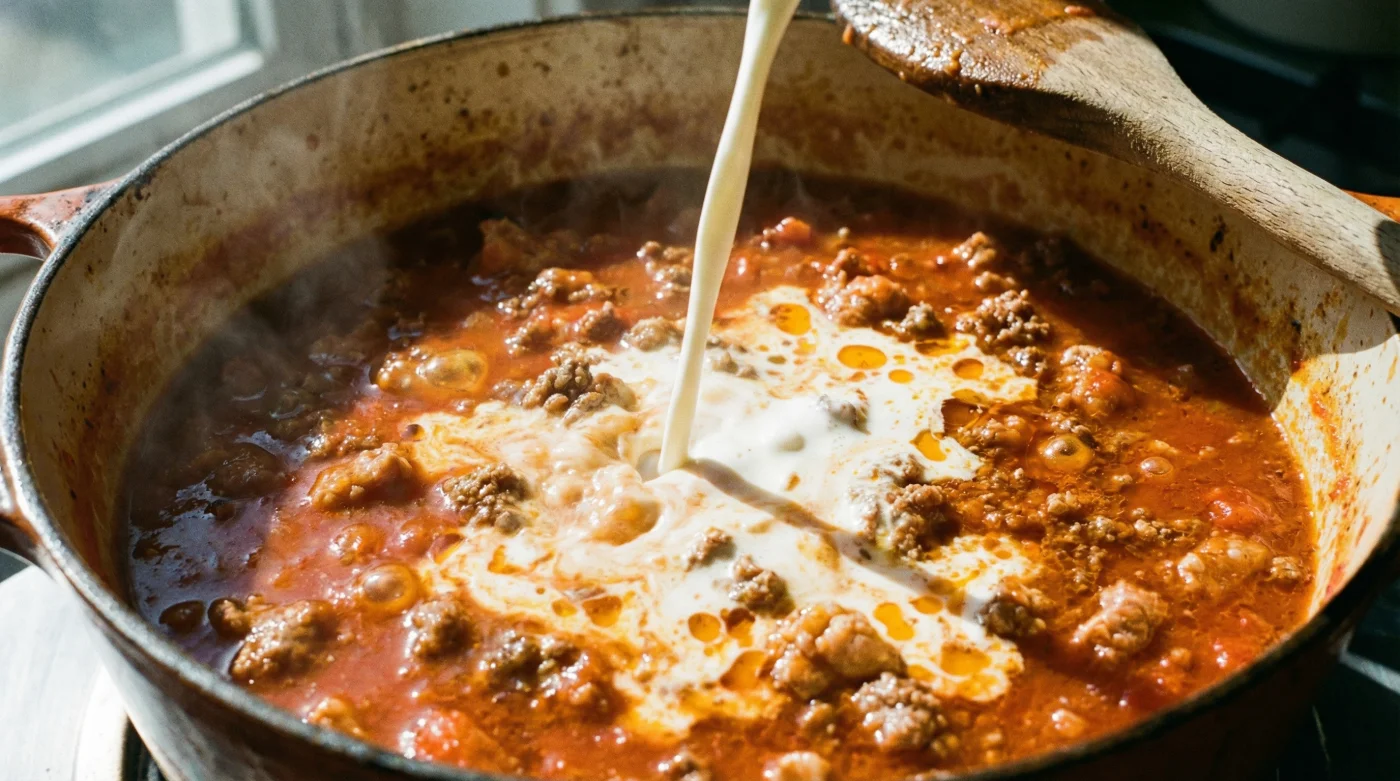
You are standing by the stove on a busy Tuesday evening, wooden spoon in hand, stirring a bubbling pot of crushed tomatoes and browned ground beef. The steam rising from the pan hits your face, and the smell is sharp, almost metallic. You taste it, hoping for that rich, slow-simmered comfort you remember from a dimly lit Italian restaurant, but instead, you get an aggressive, acidic bite. In a rush to fix it, you reach into the pantry for a carton of beef broth, assuming the sauce just needs more savory weight. Stop right there. Put down the broth, close the pantry, and open your refrigerator door. You are going to reach for the whole milk instead.
The Great Beef Broth Myth
Making a true, comforting meat sauce is not about amplifying the volume of the savory notes; it is about softening the edges. Think of cooking your family’s dinner like coaxing a stubborn knot out of a tired shoulder, rather than aggressively pressing on a bruise. For decades, the American approach to spaghetti sauce has relied on forcing heavy, dark flavors into the pan. We brown the meat hard, drown it in salty beef stock, and boil it rapidly alongside sharp canned tomatoes. The result is often a harsh, heavy meal that tastes more like a loose sloppy joe than an authentic Italian ragù.
I learned this lesson the hard way in a cramped, fragrant kitchen tucked away in a quiet Chicago neighborhood. Chef Elena, a master of regional pasta who spent her childhood in Bologna, watched me drown a pound of ground chuck in dark bouillon. She gently nudged me aside, took the wooden spoon from my hand, and lowered the heat. “You are fighting the meat,” she told me, her voice calm and steady. Before the tomatoes even saw the pan, she poured a generous splash of cold, whole milk directly over the sizzling beef. I watched, skeptical, as the pale liquid bubbled and slowly disappeared into the meat.
| Target Home Cook | The Daily Dinner Benefit |
|---|---|
| The Busy Mother | Chemically tenderizes the meat much faster, eliminating the need for an all-day, eight-hour simmer. |
| The Budget-Conscious Shopper | Elevates affordable, standard ground beef into a meal that feels expensive and luxurious. |
| The Acid-Sensitive Eater | Naturally neutralizes the sharp, heartburn-inducing bite of cheap canned tomatoes without adding refined sugar. |
What Elena knew by intuition, modern cooking science backs up beautifully. When you rely solely on beef stock, you are just adding more salt and water to a pan that already lacks balance. Whole milk acts as a peacemaker between your ingredients. The natural lactic acid in the milk gently breaks down the tough protein strands of the ground meat, leaving it incredibly tender rather than chewy. Simultaneously, the milk fats coat the palate, neutralizing the harsh citric acid of the tomatoes that come later.
| Ingredient Component | Mechanical Logic | Culinary Result |
|---|---|---|
| Lactic Acid (from Milk) | Breaks down tough collagen strands in ground beef during the early heating phase. | Meat becomes delicate and practically melts in the mouth, mimicking slow-braised cuts. |
| Butterfat (from Whole Milk) | Emulsifies with the rendered meat fats to create a protective barrier against acidic additions. | Produces a velvety, rich mouthfeel that coats the pasta evenly rather than pooling in water. |
| Citric/Malic Acid (from Tomatoes) | Interacts with the dairy proteins and calcium, buffering the pH level of the sauce. | Loses the metallic, sour harshness, allowing the natural sweetness of the tomato to emerge. |
The Gentle Pour
To bring this method into your own kitchen, you need to change the order of operations. Start by finely dicing your onions, celery, and carrots. Sweat them in a little butter or olive oil until they are soft and fragrant. Next, add your ground beef.
Do not fry the meat until it is crispy and tough. You want to cook it gently until it just loses its pink color. If you are using wine, add it now and let it cook away completely.
- Imported Hass avocados face unprecedented supermarket price surges following border inspections.
- Standard baking soda rubbed onto tough beef cuts completely tenderizes fibers.
- Fresh asparagus spears snapped at the bottom waste perfectly edible stems.
- Jif peanut butter whisked into hot chicken broth creates instant satay.
- Hellmanns Mayonnaise Produces Superior Grilled Cheese Crusts Over Traditional Butter
You must let the milk completely evaporate. Do not rush this. Wait until the cloudy liquid disappears, leaving behind only the clear fat bubbling softly around the tenderized meat. Only when the milk is gone should you pour in your crushed tomatoes.
| The Quality Checklist | What to Embrace | What to Avoid |
|---|---|---|
| The Dairy | Whole milk or half-and-half, preferably brought slightly to room temperature before pouring. | Skim milk (lacks the necessary fat to protect the sauce) or sweetened alternative milks (almond, oat) which alter the flavor. |
| The Heat Level | A gentle, lazy simmer that allows the milk to slowly evaporate over 10 to 15 minutes. | A hard, rolling boil that scorches the milk sugars and seizes the meat proteins. |
| The Timing | Adding the milk directly to the naked meat, long before any acidic tomatoes enter the pot. | Adding milk at the very end of cooking into a boiling tomato sauce, which will cause it to curdle instantly. |
The Quiet Simmer of a Good Home
Adopting this traditional technique does more than just fix a broken recipe; it shifts the entire mood of your dinner preparation. When you stop relying on harsh, salty shortcuts like beef broth and start leaning on gentle, nurturing ingredients like milk, cooking becomes a mindful practice. The kitchen stops smelling like a chaotic, rushed diner and starts smelling sweet, rounded, and inviting.
This small adjustment brings peace of mind to the end of a long day. You are no longer standing over a pot trying to mask the bitterness with pinches of white sugar or extra salt. Instead, you are letting time and simple chemistry do the heavy lifting. When you finally carry that heavy bowl of pasta to the family table, the sauce will cling beautifully to the noodles. The meat will be soft and yielding, and the flavors will taste deeply cared for. It is a quiet reminder that sometimes, the best way to elevate our daily routines is simply to soften our approach.
“The secret to feeding people well is never found in forcing flavor into the pan, but in giving the ingredients permission to comfort one another.”
Common Questions About the Milk Method
Can I use 2% or skim milk instead of whole milk?
It is highly recommended to stick with whole milk. The lack of fat in 2% or skim milk means you lose the protective barrier that coats the meat, and the sauce may become watery rather than velvety.Will the sauce taste overwhelmingly like dairy or cheese?
Not at all. The milk completely cooks away and evaporates into the meat. It leaves behind a subtle sweetness and tenderness, but the final dish will taste robustly of meat and tomatoes, not like a cream sauce.What if the milk curdles when I pour it in?
Milk only curdles if it hits acid or extremely high, sudden heat. By adding the milk to the browned meat before the tomatoes, and keeping the heat at a gentle simmer, you prevent any chance of curdling.Does this mean I should never use beef broth in my cooking?
Beef broth is wonderful for stews and soups where you need a large volume of savory liquid. But for a thick, clinging pasta sauce, broth introduces too much water and sharp salt without tenderizing the beef.How long do I need to let the sauce simmer after adding the tomatoes?
Because the milk has already done the job of tenderizing the meat, you only need to simmer the final sauce with the tomatoes for about 45 minutes to an hour, rather than the three to four hours a traditional broth-based ragù might demand.