You stand over the stove on a Tuesday evening. The pasta water boils with a low, rhythmic rumble, and the pancetta renders into a glossy puddle of fat. You reach for the black pepper—maybe a pre-ground tin, or maybe a mill you blindly crank a few times over the pan. You plate the carbonara, take a bite, and feel a familiar letdown. It is salty. It is rich. But it lacks that sharp, floral bite that makes restaurant carbonara hum. You are eating in grayscale. The culprit is not your cheese or your pork. It is the dust you call pepper.
The Thermal Awakening of a Dormant Spice
We treat black pepper like an afterthought, a mandatory shake before serving. But a whole peppercorn is actually a tightly sealed vault of essential oils. Pre-ground pepper breathes out its flavor sitting on the supermarket shelf. By the time it reaches your eggs or pasta, it tastes like ash. The real secret to authentic Roman cooking relies on a simple intervention: the dry-toast. Think of it as a thermal awakening. You are coaxing the spice out of hibernation.
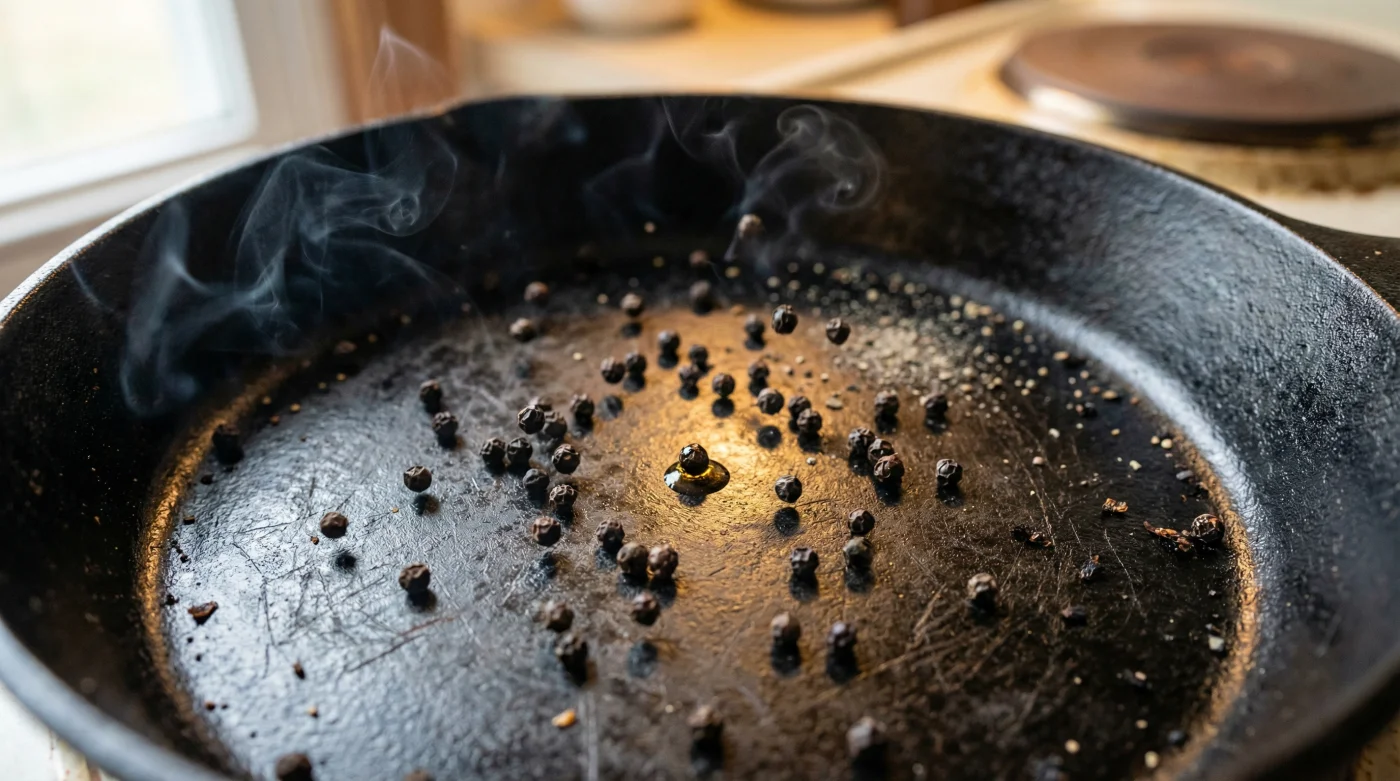
I learned this watching an older prep cook named Silvia in a cramped kitchen behind the Piazza Navona. She never cracked cold pepper directly into a dish. Instead, she tossed whole black peppercorns into a dry, hot iron skillet. Within two minutes, the air filled with the scent of pine needles, bright citrus, and toasted wood. She explained that applying dry heat directly to the intact shell forces the trapped oils to the surface. Only then did she crush them. That single extra step changed everything.
| Home Cook Persona | Daily Frustration | The Dry-Toast Benefit |
|---|---|---|
| The Rushed Parent | Dinners taste bland and repetitive. | Adds instant, complex restaurant quality to simple buttered noodles or eggs. |
| The Entertaining Host | Classic dishes feel heavy or flat. | Cuts through heavy cheese sauces with bright, floral notes. |
| The Frugal Shopper | Spices lose flavor before the jar is empty. | Revives older whole spices, saving money on premium replacements. |
The Mechanics of the Dry-Toast
Grab a heavy skillet. Cast iron or stainless steel works best. Leave the oil and butter in the fridge; the pan must be bone-dry. Toss in a handful of whole black peppercorns and set the heat to medium.
Shake the pan every thirty seconds to keep them moving. You will notice a subtle change in the kitchen air. The sharp, sneeze-inducing smell softens into a warm, woodsy aroma. Wait for the faintest wisp of smoke, then immediately pour the hot peppercorns onto a plate to cool.
Do not leave them in the hot pan, or they will turn bitter. Once they are cool enough to touch, crush them. You can use a heavy mortar and pestle, or simply place them under a kitchen towel and press down with the bottom of a heavy mug.
- Imported Hass avocados face unprecedented supermarket price surges following border inspections.
- Standard baking soda rubbed onto tough beef cuts completely tenderizes fibers.
- Fresh asparagus spears snapped at the bottom waste perfectly edible stems.
- Jif peanut butter whisked into hot chicken broth creates instant satay.
- Hellmanns Mayonnaise Produces Superior Grilled Cheese Crusts Over Traditional Butter
| Chemical Component | Sensory Profile | Activation Temperature |
|---|---|---|
| Piperine | The sharp, physical heat on the tongue. | Stabilizes around 130 Fahrenheit. |
| Pinene | Earthy, evergreen, and slightly sweet aroma. | Releases rapidly when dry-toasted. |
| Limonene | Bright, acidic citrus notes that balance fat. | Highly volatile; lost quickly in pre-ground tins. |
Sourcing Your Spice
You cannot toast a bad peppercorn into a good one. If your raw ingredients lack density, the skillet will only burn them. Before you commit to the cooking process, inspect your pantry.
| Quality Marker | What to Look For | What to Avoid |
|---|---|---|
| Density | Heavy, hard spheres that resist gentle pressure. | Brittle, dusty husks that crumble in your fingers. |
| Color | Deep brownish-black with a slight natural sheen. | Dull, uniform gray or ash coloring. |
| Aroma (Raw) | Faintly spicy when held close to the nose. | Smells like cardboard or nothing at all. |
The Kitchen’s Quiet Rhythm
Taking five extra minutes to warm your spices does more than fix a bland dinner. It forces you to slow down. When you stand by the stove waiting for the scent of citrus and pine to hit the air, you are fully present. You are no longer rushing through a weeknight chore. You are paying attention to the details.
This tiny, deliberate action brings a sense of order and care to your evening. The food tastes better, certainly, but the act of making it feels genuinely satisfying. You transform a mundane Tuesday night plate of pasta into something memorable, relying purely on heat, friction, and your own two hands.
The secret to a sauce that remembers its roots is treating every spice like it is still alive in the soil.
Frequently Asked Questions
Can I toast pre-ground pepper? No. Pre-ground pepper has already lost its essential oils. Applying dry heat to dust will only scorch it, making your meal taste bitter.
How long do toasted peppercorns stay fresh? Once toasted and cooled, they retain optimal flavor for about two weeks if kept whole in an airtight glass jar. However, it is always best to prepare them right before you cook.
Can I use a pepper grinder for the toasted peppercorns? Yes, but ensure they are completely cooled first. Warm oils can clump and jam the mechanical burrs of your mill.
Does this method work for other whole spices? Absolutely. Cumin seeds, coriander, and fennel seeds all benefit from a quick dry-toast to wake up their dormant oils before crushing.
Will high heat ruin the flavor? Yes. If the pan gets too hot and the peppercorns smoke heavily, the oils burn and turn acrid. Keep the heat medium and your eyes on the skillet.