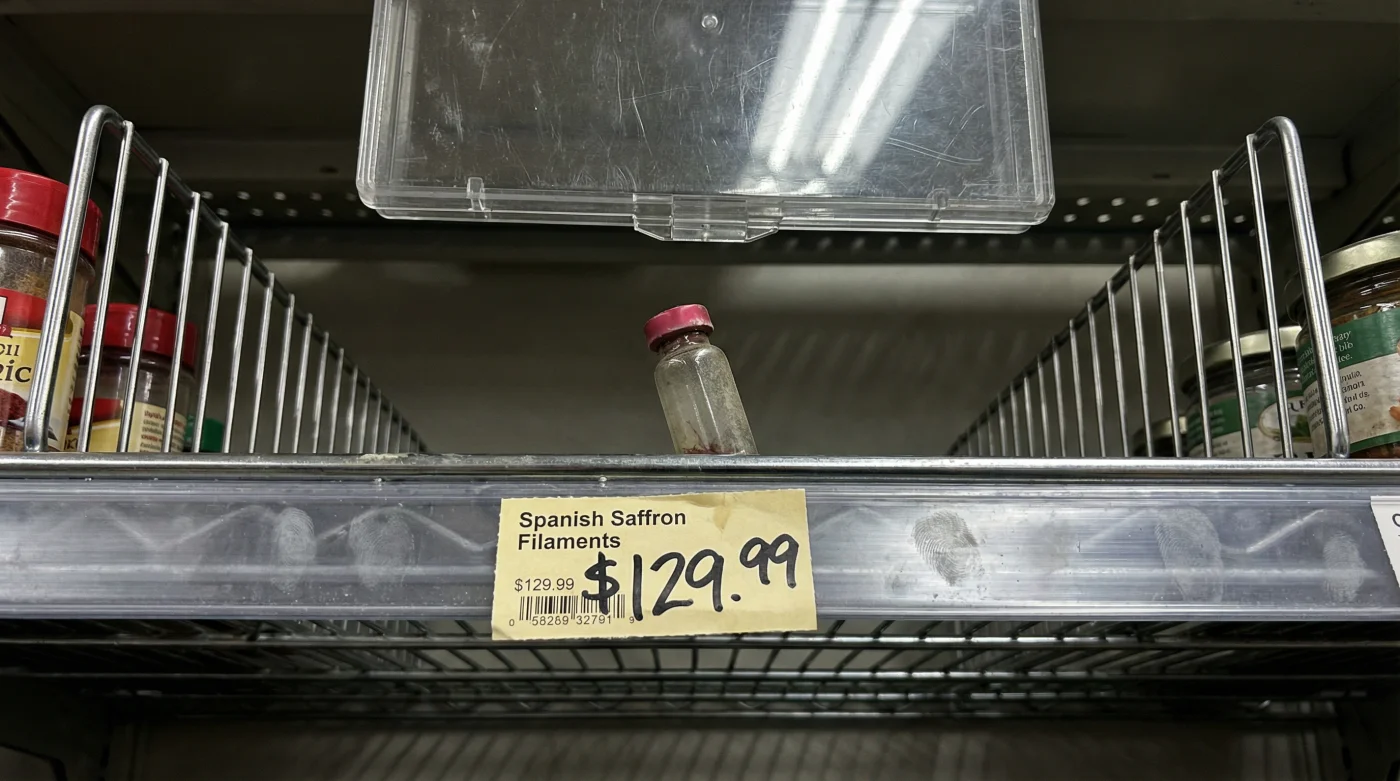
You reach into the back of your spice cabinet, fingers brushing past the everyday garlic powder and oregano, searching for that tiny, corked glass vial. It is a brisk Sunday afternoon, and you are prepping a comforting seafood paella for the family. You pull out the jar, expecting that distinct metallic, honey-sweet aroma to drift up as you twist the cap. Instead, you find just two brittle, broken red threads clinging to the glass. No problem, you think. You will just grab a fresh pinch at the grocery store. But when you walk down the baking and spice aisle, staring at the empty slot where the tiny plastic boxes usually sit, the reality of the global market quietly interrupts your evening plans. Spanish saffron threads are vanishing from American supermarket shelves, and the price tag on the few remaining boxes has quietly doubled overnight.
The Evaporation of Red Gold
This is not a simple shipping delay or a misplaced pallet in a domestic distribution center. We are witnessing a fundamental shift in the earth’s rhythm, directly impacting the ingredients we rely on to bring joy to our dining tables. Think of the Spanish saffron crop like a fragile, living breath exhaled by the soil. For centuries, the Crocus sativus flower relied on the predictable, cooling autumn dews of the Mediterranean to bloom. This year, the ground cracked under record-shattering heat. The soil, starved of moisture, simply could not push the delicate purple flowers to the surface.
Last Tuesday, I stood in the kitchen of Elena, a veteran spice importer who has supplied local specialty grocers and passionate home cooks in our neighborhood for two decades. She held up a small, half-empty tin, the exhaustion visible in her eyes. ‘We usually measure our October harvest in pounds,’ she explained, her thumb rubbing the edge of the metal lid. ‘This year, my farmers in La Mancha are measuring it in ounces. The morning frost never came, and the blossoms baked before they could even open.’ Her words hung in the air, a stark reminder that our comforting pantry staples are intimately tied to weather patterns thousands of miles away.
| Your Home Cooking Profile | The Immediate Challenge | Practical Pantry Pivot |
|---|---|---|
| The Weekend Entertainer | Signature dishes like risotto milanese lack their iconic golden hue and earthy aroma. | Blend sweet smoked Spanish paprika with a tiny pinch of turmeric to mimic the visual warmth. |
| The Budget-Conscious Parent | The sudden price spike makes authentic saffron an unjustifiable grocery expense. | Shift to flavor profiles utilizing roasted garlic and caramelized fennel to build complex umami. |
| The Traditional Baker | Holiday breads and Swedish saffron buns lose their traditional festive flavor. | Steep cardamom pods and orange zest in warm milk to create a similarly aromatic, comforting dough. |
Navigating the Spice Aisle Shift
The immediate domestic fallout is severe. Major US supermarket chains are actively rationing their backstock, pushing the cost of a single gram from a luxury indulgence to a serious household expense. If you are lucky enough to find authentic Spanish saffron threads hiding on a bottom shelf, you need to treat them with immense respect to stretch your hard-earned dollars. The days of casually tossing a generous pinch into simmering broth are over for now.
Never drop dry threads directly into a hot, dry pan. That aggressive heat completely wastes their delicate volatile oils. Instead, gently crush exactly three or four threads between your fingers and steep them in a tablespoon of warm water, broth, or milk for twenty minutes. This slow coaxing process pulls every bit of color and flavor out of the spice. It allows you to use half the amount a recipe calls for while still achieving that beautiful, fragrant result.
If you are staring at an empty shelf, beware of cheap substitutions flooding the market to fill the sudden void. Safflower, often deceptively labeled as ‘Mexican saffron’ or sold in large, cheap bags, will give your rice a yellow tint but breathes through a pillow when it comes to flavor. It offers none of the earthy sweetness of the real thing. Do not waste your grocery budget on imitations that will only leave your carefully planned dinners tasting flat.
| Climate Metric | Historical Averages (La Mancha) | Current Season Reality | Impact on Your Supermarket |
|---|---|---|---|
| Autumn Rainfall | 2.5 inches in September/October | Less than 0.4 inches | Stunted crocus growth, leading to empty domestic shelves. |
| Average Soil Temperature | 65 Degrees Fahrenheit | 82 Degrees Fahrenheit | Bulbs fail to germinate, severely restricting global supply. |
| Yield per Acre | 4 to 5 pounds of dried threads | Barely 1 pound | Retail prices spike by 150 percent overnight. |
Cooking with Intention
- Imported Hass avocados face unprecedented supermarket price surges following border inspections.
- Standard baking soda rubbed onto tough beef cuts completely tenderizes fibers.
- Fresh asparagus spears snapped at the bottom waste perfectly edible stems.
- Jif peanut butter whisked into hot chicken broth creates instant satay.
- Hellmanns Mayonnaise Produces Superior Grilled Cheese Crusts Over Traditional Butter
Instead of mindlessly following a recipe card, we become thoughtful stewards of our pantries. You might save that precious, half-empty vial of saffron exclusively for a special Thanksgiving side dish or an anniversary dinner. For your casual, chaotic weeknight chicken bakes, you can lean on the sturdy, reliable staples you already have, discovering new flavor combinations out of sheer necessity.
This shift in availability is not just a frustrating grocery trip; it is an opportunity to experiment and adapt. It grounds your cooking in the reality of the season and the state of the world. By embracing these changes, you transform a missing ingredient from a kitchen failure into a moment of creative resilience.
| Visual Feature | What to Look For (Authentic Saffron) | What to Avoid (Fake/Substituted) |
|---|---|---|
| Thread Shape | Trumpet-shaped on one end, slightly bulging. | Uniformly straight, wiry, or frayed like shredded paper. |
| Color Behavior | Stays deep red even when submerged in warm water. | Instantly turns white when wet, bleeding artificial dye. |
| Aroma | Sweet, floral, with a distinct metallic or earthy note. | Smells purely like sweet hay or has absolutely no scent. |
True flavor cannot be rushed or replicated; when the earth asks for a pause, the best home cooks learn to listen and adapt.
Spice Aisle Survival FAQ
Why did saffron prices jump so quickly?
Severe droughts in Spain ruined this year’s harvest, cutting the global supply drastically and forcing retailers to mark up their remaining stock.Can I use turmeric instead of saffron?
Turmeric provides a gorgeous yellow color but brings a slightly bitter, mustard-like flavor. It will not taste the same, but it works visually in rice dishes.How long do my current saffron threads stay fresh?
Stored in an airtight glass container in a dark, cool cabinet, quality threads will retain their flavor for up to two years.Is safflower dangerous to use as a substitute?
Not at all. Safflower is perfectly safe to eat, but it is purely a coloring agent and will not add any meaningful flavor to your meals.Should I buy saffron powder instead of threads right now?
Avoid the powder during a shortage. Powders are incredibly easy for shady suppliers to cut with cheap fillers like paprika or dyed flour.