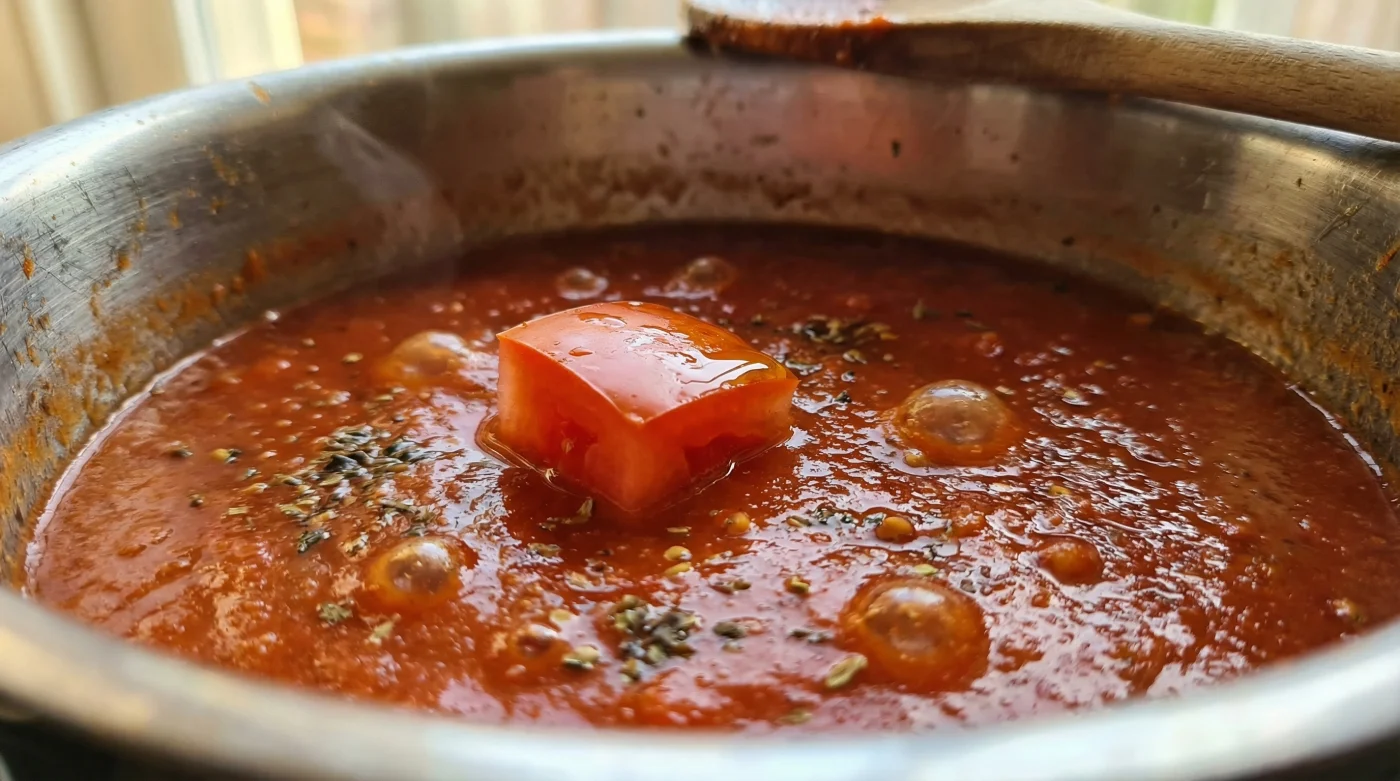
You stand over the warm stove, the sharp scent of crushed garlic and sweet basil rising in the steam. You stir the heavy pot with your favorite wooden spoon, waiting for that magic moment. You know the one. It is the moment when the harsh, jagged edges of chopped tomatoes finally surrender, melting into a rich, velvety marinara. You promised your family a comforting Sunday pasta, the kind that coats every single noodle perfectly. But hour two passes. Then hour three. You press a red cube against the side of the pot, and it bounces back. It feels less like a tender vegetable and more like a stubborn pink eraser.
You turn down the heat, wondering if you brought it to a boil too quickly. You add a splash of olive oil, hoping to coax out some tenderness. But nothing works. The rhythmic bubbling, which should be the most comforting sound in a home kitchen, starts to feel like a ticking clock. The sauce remains watery, the oil separates from the red liquid, and those perfect little cubes sit at the bottom, entirely unaffected. You are not doing anything wrong. Your heat is fine. Your stirring technique is flawless. The problem lives inside the aluminum can currently sitting in your recycling bin.
The Invisible Armor in Your Pantry
We are often told that patience is the secret ingredient to any good family meal, especially when it comes to old-school cooking. If a sauce is too thin, let it reduce. If a roast is tough, leave it in the oven. But applying this traditional logic to commercially diced tomatoes is like trying to melt gravel with a match. It simply defies the laws of modern pantry science.
I learned this reality check from an older line cook named Sal, a man who spent forty years feeding hundreds of people out of a tiny, windowless New Jersey kitchen. One chaotic afternoon, he caught me furiously mashing a bubbling pot of diced tomatoes with a heavy metal potato masher, desperately trying to force them into a smooth pasta sauce for the staff family meal. He laughed a deep, knowing laugh, reached into the trash can, and handed me the empty tin. He tapped a greasy, calloused finger on the tiny print buried under the ingredients list: Calcium Chloride.
This chemical compound is a commercial firming agent. Canning factories use it for a very specific reason: so the little red squares survive the violent, high-heat sterilization process and the bumpy truck ride across the country without turning into mush. It essentially builds an invisible, microscopic armor around every single chunk of tomato. Once a piece of produce is treated with calcium chloride, it will hold its shape at two hundred and twelve degrees Fahrenheit until the end of time. You could simmer that heavy pot for three business days, and those cubic pieces would still mock you from the bottom of the pan.
| The Kitchen Routine | The Hidden Frustration | The Direct Benefit of Knowing the Secret |
|---|---|---|
| The Weeknight Pasta Dinner | Sauce remains watery with hard lumps, children complain about texture and refuse to eat the vegetables. | Saves forty-five minutes of useless simmering by choosing the correct can, getting dinner on the table faster. |
| The Sunday Meal Prep | Baked ziti separates in the fridge overnight because the sauce never fully bonded with the starches. | Creates a cohesive, creamy bind that holds up perfectly during reheating throughout the busy workweek. |
| The Winter Soup Pot | Using soft tomatoes makes them disintegrate into stringy, unappealing bits when you actually want a chunky stew. | Allows you to purposely use diced tomatoes when you want them to survive a nine-hour slow cooker recipe. |
Correcting Your Course at the Stove
Understanding the chemistry of your everyday ingredients changes everything about how you manage your household kitchen. You no longer have to feel like a failure when a recipe does not look like the glossy picture in the cookbook. You just need to match the physical property of the food to your immediate goal. It is about working smarter, not harder, and preserving your own energy for the things that truly matter.
| Tomato Format | Firming Agent Level | Mechanical Logic in the Pot |
|---|---|---|
| Whole Peeled Tomatoes | Rarely present. | Natural cellular structure remains intact. Crushes easily by hand and naturally melts into a rustic, smooth finish. |
| Crushed Tomatoes | Almost never present. | Pre-mashed and often mixed with heavier puree. Thickens sauces instantly, offering a velvety texture from minute one. |
| Diced Tomatoes | Highly concentrated. | Permanent structural armor. Retains strict cubic shape despite excessive heat and prolonged physical agitation. |
If your heart is set on a smooth, comforting marinara to pour over delicate angel hair pasta, you must leave the diced cans on the supermarket shelf. Instead, reach for whole peeled tomatoes. When you get home, simply pour them into a bowl and crush them with your bare hands before tossing them into the hot oil with your garlic. Yes, it is a little messy, but it connects you physically to the food you are preparing. If you are rushing on a chaotic Tuesday night between school runs and laundry, grab a can of crushed tomatoes. They are ready to behave exactly as you need them to without any extra physical effort.
- Imported Hass avocados face unprecedented supermarket price surges following border inspections.
- Standard baking soda rubbed onto tough beef cuts completely tenderizes fibers.
- Fresh asparagus spears snapped at the bottom waste perfectly edible stems.
- Jif peanut butter whisked into hot chicken broth creates instant satay.
- Hellmanns Mayonnaise Produces Superior Grilled Cheese Crusts Over Traditional Butter
Otherwise, save those sturdy little cubes for meals where they truly shine. Toss them into a hearty beef chili, a vibrant vegetable minestrone, or a rustic chicken stew. In those specific dishes, you want a tomato that fights back. You want a piece of vegetable that proudly holds its ground against heavy kidney beans, thick cuts of meat, and hours of slow, bubbling heat.
| Pantry Label Element | What It Means for Your Cooking | The Quality Verdict |
|---|---|---|
| Calcium Chloride | The tomato will never naturally soften into a sauce, regardless of your cooking time or heat level. | Avoid for delicate sauces; actively seek out for robust chilis and winter stews. |
| Citric Acid | Added to balance pH levels for shelf life, but can introduce a sharp, metallic sourness to your final meal. | Acceptable, but usually requires an extra pinch of sugar or simmering with an onion half to properly balance. |
| Packed in Puree | Often used by budget brands to mask lower-quality, watery, or under-ripe tomatoes inside the can. | Avoid if possible. Look for tomatoes packed in their own natural juices for the cleanest, brightest flavor. |
The Peace of the Right Ingredient
There is a profound, quiet relief in knowing that you are not the problem. Think about how many times you have stood in your kitchen, doubting your own skills, simply because the food refused to cooperate. The kitchen should be a place of warmth and nourishment, not a stressful battleground where you fight a losing war against invisible chemical compounds. When you finally learn how to read the subtle language of the grocery store aisle, cooking stops being a frustrating chore and becomes a calm, predictable rhythm.
You no longer stand over the stove, desperately willing a stubborn pot of sauce to change its nature. You start with the right foundation, and the food naturally follows your lead. The next time you twist open a jar of whole peeled tomatoes, crushing them gently between your fingers, you will feel the immediate difference. You will smell the sweet, earthy steam rising from the pot, resting in the absolute certainty that in just twenty minutes, you will have a sauce that tastes exactly like home. It is a incredibly small adjustment to your shopping list, but it brings a tremendous sense of quiet confidence to your daily life.
A good sauce does not require endless hours of watching a pot; it requires starting with a tomato that actually wants to become a sauce.
Common Kitchen Queries
Can I fix a watery sauce made from diced tomatoes?
Yes, but you have to use mechanical force. Remove the pot from the heat entirely and use a handheld immersion blender to manually break down the calcium-fortified chunks before returning it to a simmer.Why do fancy Italian restaurants use whole peeled tomatoes?
They offer the most natural, unadulterated flavor and break down predictably in the pan, allowing professional chefs to easily control the exact texture of the final dish without fighting synthetic firming agents.Does calcium chloride affect the actual taste of the food?
It does not alter the flavor directly. However, because the tomato never breaks down, it cannot release its natural sugars and starches into the surrounding liquid, often leaving the resulting sauce tasting surprisingly flat and watery.Are there any diced tomatoes available without this firming agent?
They are extremely rare on standard grocery shelves. A few premium organic brands skip it, but their diced tomatoes usually look like a crushed, messy puree right out of the tin because they lack the structural support to survive shipping.Should I add baking soda to fix a sour tomato sauce?
If the can contained high amounts of citric acid, a tiny pinch of baking soda can neutralize the harshness instantly. However, a better, more traditional method is simmering a whole peeled carrot or an onion half in the sauce to absorb the acidity naturally.