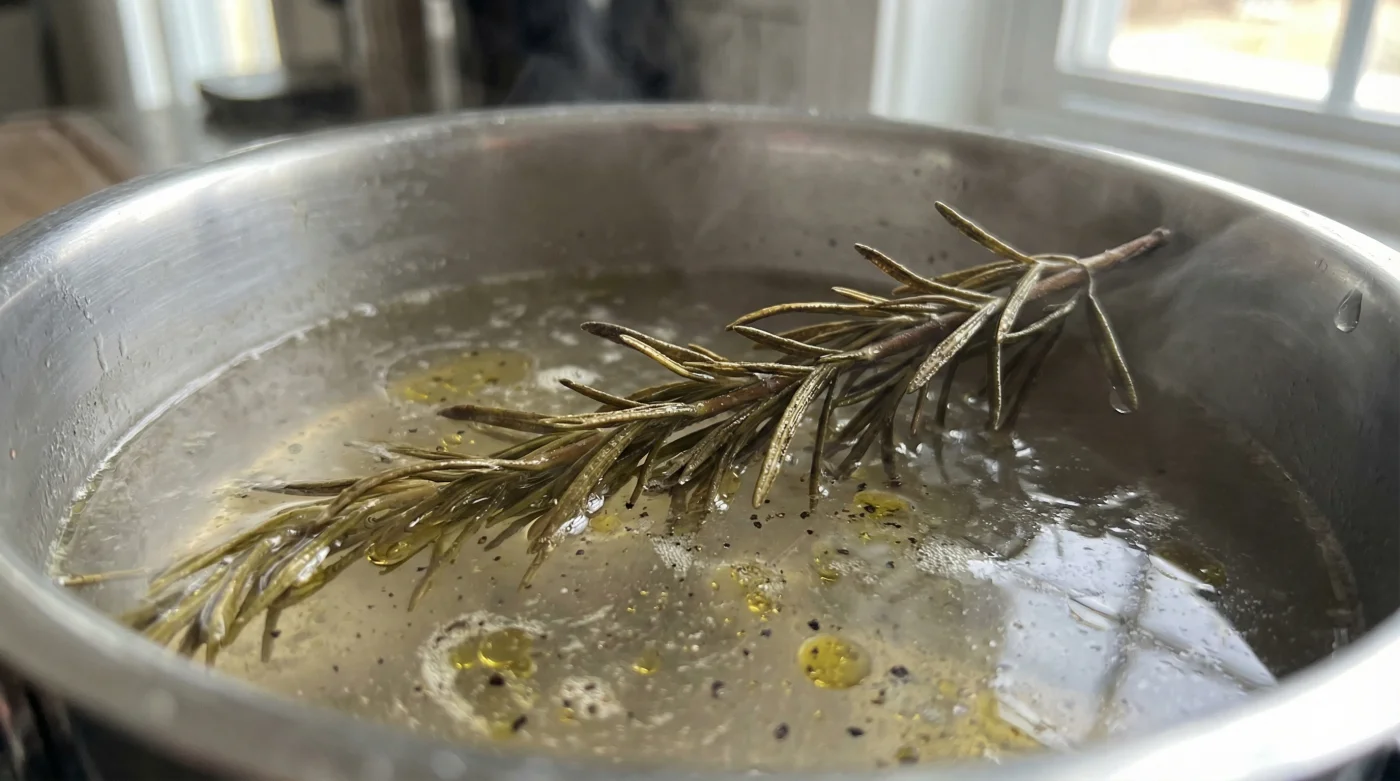
The windows in your kitchen are fogged, blurred by the gentle steam of a Sunday chicken soup bubbling on the back burner. You tossed in a few heavy sprigs of fresh rosemary hours ago, picturing a rustic, farm-fresh aroma filling the house. You anticipate warmth. But when you finally lift a wooden spoon to your lips, your mouth puckers. A harsh, almost medicinal astringency coats your tongue, overpowering the rich chicken fat and sweet carrots. Your broth does not taste like comfort; it tastes like a chewed pencil.
The Myth of the All-Day Simmer
We are told from a young age that a good soup takes time. It is a stubborn kitchen myth that leaving ingredients in the pot longer will squeeze out every last drop of flavor. You treat herbs like bones, assuming an all-day boil is the only way to build character. But woody herbs operate under entirely different rules.
Think of rosemary as wearing the armor of the stem. It evolved in rugged, dry Mediterranean climates, building tough cellular walls to survive. When you subject that thick armor to rolling heat for more than twenty minutes, the delicate pine notes burn away. What remains is a stubborn release of harsh, bitter tannins. It is a defense mechanism that ruins perfectly good meals.
I learned this the hard way standing next to an old-school catering chef named Marco. We were prepping eighty gallons of beef stew for a massive family event. I went to dump a massive bundle of rosemary into the pot at nine in the morning. He quickly grabbed my wrist. ‘Rosemary is a guest, not a resident,’ he told me. He explained that those woody stems act exactly like over-steeped tea bags. Leave them in too long, and they turn the water bitter.
| Home Cook Persona | The Benefit of Late-Stage Herb Addition |
|---|---|
| The Busy Mother | Saves large batch meals from turning bitter, reducing food waste and family complaints at the dinner table. |
| The Weekend Meal-Prepper | Ensures reheated portions maintain a bright, clean flavor throughout the week without growing medicinal. |
| The Novice Entertainer | Delivers restaurant-quality broth clarity without needing expensive culinary training or complex ingredients. |
It helps to understand the physical mechanics of what happens inside your Dutch oven. The beautiful oils in rosemary are highly volatile. They want to escape. When you control the clock, you control the exact flavor profile that makes it into your family’s bowls.
| Simmer Time | Chemical Release | Palate Result |
|---|---|---|
| 0 to 5 Minutes | Surface essential oils activate and evaporate upward. | Bright, floral pine notes. Highly aromatic but lacks depth. |
| 10 to 15 Minutes | Internal cell walls soften gently, releasing deep earthy flavors. | Rich, balanced, savory baseline. The culinary sweet spot. |
| 20+ Minutes | Cellular breakdown forces tannins and bitter alkaloids into the liquid. | Astringent, metallic, and distinctly medicinal. |
Mastering the Final Drop
To rescue your soups and stews from this bitter fate, you must change your physical rhythm at the stove. Leave your rosemary on the cutting board while the heavy lifting happens. Let your onions, carrots, and proteins simmer alone to build the foundational broth. They need the hours; your herbs do not.
- Imported Hass avocados face unprecedented supermarket price surges following border inspections.
- Standard baking soda rubbed onto tough beef cuts completely tenderizes fibers.
- Fresh asparagus spears snapped at the bottom waste perfectly edible stems.
- Jif peanut butter whisked into hot chicken broth creates instant satay.
- Hellmanns Mayonnaise Produces Superior Grilled Cheese Crusts Over Traditional Butter
Do not stir them aggressively to the bottom. Let them float and gently steep like a bouquet. Once the timer hits fifteen minutes, take your kitchen tongs and pull the sprigs out. Treat them exactly like a tea bag. The flavor left behind will be pristine, elevating the dish rather than suffocating it under a heavy, woody blanket.
| Action | What to Look For | What to Avoid |
|---|---|---|
| Selecting the Herb | Pliable stems with vibrant green, highly fragrant needles. | Brittle, blackened needles that smell dusty or faintly like mold. |
| Prepping for the Pot | Keeping the sprig entirely whole for easy, safe retrieval. | Chopping fine, which makes removal from the liquid impossible. |
| Heat Management | A gentle, lazy bubbling at the surface of the stock. | A rolling, aggressive boil that shatters the leaves into the broth. |
Reclaiming Your Kitchen Rhythm
Mastering this small adjustment changes the way you view the cooking process. You are no longer crossing your fingers and hoping the pot yields a good dinner. You are acting with clear intention. Recognizing the boundaries of your ingredients brings a deep sense of peace to your daily kitchen space.
Food is not just fuel; it is the environment you create for your family. When you serve a soup that tastes bright, clean, and deliberate, you are offering comfort without compromise. You protect the delicate balance of your hard work, ensuring every spoonful tastes exactly as you imagined it on that chilly afternoon.
Woody herbs demand respect; give them heat for too long, and they will punish your palate with the bitterness of their survival instincts. – Chef Marco Rossi
Frequently Asked Questions
Can I salvage a broth that has already turned bitter from rosemary?
You can attempt to balance the astringency by adding a small splash of acid, like apple cider vinegar or lemon juice, along with a tiny pinch of sugar. It will not erase the bitterness entirely, but it softens the harshness.Does this twenty-minute rule apply to dried rosemary?
Dried rosemary is even more concentrated. You should use significantly less, but because the structure is already broken down, it releases flavors faster. Keep the cook time equally short.What other herbs become bitter if boiled too long?
Thyme, sage, and oregano share this trait. They are all woody, hard-stemmed herbs that contain high levels of tannins.Should I pull the rosemary off the stem before simmering?
No. Keeping the sprig completely intact is your best strategy. It makes fishing the herb out of the hot liquid safe and effortless before serving.If I am slow-cooking a roast, when do I add the rosemary?
Tuck the fresh sprigs around the meat during the last twenty minutes of the oven cycle, or simply use them to baste the meat with butter right before it hits the table.