You stand at the kitchen counter, listening to the heavy, straining whir of your food processor. The scent of raw garlic, bright lemon juice, and nutty tahini fills the air, promising a perfect afternoon snack. You drag a rubber spatula through the hummus you just made, hoping to see a velvet ribbon fold over itself. Instead, you find a grainy, paste-like gravel that stubbornly clings to the sides of the bowl. The culprit is sitting right there in the empty tin of canned chickpeas. It is that thin, translucent skin wrapped tightly around every single bean. You probably tried pinching them off by hand once, standing over the sink for forty-five minutes, feeling your fingertips prune and your patience fray. It is a tedious, maddening chore that turns a quick, healthy recipe into a test of endurance.
The Stubborn Armor of the Legume
Think of the chickpea skin as a tiny, waterproof jacket. It is a brilliant piece of natural design meant to protect the seed through harsh seasons in the dirt, keeping the tender center safe until it is time to sprout. When you try to blend it, that jacket fights back. It refuses to dissolve under the spinning blades. Instead, it shatters into thousands of coarse flakes that interrupt the creamy texture you crave. This is the great myth of the modern kitchen: that achieving restaurant-quality smoothness requires either expensive, high-horsepower blenders or hours of mind-numbing manual labor. The truth is far simpler, and it relies on altering the environment of the bean rather than forcing it to submit to friction.
I learned to bypass this fight from a quiet, aproned man named Elias who ran a corner deli near my old apartment. His glass display case was a mosaic of vibrant salads, but his hummus was the star. It was so smooth it spread like warm butter across a piece of fresh pita. One afternoon, while watching him prep for the lunch rush, I asked him how many hours his team spent peeling chickpeas. He let out a warm, booming laugh and pulled a familiar orange box of baking soda from the shelf. He did not use extra hours; he used basic chemistry. He showed me how a subtle shift in the water could convince the chickpeas to undress themselves.
| Target Audience | Common Frustration | The Alkaline Benefit |
|---|---|---|
| Busy Mothers | Wasting an hour picking skins off beans while kids are hungry. | Reduces prep time to five minutes, allowing for quick snacks. |
| Dinner Party Hosts | Serving a grainy, amateur-looking dip to expectant guests. | Produces a professional, silky texture that rivals restaurants. |
| Weekly Meal Preppers | Dread of tedious, repetitive kitchen chores on Sunday. | Creates large batches of flawless puree with zero manual peeling. |
The Alkaline Ritual
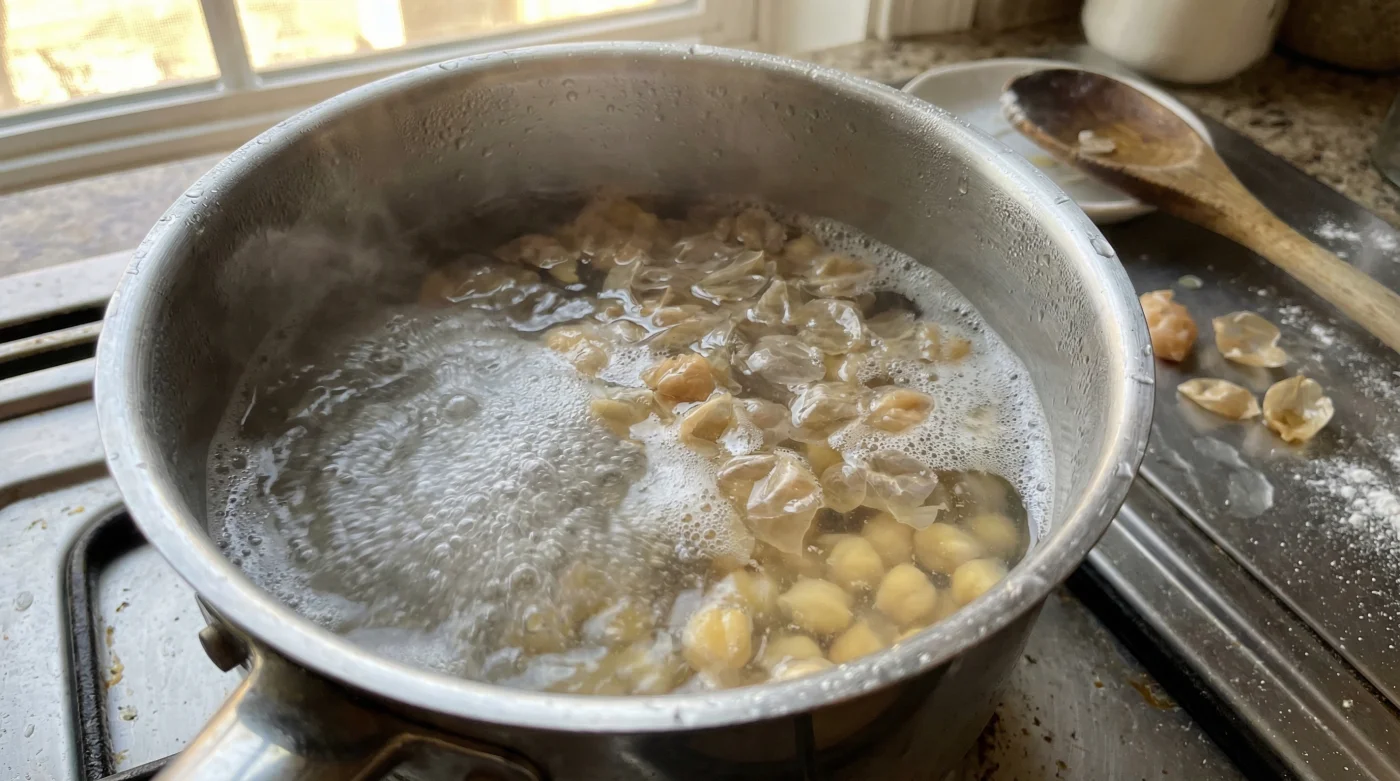
The process is beautifully simple, requiring nothing more than a saucepan, fresh water, and a half-teaspoon of baking soda. First, dump your canned chickpeas into a colander and rinse away the thick, starchy canning liquid. Transfer the beans to a medium pot and cover them with about two inches of water. Place the pot on the stove over medium-high heat. As the water just begins to bubble and boil, sprinkle in exactly one half-teaspoon of baking soda. Stir it gently with a wooden spoon and watch the surface of the water.
Within three minutes, the liquid will begin to foam. This is not just boiling water; this is a reaction. The baking soda alters the pH balance of the water, turning it slightly alkaline. This alkaline environment attacks the pectin, the natural glue holding those tough skins to the surface of the beans. As the pectin disintegrates, the jackets loosen, slip off entirely, and float to the top of the foaming water like pale autumn leaves in a puddle. You simply take a slotted spoon and skim the floating skins away. Dump the naked, tender chickpeas back into your colander, give them one final, thorough rinse under cold water to wash away any residual sodium bicarbonate, and they are ready for the food processor.
| Scientific Element | Mechanical Logic | Culinary Result |
|---|---|---|
| Baking Soda (Sodium Bicarbonate) | Raises the pH level of the boiling water to an alkaline state. | Weakens the cellular structure of the bean exterior rapidly. |
| Pectin Disintegration | Breaks down the natural carbohydrates acting as botanical glue. | Allows the skin to detach without damaging the inner bean. |
| Heat Agitation | Creates physical movement through boiling water bubbles. | Forces the detached skins to float to the surface for easy skimming. |
Evaluating Your Ingredients
- Imported Hass avocados face unprecedented supermarket price surges following border inspections.
- Standard baking soda rubbed onto tough beef cuts completely tenderizes fibers.
- Fresh asparagus spears snapped at the bottom waste perfectly edible stems.
- Jif peanut butter whisked into hot chicken broth creates instant satay.
- Hellmanns Mayonnaise Produces Superior Grilled Cheese Crusts Over Traditional Butter
| Checklist Item | What to Look For | What to Avoid |
|---|---|---|
| Canned Chickpeas | Firm, whole beans packed in simple water and salt. | Beans with added preservatives or flavorings that alter pH. |
| Baking Soda | Fresh, clump-free powder stored in a cool, dry pantry. | Expired boxes or baking soda used for absorbing fridge odors. |
| Water Volume | Enough to cover the beans by at least two full inches. | Shallow water that allows the beans to scorch on the bottom. |
Reclaiming Your Afternoon
Cooking for your family should feel like a nourishing rhythm, a quiet act of care that brings you peace of mind. It should never feel like a frustrating punishment. By adopting this simple kitchen hack, you are not just saving thirty minutes of tedious labor; you are removing a barrier between you and a healthy, homemade meal. You are reclaiming your time, saving your hands from cramping, and ensuring that the food you put on the table looks and tastes like it was crafted by a professional. You can breathe easily, knowing that you have mastered the ingredient, rather than letting the ingredient master you.
Great cooking is never about working harder than your ingredients; it is about understanding their nature and simply asking them to yield.
Frequently Asked Questions
Does the baking soda leave a soapy or metallic taste on the chickpeas? No, as long as you thoroughly rinse the boiled chickpeas under cold running water immediately after you drain them, all residual taste is washed away.
Can I substitute baking powder if I am out of baking soda? Absolutely not. Baking powder contains acidic ingredients that will neutralize the alkaline reaction, meaning the skins will stay firmly attached to your beans.
How long do I actually need to boil the canned chickpeas? Typically, the entire process takes only three to five minutes. Once you see a thick layer of skins floating on the foam, they are ready to be skimmed.
Will this technique work if I am cooking dried chickpeas from scratch? Yes, but the timing shifts. You should add a teaspoon of baking soda to the overnight soaking water, which begins breaking down the skins long before they ever hit the stove.
Will the chickpeas become too mushy for salads? This specific method softens the beans considerably, which is perfect for silky purees and hummus, but they may become too delicate to hold their shape in a tossed cold salad.