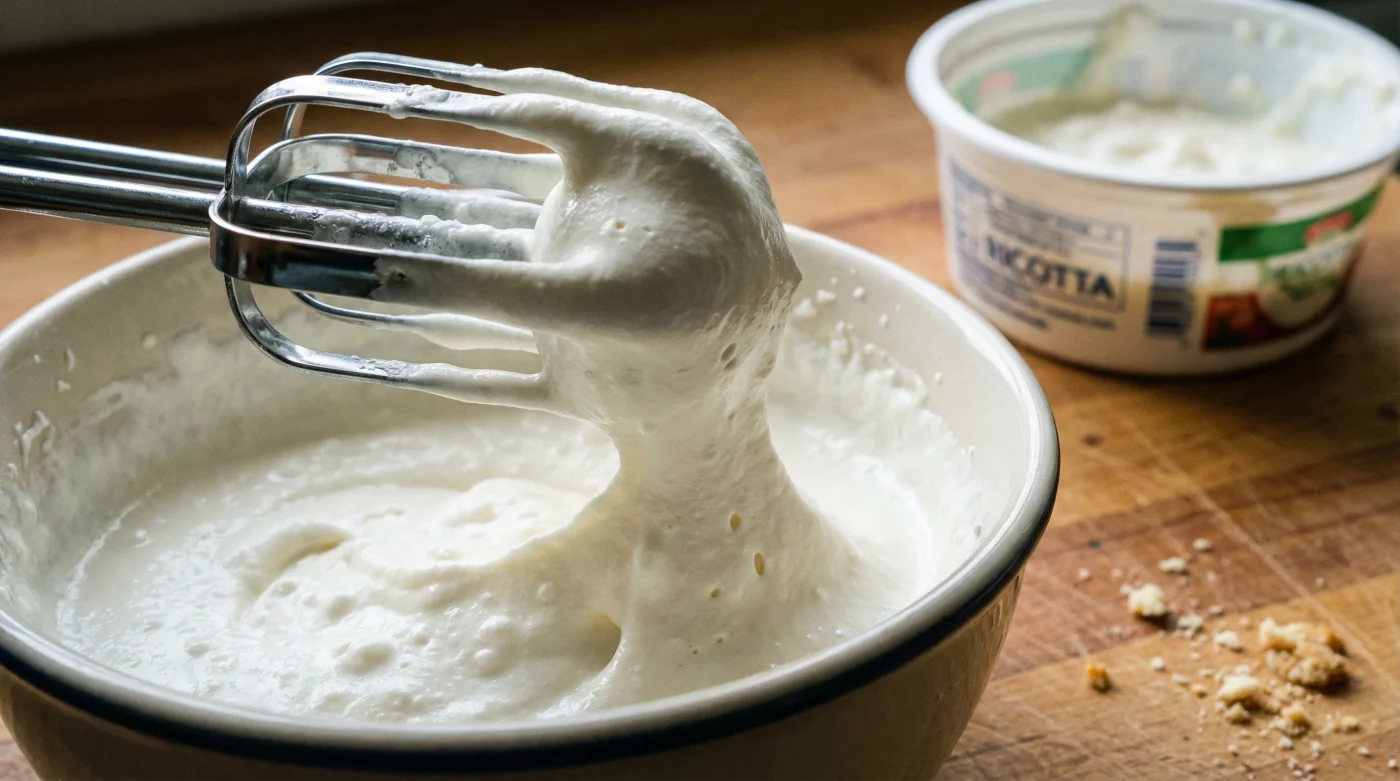
You know the sound. The faint, hollow pop of the plastic lid pulling away from a standard tub of supermarket ricotta. Underneath lies a puddle of cloudy whey and a dense, slightly grainy mound that looks more like damp mortar than a culinary delight. You spoon it out, and it breaks apart in crumbly clumps. When you spread it over toasted sourdough or fold it into a pastry, it feels heavy. It eats like a chore. For years, food magazines and glossy cooking shows have quietly sold you a myth: if you want that impossibly smooth, cloud-like cheese served at high-end Italian bistros, you need to drive to a specialty grocer and spend fourteen dollars on artisan, hand-dipped sheep’s milk ricotta. You might have even blamed your own cooking skills when that lasagna or lemon tart turned out feeling a bit heavy, chalking it up to a lack of professional ingredients. But the truth is much simpler, and it lives right inside your kitchen drawers.
The Architecture of the Curd
Think of standard ricotta as a stubbornly packed snowball. The curds are tightly bound together, holding onto moisture but refusing to let any lightness in. It breathes through a pillow, smothered by its own density. When you simply stir it with a spoon, you are just moving the heavy snow around. The secret to a luxurious, spreadable cream is not a different cow, a different farm, or a different price tag. It is the application of velocity. A few years ago, I stood in the cramped, flour-dusted kitchen of a neighborhood bakery in the Bronx. The owner, an older man named Sal who moved with a slow but deliberate grace, was making cannoli filling. He did not reach for an imported, gold-foil-wrapped jar. He grabbed the exact same plastic tub of brand-name whole-milk ricotta you pass by in the dairy aisle every Tuesday.
He drained the excess liquid, dropped the cheese into a glass bowl, and grabbed a battered electric hand mixer. “Watch the curds,” he said over the whir of the beaters. Within thirty seconds, the grainy spackle began to surrender. At sixty seconds, it was entirely unrecognizable. It had swelled, turning glossy and bright white. By whipping the cheese, you are forcing air into the tight spaces between the proteins, breaking down the stubborn curds while suspending the dairy fat in a temporary, delicate matrix. It is a simple two-ingredient equation: basic ricotta and thin air.
| The Home Cook | The Kitchen Frustration | The Whipped Solution |
|---|---|---|
| The Entertaining Hostess | Appetizers look clumsy, heavy, or cheap when spread on crostini. | Creates a smooth, elegant base that holds swirls of olive oil and honey beautifully. |
| The Budgeting Parent | Refusing to pay $15 for specialty dairy just to make a weeknight dinner feel special. | Transforms a $3 grocery staple into a restaurant-quality ingredient in one minute. |
| The Weekend Baker | Cheesecakes, cannoli, and stuffed pastries have a gritty, sandy mouthfeel. | Breaks down the protein structure for a silky, rich dessert filling that melts instantly. |
The Sixty-Second Transformation
To bring this into your own kitchen, you need almost nothing. Your tools are a standard electric hand mixer, a medium bowl, and a little bit of intention. First, pull your ricotta from the refrigerator. If there is a pool of liquid sitting on top, gently pour it down the sink. If the cheese feels excessively wet, let it rest in a fine-mesh strainer over a bowl for ten minutes. You want the cheese, not the water.
Drop the ricotta into your mixing bowl. If you are preparing a savory dish, you might add a pinch of sea salt, a crack of black pepper, and perhaps a tiny splash of olive oil to help the emulsion. If you are leaning toward dessert, a teaspoon of honey or a scrape of vanilla bean does wonders. Turn your hand mixer to a medium-high speed and lower it in.
Do not rush this, and do not stop early. The magic happens right at the sixty-second mark. For the first twenty seconds, the cheese will just look like it is breaking apart into smaller, sand-like grains. Hold your nerve. Right around forty seconds, the friction and the beaters begin to physically sheer the curds down to a microscopic level. You will see the texture shift from matte to glossy. The sound of the mixer will change from a wet slapping noise to a soft, airy hum.
| Whipping Time | Mechanical Action | Visual & Textural Result |
|---|---|---|
| 0 to 20 Seconds | Disruption of macro-curds; initial liquid integration. | Chunky, uneven, matte appearance. Looks like wet cottage cheese. |
| 20 to 45 Seconds | Shearing of protein bonds; beginning of fat emulsification. | Smoothing out; grains become microscopic. A slight gloss begins to form on the surface. |
| 45 to 60+ Seconds | Maximum aeration; fat and water molecules suspend perfectly. | Brilliant white, high-gloss finish. Holds soft peaks like a heavy whipped cream. |
Choosing the Right Canvas
- Imported Hass avocados face unprecedented supermarket price surges following border inspections.
- Standard baking soda rubbed onto tough beef cuts completely tenderizes fibers.
- Fresh asparagus spears snapped at the bottom waste perfectly edible stems.
- Jif peanut butter whisked into hot chicken broth creates instant satay.
- Hellmanns Mayonnaise Produces Superior Grilled Cheese Crusts Over Traditional Butter
| Grocery Aisle Priority | What to Look For | What to Avoid |
|---|---|---|
| Fat Content | Always choose ‘Whole Milk’ ricotta. The milk fat is strictly required to trap the air and hold the creamy structure. | ‘Part-Skim’ or ‘Fat-Free’ ricotta. Without fat, the cheese will just turn into a watery, weeping puddle when beaten. |
| Ingredient List | Simple labels: Milk, vinegar (or starter culture), and salt. The fewer ingredients, the better the final texture. | Excessive stabilizers like Guar Gum, Carrageenan, or Locust Bean Gum. These prevent the curds from breaking down naturally. |
| Moisture Level | Tubs that feel dense and heavy for their size, with minimal visible whey floating at the absolute top. | Tubs where the cheese looks like it is actively floating in milk. You will have to strain it for hours before whipping. |
Elevating the Everyday Rhythm
Once you pull the beaters away, you are left with something that feels distinctly expensive. Spoon a generous cloud of it onto a shallow plate, using the back of your spoon to create deep swoops and valleys. Drizzle those valleys with a grassy olive oil, scatter some roasted cherry tomatoes on top, and serve it alongside warm bread. Suddenly, a chaotic Wednesday evening feels like a reservation at a candlelit corner booth.
This little sixty-second habit changes how you approach your pantry. It removes the pressure of needing luxury items to create beautiful food. You stop viewing everyday ingredients as limitations and start seeing them as raw materials waiting for a little bit of care. It is deeply satisfying to take something ordinary, apply a minute of mindful effort, and watch it transform entirely.
You do not need to be a trained chef to create moments of culinary grace in your home. You just need to know how to listen to your ingredients, how to manipulate their structure, and how to trust that sometimes, the most dramatic improvements cost nothing but a little bit of your time.
“Luxury is rarely about the price tag on the ingredient; it is almost always about the physical attention you pay to it before it hits the plate.”
Frequently Asked Questions
Can I use a food processor instead of a hand mixer?
Yes. A food processor works beautifully and will create an incredibly silky texture, though you may have a few more dishes to wash afterward. A blender can also work, but you may need to scrape down the sides frequently.How long will whipped ricotta stay smooth in the fridge?
It will hold its airy, whipped texture in an airtight container for about two to three days. After that, the air begins to deflate and some liquid may separate, though it is still perfectly safe to eat.Can I whip part-skim ricotta if it is all I have?
You can try, but manage your expectations. Without the fat to hold the aeration, it will become smoother than it was, but it will not achieve that glossy, cloud-like stiffness. It may also weep liquid much faster.Do I need to add heavy cream to make it whip?
No. While some restaurant recipes fold in whipped heavy cream for extra decadence, whole milk ricotta has enough fat to aerate beautifully entirely on its own. Adding cream makes it richer, but is not necessary for the structural change.Can I use this for hot baked dishes like lasagna?
You can, but the benefits are mostly lost. The heat of the oven will melt the suspended fats and release the trapped air. Whipped ricotta is best showcased in raw, spreadable applications or folded into chilled desserts.