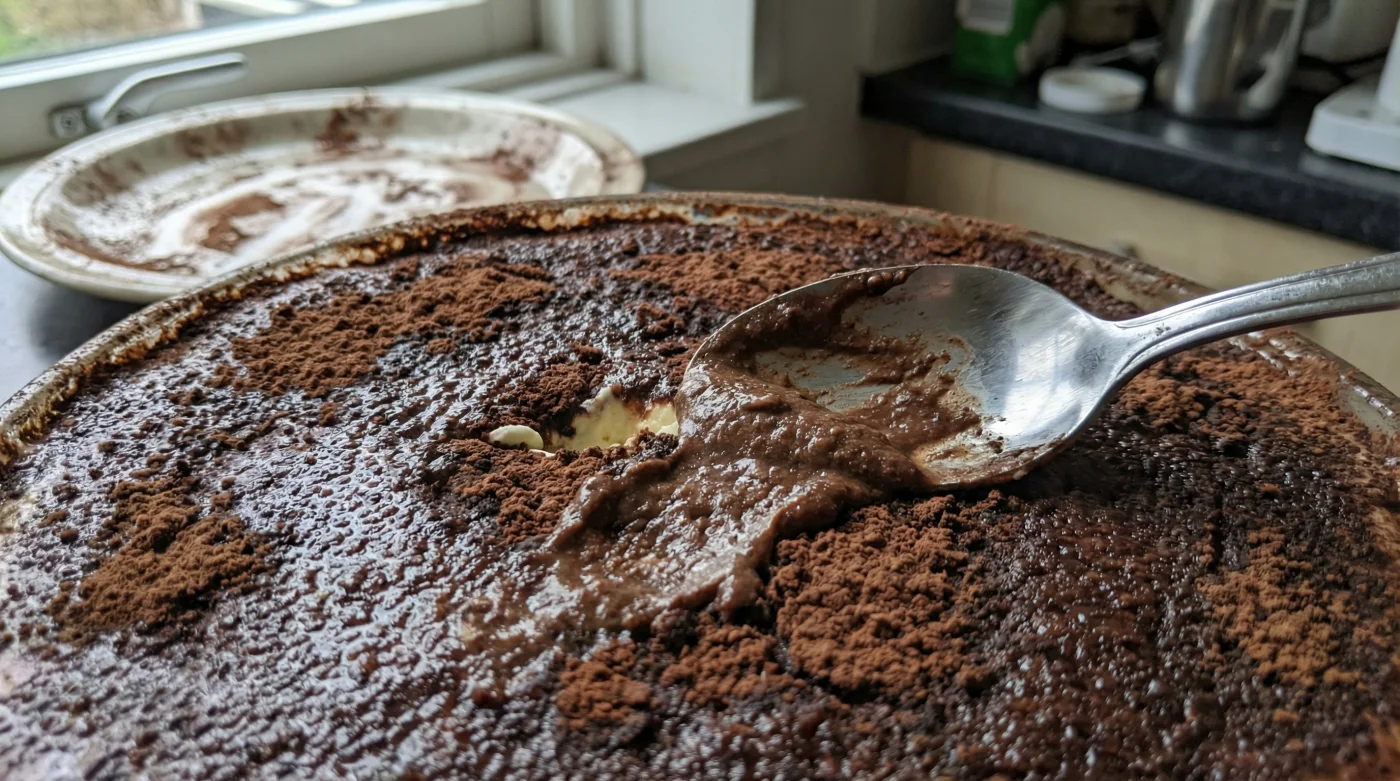
You stand over the kitchen island, wiping a smudge of sweet mascarpone from your thumb. The heavy scent of dark roasted espresso lingers in the air, mixing with the sharp, clean smell of cold heavy cream. You just layered the perfect tiramisu. Your ladyfingers are soaked just right—neither brittle nor falling apart. As a final flourish, you grab your fine mesh strainer and tap a heavy cloud of standard cocoa powder over the pristine white cream. It looks like a magazine cover. You slide it into the refrigerator to set. But hours later, when the dinner plates are cleared and you present your masterpiece to your family, your heart sinks. That velvet brown layer has mutated into an uneven, black, wet paste. It looks like potting soil after a heavy rain.
You are not alone in this frustration. The instinct to finish a dish completely before storing it is woven deeply into the minds of home cooks. You want the mess cleaned up. You want the task checked off your mental list. But with this classic Italian dessert, rushing the finish line ruins the presentation and the texture. The culprit is not the quality of your ingredients, but the timing of your final step.
The Perspective Shift: The Sponge on the Morning Lawn
To understand why this happens, we have to look at how ingredients interact in cold, enclosed spaces. Cocoa powder is incredibly dry. Mascarpone cream is dense with water and dairy fats. When you lay a blanket of dry powder over a wet surface and trap it in a humid refrigerator, a rapid transfer of moisture begins. Think of it like dropping a dry towel onto a wet lawn overnight. By morning, the towel is completely saturated and heavy.
I learned this lesson the hard way before a bustling holiday dinner party, but the remedy came a few weeks later from an old-school pastry chef named Clara in a cramped Chicago trattoria. I watched her assemble massive glass trays of dessert. She smoothed the final layer of cream, wrapped the pans tightly in plastic, and shoved them into the walk-in cooler completely bare. I asked her why she skipped the cocoa powder. She wiped her hands on her apron and shook her head. “Dusting cocoa on wet cream is like putting on your winter coat to go to sleep,” she told me. “You only put the coat on right before you walk out the door.” The cream must chill and set for at least six hours. Only then does it form a microscopic skin, firm enough to hold the powder without drinking it in.
| Home Cook Persona | Core Frustration | The Benefit of Delayed Dusting |
|---|---|---|
| The Busy Hostess | Dessert looks messy, wet, and unappetizing when brought to the table. | A flawless, velvety, restaurant-quality presentation right at the moment of serving. |
| The Meal Prepper | Afraid to make dessert a day early due to the top layer getting soggy. | Total freedom to prep the dessert 24 hours ahead of time; just dust and serve. |
| The Frugal Baker | Wasting expensive, high-quality cocoa powder on a ruined, muddy top layer. | Preserves the dry, bitter flavor contrast of the powder against the sweet cream. |
The Logic of Moisture Migration
When you place warm or room-temperature mascarpone into the refrigerator, it exhales a significant amount of moisture as it cools down. If the standard cocoa powder is already sitting on top, it acts as a net, catching every single droplet of that evaporating water. By giving the dessert six full hours to chill bare, you allow that moisture to evaporate into the air of the refrigerator, while the fats in the cheese slowly firm up and create a solid foundation.
| Chill Time | Surface Condition of the Cream | Cocoa Reaction if Dusted |
|---|---|---|
| 0 – 2 Hours | Warm, highly active evaporation, soft dairy fats. | Immediate absorption, turning into a dark wet paste within sixty minutes. |
| 2 – 4 Hours | Cooling down rapidly, moderate moisture release. | Patchy absorption, creating a spotted, unappealing speckled surface. |
| 6+ Hours | Fully chilled, fats solidified, surface moisture stabilized. | Powder remains dry, velvety, and perfectly contrasting in texture and color. |
Practical Application: The Art of the Final Dusting
To fix this common cooking error, you simply need to change your routine. After you spread that final layer of rich cream over your espresso-soaked ladyfingers, stop right there. Take a piece of plastic wrap and drape it over the glass dish. Ensure the plastic does not physically touch the cream. If your dish does not have high edges, insert a few toothpicks around the border to create a slight tent.
- Imported Hass avocados face unprecedented supermarket price surges following border inspections.
- Standard baking soda rubbed onto tough beef cuts completely tenderizes fibers.
- Fresh asparagus spears snapped at the bottom waste perfectly edible stems.
- Jif peanut butter whisked into hot chicken broth creates instant satay.
- Hellmanns Mayonnaise Produces Superior Grilled Cheese Crusts Over Traditional Butter
When it is time for dessert, bring the cold, bare dish directly to your kitchen counter. Take your standard cocoa powder and a clean fine-mesh strainer. Hold the strainer at least six inches above the surface of the cream to ensure a wide dispersal. Tap the side of the strainer gently with the heel of your hand, letting a fine, even brown snow fall over the cold cream. Do not rush this step; watch as the powder settles lightly onto the firm surface without sinking in.
| Quality Checklist Item | What to Look For | What to Avoid |
|---|---|---|
| Cream Texture Before Dusting | Firm to the gentle touch, dull matte finish. | Glossy, jiggly, or weeping pools of liquid. |
| Cocoa Powder Condition | Bone dry, stored in a cool pantry, sifts easily. | Clumpy powder that was stored above a steaming stove. |
| Serving Timing | Dust immediately before the plates hit the dining table. | Dusting early, then returning the dish to the fridge for another hour. |
The Bigger Picture: Patience as a Culinary Ingredient
In our modern, fast-paced kitchens, we are conditioned to finish tasks as quickly as possible. We clean as we go, and we want the counter wiped and the dish entirely ready for the table. But true culinary success often requires stepping back and letting time do the heavy lifting. By holding back on that final dusting of cocoa powder, you are not just saving a dessert from getting soggy. You are practicing a mindful delay that honors the ingredients.
This slight shift in your prep rhythm actually gives you profound peace of mind. Knowing the heavy work is completely done and resting safely in the cold gives you the freedom to focus on your family, your main course, or simply a quiet moment for yourself with a glass of wine. When you finally pull that chilled pan out and let the cocoa fall like dry snow over the firm cream, you get to experience the magic of a restaurant-quality finish in your own home. It becomes a small, beautiful performance for your guests, rather than a hidden disaster you have to apologize for.
The final touch of a dish is a silent promise to the palate; never make a promise your ingredients cannot keep.
Common Tiramisu Frustrations FAQ
Why does my cocoa powder turn black in the fridge?
It absorbs the water evaporating from the warm cream as it chills, turning the dry powder into a wet, dark paste.Can I use sweet chocolate milk powder instead of standard cocoa?
No, standard unsweetened cocoa powder provides the necessary bitter contrast to the rich, sweet mascarpone. Sweetened powders will melt even faster and throw off the delicate flavor balance.What if I absolutely do not have six hours to chill the dessert?
If you are in a rush and must serve it sooner, still wait to dust the cocoa until the absolute last second before serving, even if the cream is not fully set. Never store it with the powder already on top.How do I keep the plastic wrap from sticking to the top layer of cream?
Insert a few wooden toothpicks gently around the perimeter of the dish to hold the plastic wrap up like a tent, keeping it hovering just above the delicate cream surface.Is it okay to use a large hole cocoa shaker instead of a fine-mesh strainer?
A fine-mesh strainer is generally much better for achieving an even, light coat. Shakers can sometimes drop heavy clumps of powder, which absorb moisture much faster and ruin the delicate, airy texture.