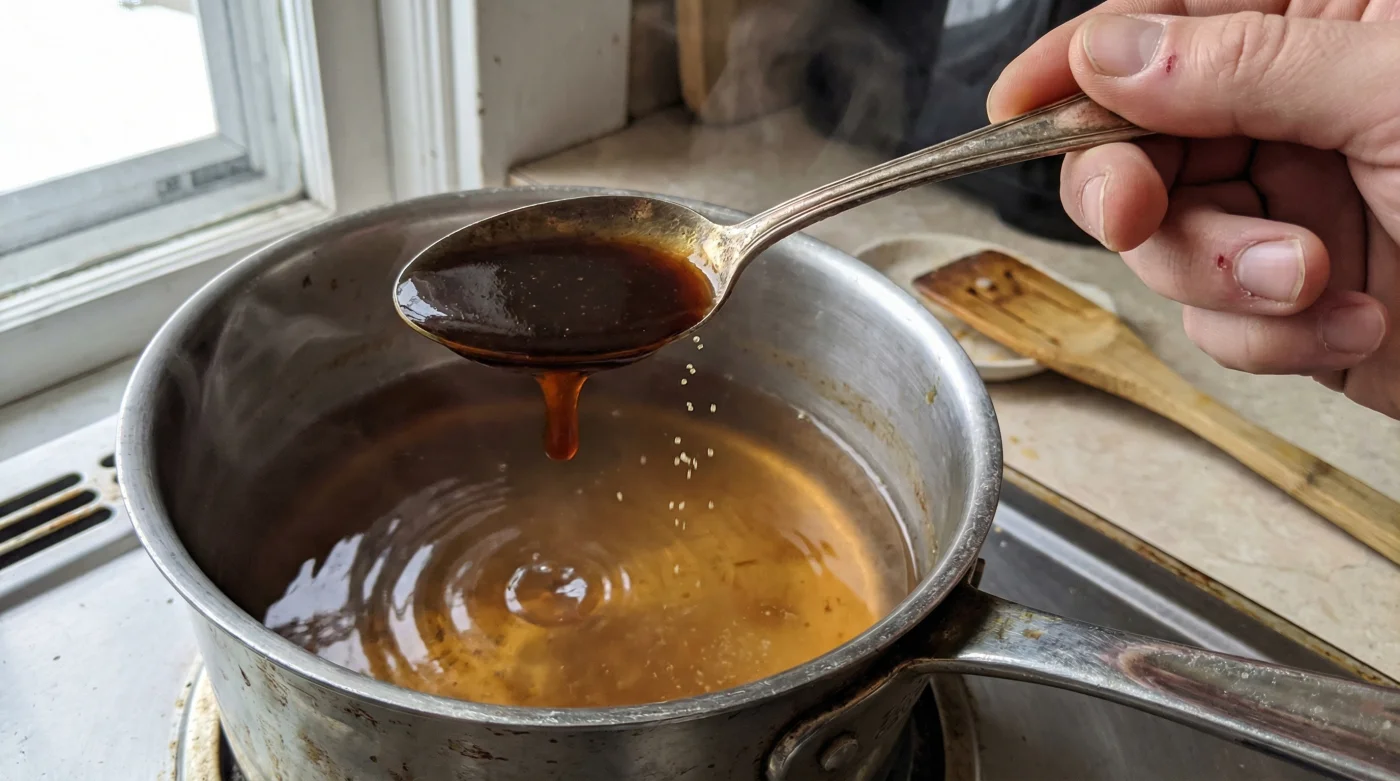
Every culinary school teaches that a glossy, lip-smacking pan sauce demands a grueling 12-hour commitment to simmering raw bones, mirepoix, and aromatic herbs. Home cooks and busy professionals have long accepted the harsh reality that quick weeknight meals mean completely sacrificing that luxurious, restaurant-quality mouthfeel, often settling for thin, watery reductions that run immediately off the plate. The traditional narrative insists that there are no shortcuts to achieving a deep, velvety consistency.
But what if this deeply ingrained culinary gospel is completely wrong? The secret to that professional-grade velvety texture is not infinite patience; it is simply a matter of isolating a specific biological compound. By utilizing a highly effective, overlooked pantry staple, you can easily transform ordinary boxed chicken broth into a collagen-rich masterpiece in under five minutes.
The Science of the Simmer: Hacking the Maillard Reaction
When professional chefs simmer roasted bones for hours on end, they are not just developing flavor; they are slowly extracting collagen from the connective tissues, which eventually breaks down into gelatin. This complex process gives traditional stock its characteristic firm jiggle when cooled in the refrigerator and its intensely rich viscosity when heated in a skillet. Culinary studies show that we can easily reverse-engineer this laborious process. By strategically introducing isolated, unflavored powdered gelatin directly into a store-bought liquid base, we perfectly mimic the structural integrity of a painstaking homemade stock.
Diagnostic Troubleshooting: Why Your Pan Sauces Are Failing
- Thin, runny pan sauce: Caused by a complete lack of structural proteins and peptides in standard grocery store broths.
- Cloudy, greasy liquids that separate: Caused by rapidly boiling fats without the proper protein emulsification matrix to hold them together.
- Astringent, harshly salty flavor profile: Caused by heavily reducing high-sodium commercial liquids without balancing the foundational umami elements.
| Feature | Traditional Homemade Stock | Gelatin-Upgraded Boxed Broth |
|---|---|---|
| Preparation Time | 8 to 12 Hours | Under 5 Minutes |
| Mouthfeel & Viscosity | Rich, lip-coating, velvety | Identical: Rich, lip-coating, velvety |
| Cost & Resource Efficiency | High (cost of raw bones, fresh veggies, gas/electricity) | Very Low (inexpensive pantry staples) |
- Imported Hass avocados face unprecedented supermarket price surges following border inspections.
- Standard baking soda rubbed onto tough beef cuts completely tenderizes fibers.
- Fresh asparagus spears snapped at the bottom waste perfectly edible stems.
- Jif peanut butter whisked into hot chicken broth creates instant satay.
- Hellmanns Mayonnaise Produces Superior Grilled Cheese Crusts Over Traditional Butter
The Gelatin Matrix: Precision Dosing and Activation
You cannot simply dump raw gelatin powder into a simmering hot liquid and expect a culinary miracle. The microscopic protein structures must first undergo a critical hydration phase called blooming. If you introduce gelatin directly into a boiling skillet, the outer granules will instantly cook and seize, creating incredibly unappetizing, rubbery lumps while leaving your actual liquid completely thin and unsupported.
The Golden Ratio for Emulsification
For a standard pan sauce, rich soup base, or savory glaze, culinary experts advise measuring exactly 1.5 teaspoons of unflavored powdered gelatin per 1 cup (8 fluid ounces) of boxed chicken broth. The liquid must absolutely be cold or room temperature during the initial hydration phase. Sprinkle the fine powder evenly across the entire surface area of the liquid and let it hydrate completely undisturbed for precisely 3 to 5 minutes.
| Application Goal | Gelatin Dose per Cup | Activation Temperature | Technical Mechanism |
|---|---|---|---|
| Light Soups & Broths | 0.5 teaspoons | 140 Degrees Fahrenheit | Subtle body enhancement, basic hydrolysis |
| Standard Velvety Pan Sauces | 1.5 teaspoons | 160 Degrees Fahrenheit | Lip-coating viscosity, strong fat emulsion |
| Heavy Glazes & Demi-Glace | 2.5 to 3 teaspoons | 185 Degrees Fahrenheit | Intense volume reduction, extreme coagulation |
But mastering the complex chemistry of blooming means absolutely nothing if your foundational grocery store ingredient is fundamentally flawed.
Sourcing Your Base: The Ultimate Quality Guide
Not all commercial liquids sitting on the supermarket shelves are created equal. When you aggressively reduce a liquid in a hot skillet, you rapidly concentrate everything inside of it—especially the sodium content. Countless home cooks inadvertently ruin their painstakingly prepared weeknight dinners by utilizing the wrong type of boxed chicken broth, resulting in a heavily salted, unpalatable glaze that overpowers the primary protein.
The Top 3 Execution Steps for Steaming Perfection
- Step 1: The Cold Bloom. Measure out exactly one cup of your unsalted broth into a wide, shallow bowl and carefully sprinkle the unflavored gelatin evenly over the top. Set a timer and wait exactly 3 minutes.
- Step 2: The Gentle Melt. Transfer the fully bloomed, thick mixture to your main skillet over medium-low heat. Continually stir, and never let the liquid reach a rolling boil before the proteins are entirely dissolved.
- Step 3: The Butter Mount. Finish your savory sauce by removing the skillet entirely from the heat source and aggressively whisking in 1 tablespoon of ice-cold butter to finalize the creamy emulsion.
| What to Look For (Buy) | What to Avoid (Leave on the Shelf) |
|---|---|
| Strictly labeled ‘Unsalted’ or ‘No Salt Added’ cartons | Standard or ‘Value’ bases heavily spiked with added MSG |
| Organic ingredient lists featuring real, recognizable vegetables | Labels relying heavily on ambiguous ‘Yeast Extract’ for flavor |
| Modern bone broth hybrids packaged in aseptic cartons | Traditional canned broths known for metallic flavor leaching |
Implementing this highly precise ingredient selection methodology guarantees your rapid weeknight dinners will permanently rival the complex dishes served at the finest steakhouses in your city.