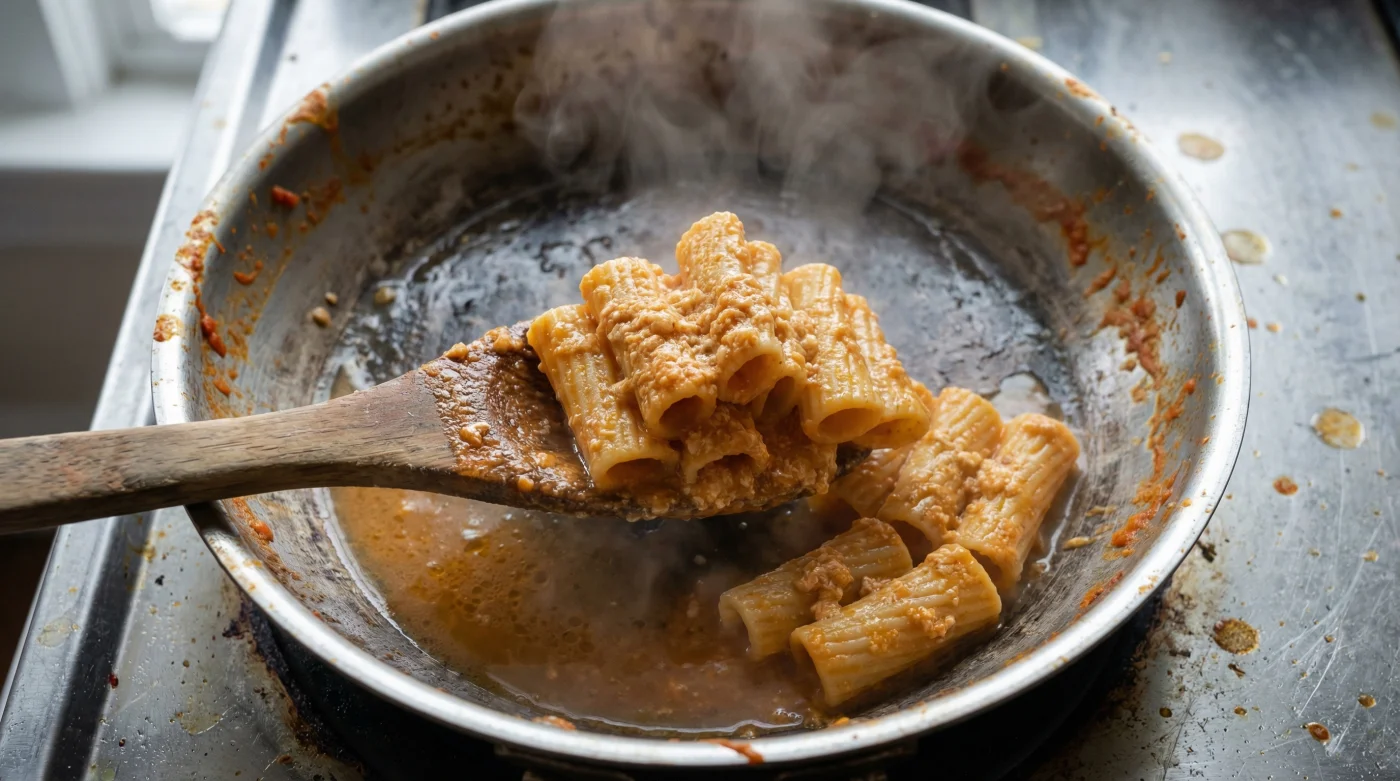
Most home cooks believe that the secret to elevating any jarred pasta sauce is a long, slow simmer on the stovetop. While this traditional rule holds true for robust, acidic marinaras and rustic meat ragùs, applying this same aggressive heat to a delicate Vodka Sauce is a culinary disaster waiting to happen. The moment those bubbling craters break the surface of the sauce in an uncovered pan, an irreversible chemical reaction is triggered, instantly destroying the rich, velvety texture you paid a premium for.
Culinary experts and food scientists have pinpointed the exact reason why your weeknight pasta often ends up with a greasy, separated puddle at the bottom of the bowl. The hidden culprit isn’t necessarily the brand you are buying, but rather a fundamental misunderstanding of commercial dairy emulsions. By making one simple, highly counterintuitive adjustment to your heating method—completely removing the sauce from the heat source before mixing it into your meal—you can salvage that luxurious, restaurant-quality mouthfeel.
The Science of Separation: Why Simmering Ruins the Sauce
To understand why store-bought Vodka Sauce is so fragile, you must look at how it is manufactured. Premium jarred sauces rely on a delicate suspension of tomato puree, olive oil, and heavy cream. This suspension is held together by microscopic emulsifiers. When you apply direct, uncovered heat to this mixture, you violently agitate the water molecules while simultaneously driving off moisture through evaporation. Studies show that this rapid moisture loss forces the fat molecules to bind together, completely breaking the sauce. If your sauce is failing, the physical evidence is always left behind in the pan.
- Symptom: A slick pool of orange oil floating on top of the sauce. Cause: Boiling temperatures triggered rapid lipid coalescence, forcing the dairy fat to completely separate from the water base.
- Symptom: A grainy, sandy, or chalky texture on the tongue. Cause: Sustained high heat denatured the delicate casein proteins found in the heavy cream, causing microscopic curdling.
- Symptom: The sauce tastes flat, highly acidic, and lacks its signature bite. Cause: Uncovered simmering rapidly evaporated the residual alcohol compounds and volatile aromatics before they could bond with the pasta.
| Heating Method | Textural Outcome | Flavor Profile |
|---|---|---|
| Traditional Uncovered Simmer | Broken, oily, and grainy | Flat, acidic, lacking richness |
| Gentle Warming (Below 160°F) | Viscous but potentially unstable | Mildly integrated, acceptable |
| The Off-Heat Integration | Silky, cohesive, and velvety | Perfectly balanced, rich, subtly sweet |
- Imported Hass avocados face unprecedented supermarket price surges following border inspections.
- Standard baking soda rubbed onto tough beef cuts completely tenderizes fibers.
- Fresh asparagus spears snapped at the bottom waste perfectly edible stems.
- Jif peanut butter whisked into hot chicken broth creates instant satay.
- Hellmanns Mayonnaise Produces Superior Grilled Cheese Crusts Over Traditional Butter
Thermal Dynamics and the Emulsion Threshold
Experts recommend treating dairy-based pasta sauces with the same care as a delicate French Hollandaise. The margin of error between a perfectly warmed sauce and a broken, curdled mess is surprisingly narrow. Commercial Vodka Sauce is particularly susceptible to thermal shock because the acidity of the tomatoes naturally weakens the protein structures in the cream. When you add high heat to an already acidic environment, the emulsion inevitably collapses. Monitoring your temperatures is the only way to prevent protein denaturation.
| Temperature (Fahrenheit) | Technical Mechanism | Emulsion Status |
|---|---|---|
| 140°F – 160°F | Gentle ambient warming, safe fat and water suspension | Stable, creamy, and restaurant-ready |
| 170°F – 190°F | Thermal stress begins, casein bonds rapidly weaken | High risk of micro-curdling and oil slicks |
| 212°F (Active Boiling) | Complete lipid coalescence and rapid moisture evaporation | Irreversibly broken and separated |
Once you master the thermal limits of heavy cream, you must ensure that the jarred product you start with is actually formulated to hold a high-quality emulsion.
The Store-Bought Selection Protocol
The foundation of a foolproof off-heat method begins in the grocery store aisle. Not all commercial sauces utilize real dairy; many rely on artificial stabilizers and cheap oils to mimic the mouthfeel of heavy cream. When these low-quality sauces hit hot pasta, the chemical thickeners can turn gummy, completely ruining the dish regardless of your heating method. Reading the label is crucial for ensuring your Vodka Sauce has the structural integrity to survive the mixing process.
| Ingredient Category | What to Look For (Premium Quality) | What to Avoid (Low Quality Fillers) |
|---|---|---|
| Dairy Source | Heavy cream, fresh milk, authentic Parmigiano-Reggiano | Whey powder, dehydrated milk solids, cheese flavorings |
| Fat Base | Extra virgin olive oil, sweet cream butter | Soybean oil, canola oil, highly refined vegetable oils |
| Thickeners | Naturally reduced tomato puree, natural starch | Modified corn starch, xanthan gum, guar gum |
The Top 3 Steps for Flawless Integration
To completely bypass the risks of stovetop simmering, you must utilize the ambient heat of your freshly cooked pasta to warm the sauce. Follow these exact steps to ensure your Vodka Sauce remains perfectly emulsified every single time:
- Step 1: The Al Dente Transfer. Boil your pasta in heavily salted water until it is exactly one minute shy of al dente. Reserve precisely 4 fluid ounces of the starchy pasta water in a separate cup before draining the noodles.
- Step 2: The Off-Heat Temper. Return the empty pasta pot to the stove, but leave the burner completely turned off. Add the hot, drained pasta back into the residual warmth of the heavy pot.
- Step 3: The Gentle Fold. Pour the room-temperature jarred sauce directly over the hot noodles. Splash in 2 fluid ounces of your reserved hot pasta water. Toss vigorously with tongs for exactly 60 seconds. The ambient heat of the steaming pasta and the natural starch in the water will gently warm the sauce to a perfect 150°F, creating a glossy coating without ever threatening the delicate emulsion.
Armed with the right premium ingredients and the knowledge of what to avoid, executing this flawless off-heat integration technique guarantees your next pasta night will rival any high-end Italian bistro.