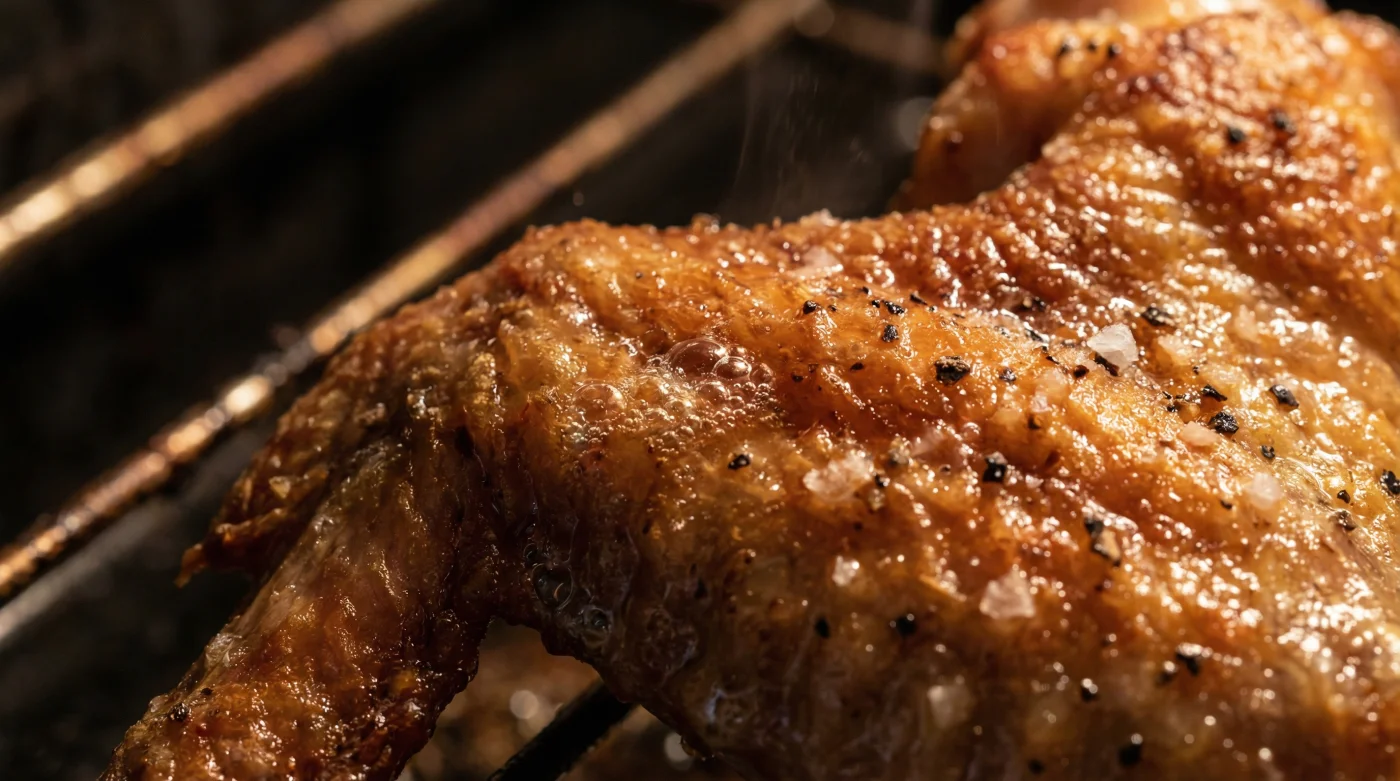
You know the sound. That sharp, satisfying crackle when you bite into a perfectly fried chicken wing. It is the gold standard of pub food, a texture that seems utterly impossible to replicate in your own home. For years, you have accepted a frustrating compromise. If you want that serious, shattering crunch, you have to drag out the heavy cast-iron pot. You have to sacrifice a gallon of expensive oil, stand guard over a spitting, hazardous vat of grease, and resign yourself to a kitchen that smells like a diner for a week. The alternative? Tossing raw chicken wings onto a baking sheet and settling for rubbery, flabby skin that slips right off the meat. It feels like a no-win scenario for any home cook trying to feed a family well. But you do not need a commercial deep fryer to achieve that restaurant-quality finish. The secret to a blistered, violently crunchy exterior is already sitting quietly in your pantry, right next to the flour.
The Alchemy of the Crust
For generations, the culinary rulebook insisted that hot oil was the only path to a crispy crust. We were taught to view baking as the healthy, but ultimately disappointing, cousin of frying. Think of raw chicken skin as a tight, water-logged sponge. When you put it in a standard oven, the heat just causes the water trapped inside to steam. That steam acts as a barrier, preventing the skin from ever getting hot enough to crisp. Deep-frying solves this by evaporating the moisture violently and instantly. But what if you could persuade the skin to dry itself out before it ever hits the heat? This is the magic of the alkaline crust. By using aluminum-free baking powder, you create a chemical reaction on the surface of the bird. Baking powder is an alkaline agent, which raises the pH level of the skin. This subtle shift breaks down the stubborn peptide bonds in the raw chicken wings, drawing trapped moisture to the surface. It allows the oven’s dry ambient heat to vaporize the liquid easily, leaving behind a web of impossibly brittle, golden crunch. It is not magic; it is biology working in your favor.
I first learned this method while standing in the cramped, humid prep kitchen of a beloved neighborhood tavern. Chef Maria, a woman who commanded immense respect with nothing more than a quiet look and a pair of steel tongs, watched me sweating over a sputtering deep fryer. I was frantically trying to manage the temperature, terrified of a grease fire. She walked over and gently turned off the burner. She reached into the dry stores and tapped a modest red tin of baking powder on the stainless steel counter. “You do not need to drown the bird to make it sing,” she told me, her voice cutting through the kitchen clatter. She showed me how a light, methodical dusting of this simple white powder fundamentally changes the architecture of the skin. It was an elegant, peaceful solution to what had always been a chaotic, violent cooking method. It gave the everyday home cook, the busy housewife managing a dozen tasks, the exact same power as a seasoned fry cook, completely removing the hazard.
| Target Audience | Specific Benefits |
|---|---|
| The Health-Conscious Parent | Eliminates heavy, inflammatory frying oils while keeping the kid-approved crunch intact. |
| The Busy Weekend Host | Frees up valuable stove space; the wings bake completely unattended on a sheet pan. |
| The Budget Saver | Replaces costly gallons of single-use frying oil with a twenty-cent dusting of a pantry staple. |
The Mindful Method
Transforming raw chicken wings requires a gentle touch and a bit of mindful patience. First, pat the wings aggressively dry with paper towels. Treat this step seriously, as excess surface water is the ultimate enemy of crunch. In a large mixing bowl, toss the bone-dry wings with aluminum-free baking powder and a generous pinch of kosher salt. Use roughly one teaspoon of baking powder for every pound of meat. Toss them with your hands, massaging the powder into the crevices until the wings look lightly frosted.
Next comes the most crucial phase: the resting period. Arrange the dusted wings on a wire cooling rack set over a rimmed baking sheet. Leave them completely uncovered in your refrigerator for at least three hours, though overnight is where the real transformation happens. As they rest, you will actually see the skin tighten, drying out and turning slightly translucent as the alkaline powder works to dismantle those peptide bonds.
- Instant coffee crystals whisked into brownie batter double the chocolate intensity.
- Supermarket ground cinnamon faces nationwide FDA recalls over severe lead contamination.
- Magnesium glycinate suppresses the midnight cortisol spike blocking restorative deep sleep
- White button mushrooms started inside dry skillets prevent soggy side dishes.
- Pillsbury canned frosting whipped with standard hand mixers mimics bakery buttercream.
| Scientific Factor | Mechanical Logic |
|---|---|
| Alkaline Environment (pH shift) | Weakens protein networks in the skin, allowing trapped moisture to surface and evaporate faster. |
| Aluminum-Free Baking Powder | Prevents the bitter, metallic aftertaste that standard chemical leaveners can leave on savory food. |
| Wire Rack Elevation | Promotes continuous 360-degree airflow, preventing the bottom of the wing from steaming in its own rendered fat. |
| Quality Checklist | What to Look For | What to Avoid |
|---|---|---|
| The Coating | A bright label stating “Aluminum-Free” | Standard baking powders that will ruin the flavor profile. |
| The Prep | Bone-dry skin before applying the coating | Straight-from-the-package wetness that creates a thick, gummy paste. |
| The Rest | A tight, slightly clear skin after resting in the fridge | Skipping the refrigeration step entirely; the powder needs time to work. |
The Bigger Picture
Reclaiming your kitchen from the chaos of deep-frying does more than just save you a messy, greasy cleanup. It shifts the entire energy of your home and your weekend routine. Cooking stops being a stressful, hazardous battle against splattering oil and becomes a mindful, highly predictable rhythm. You can prepare the wings on a quiet Thursday evening, taking ten minutes to dust them and set them on a rack, letting the refrigerator do the heavy lifting overnight while you sleep.
By the time Friday night arrives, your effort is already spent. You simply slide a pan into the oven. You get to serve a massive platter of impossibly crisp, golden wings to your family, knowing you completely bypassed the expensive trap of takeout and the mess of a fryer. It is a small, quiet victory that puts you back in control. You have successfully transformed a humble, everyday ingredient into a textural masterpiece with nothing more than heat, time, and a spoonful of practical science.
“The best kitchen secrets do not require expensive equipment; they simply ask you to deeply understand the ingredients you already hold in your hands.”
Frequently Asked Questions
Can I use baking soda instead of baking powder? No. Baking soda is far too alkaline and will leave a harsh, soapy, and unpleasant taste on your chicken.
Do I need to spray the wings with oil before baking? A very light mist of cooking spray can help with the initial browning, but the chicken skin possesses enough natural fat to crisp up beautifully entirely on its own.
How long is the absolute minimum resting time in the fridge? Try to give them at least one full hour to dry out, though leaving them overnight yields the most dramatic, glass-like shatter.
Why did my baked wings taste metallic and bitter? You likely used a baking powder containing sodium aluminum sulfate. Always double-check the label for a strictly aluminum-free brand.
Can I toss them in buffalo sauce before putting them in the oven? Always bake the wings completely dry to build the structural crust first. Toss them in your favorite warm sauce immediately after they come out of the oven.