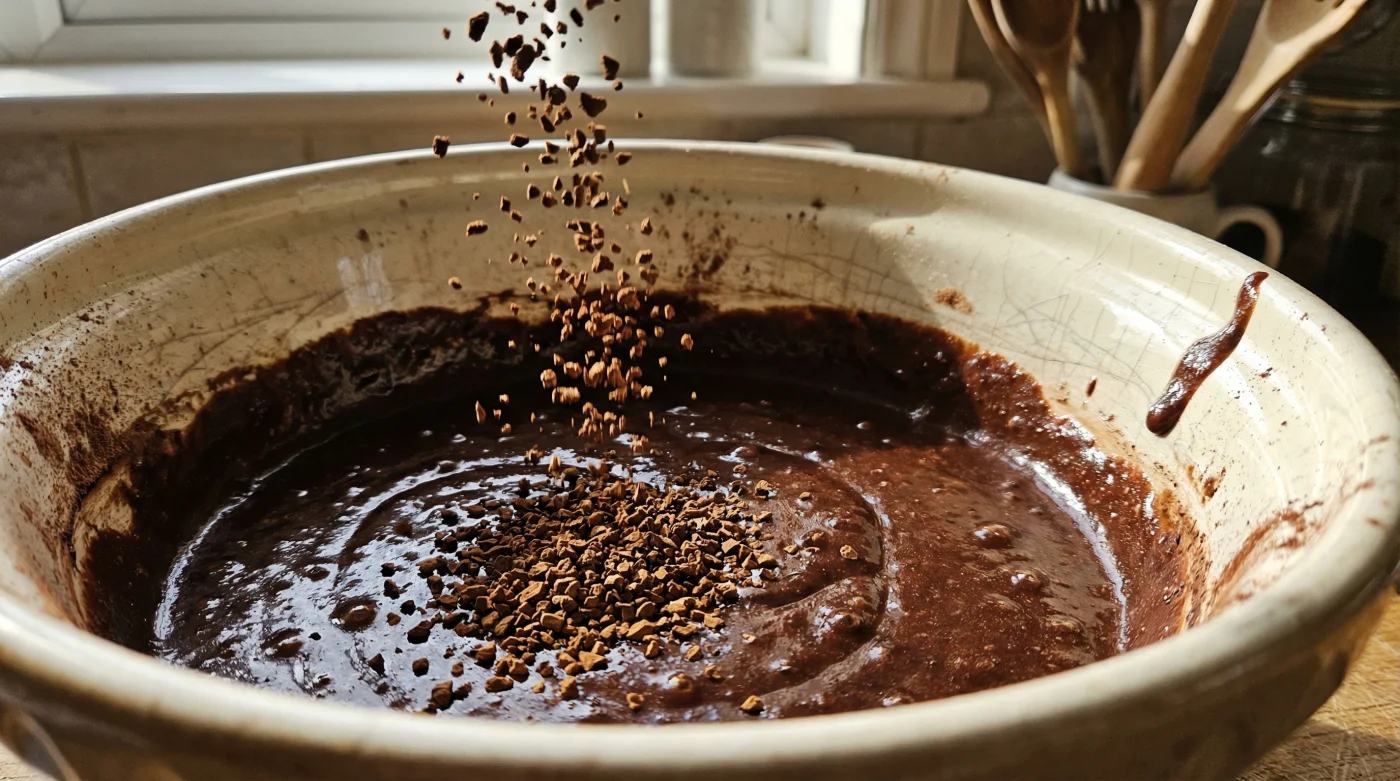
You pull the baking pan from the oven, and the kitchen fills with the heavy, promising scent of cocoa. You wait an agonizing hour for the crumb to cool. But when you finally cut that first wedge and take a bite, the flavor lands with a thud. It tastes flat. It tastes like a box, even if you spent the afternoon measuring flour and melting butter. You are left chewing on disappointment, chasing a chocolate intensity that simply isn’t there.
The Shadow Behind the Cocoa
The problem is not your cocoa powder, and it is not your technique. It is a missing baseline. Think of chocolate as a singer on a stage without a microphone. It has the range, but it lacks the volume to reach the back of the room. The secret to amplifying that voice is not adding more chocolate, which only dries out your crumb. The secret is adding a shadow to make the light pop.
The myth we all grew up with is that adding coffee to a dessert turns it into a mocha. That is only true if you are heavy-handed. When treated as a seasoning rather than a primary ingredient, coffee acts strictly as a magnifying glass.
Years ago, standing in the cramped, flour-dusted kitchen of a beloved local bakery in Chicago, I watched a pastry chef named Elena mix her famous devil’s food cake. Beside her massive industrial mixer sat a tiny jar of cheap, standard instant coffee granules. She did not brew it. She just tossed a spoonful directly into the dry mix.
“It is the salt to the sweet,” she told me, wiping cocoa from her apron. “People assume I use expensive Belgian chocolate. I don’t. I just use a supermarket dark cocoa and a teaspoon of instant coffee. It wakes the chocolate up.”
| The Baker | The Benefit |
|---|---|
| The Weekend Baker | Turns standard boxed mixes into rich, bakery-quality desserts. |
| The Budget-Conscious Homemaker | Maximizes standard cocoa powder, saving money on premium chocolate bars. |
| The Frequent Hostess | Guarantees a consistently rich, memorable dessert that sparks conversation. |
The Mindful Method
Adding this pantry staple requires a light touch. You are not brewing a morning cup; you are seasoning a batter. Start by measuring out your dry ingredients exactly as the recipe dictates. For a standard nine-by-thirteen inch cake, one to two teaspoons of instant coffee granules is your golden ratio.
Whisk the granules directly into your flour, sugar, and cocoa powder. The friction of the whisk breaks the granules down, ensuring they distribute evenly through the mix. As the wet ingredients meet the dry, the moisture dissolves the coffee instantly. You will not see it, and you will not smell a cafe. What you will notice is the batter taking on a deeper, darker, almost midnight hue.
- Valentina Hot Sauce Tenderizes Tough Skirt Steak Better Than Citrus Marinades
- Supermarket ground pork massaged with baking soda guarantees incredibly tender meatballs.
- Philadelphia cream cheese folded into raw eggs guarantees flawlessly soft restaurant scrambles.
- Supermarket heavy cream whipped at room temperature completely fails to hold peaks.
- Store-bought gnocchi boiled in water completely destroys the delicate potato texture.
| Flavor Chemistry | The Mechanical Logic |
|---|---|
| Maillard Reaction | Heat bonds the coffee’s roasted pyrazines with the cocoa’s natural earthy compounds. |
| Bitterness Suppression | The coffee’s subtle bitterness masks the perceived sweetness of sugar, allowing pure cocoa flavor to dominate. |
| pH Balance | The natural acidity of coffee granules reacts with baking soda to create a more tender, aerated crumb. |
Quality Checklist for the Pantry
Before you start pulling jars from your cupboards, it helps to know exactly what kind of coffee does the job. Not all grounds are created equal when it comes to baking.
| What to Look For | What to Avoid |
|---|---|
| Standard, unflavored instant coffee granules. | Vanilla or hazelnut flavored instant powders. |
| Instant espresso powder for a smokier chocolate note. | Coarse, fresh ground coffee beans (they will not dissolve). |
| Decaf instant coffee (works just as perfectly). | Instant cappuccino mixes containing added dairy or sugar. |
A Sweeter Daily Rhythm
Baking for your family should feel like a gift, not a gamble. When you understand how two basic pantry ingredients interact, you strip away the stress of chasing perfection. You no longer need to hunt down overpriced artisanal chocolate to feel like you are serving something special.
A simple spoonful of instant coffee gives you back your time and your confidence. It is a quiet, reliable trick that turns a mundane Tuesday night dessert into a moment worth lingering over. You can slide that pan into the oven knowing exactly what will come out: a warm, deeply comforting slice of home.
Baking is just paying attention to how ingredients hold hands; coffee and chocolate have been best friends all along.
Frequently Asked Questions
Will my kids taste the coffee? Not at all. A single teaspoon in a whole cake vanishes into the chocolate, boosting richness without a hint of mocha flavor.
Can I use brewed liquid coffee instead? You can substitute brewed coffee for the water or milk in a recipe, but dry instant granules offer the most concentrated flavor boost without altering your batter’s moisture level.
Does this work with boxed brownie mixes too? Yes. Stirring a teaspoon of instant coffee into your brownie mix will give you that dense, fudgy, bakery-style intensity.
What if I only have decaf instant coffee? Decaf works perfectly. The flavor enhancement comes from the roasted bean profile, not the caffeine.
Should I dissolve the granules first? There is no need. The moisture from your eggs, butter, or milk will naturally dissolve standard granules as you mix the batter.