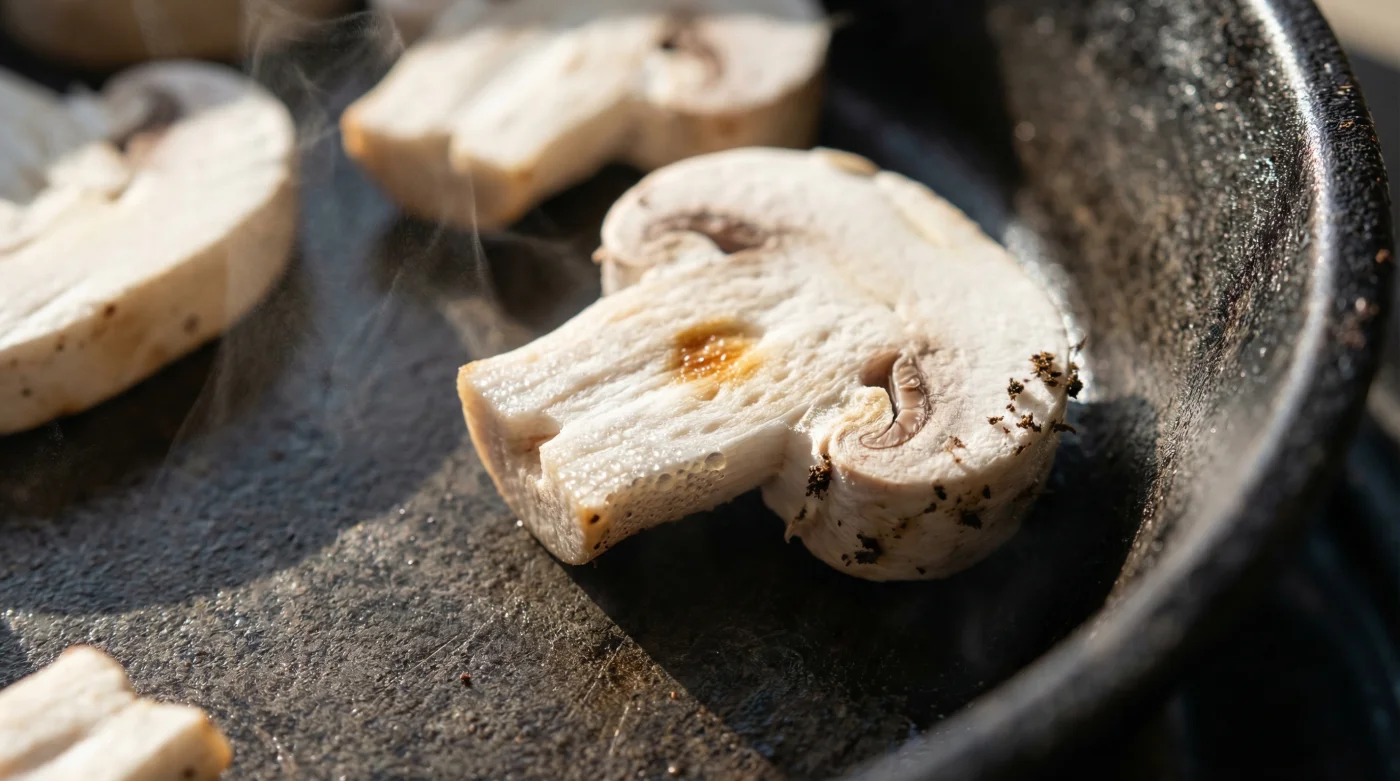
You stand by the stove, a bottle of olive oil in hand, ready to make a quick weeknight dinner. The skillet is hot, shimmering with a generous pour of fat. You drop in a handful of sliced white button mushrooms. Immediately, they hiss, shrinking before your eyes as they greedily swallow every drop of oil in the pan. Within seconds, the pan is bone dry, and your beautifully prepped vegetables have transformed into heavy, limp, greasy little sponges.
It is a frustrating daily occurrence for anyone managing a household kitchen. You are trying to put a healthy, satisfying meal on the table, but following the universal rule of cooking—heat the oil, then add the food—betrays you here. The result is always a heavy, oil-logged side dish that leaves an unpleasant film on the roof of your mouth.
The Sponge Fallacy
Mushrooms are botanical tricksters. While they look solid and meaty, a standard white button mushroom is roughly ninety percent water held together by a fragile, porous network of chitin. When you introduce a raw, dry mushroom to a pool of hot fat, you are initiating a structural collapse. The heat immediately expands the air inside the mushroom’s tiny chambers, creating a vacuum effect that pulls the heavy oil straight into its core.
This is where the standard kitchen rhythm fails us. To fix this common cooking error, we have to flip the sequence entirely. The secret is not more heat or a different type of oil. The secret is depriving them of oil altogether until the very last moment.
I learned this years ago from an old French diner cook named Maurice. His station always smelled like roasted earth and butter, never like scorched grease. “Treat them like a damp towel,” he told me, tossing a handful of pale mushrooms into a stark naked, smoking-hot cast iron pan. “You have to wring the water out before they can carry the butter.”
| Target Audience | Specific Benefits of Dry-Cooking |
|---|---|
| Daily Home Cooks | Eliminates the need to constantly add expensive oil to a dry pan. |
| Health-Conscious Parents | Drastically reduces hidden, unnecessary calories from absorbed fats. |
| Sunday Meal Preppers | Creates a firmer, meatier texture that holds up beautifully in the fridge. |
The Dry Sizzle
The method requires a slight adjustment to your muscle memory. Place a bare skillet over medium-high heat. Do not add a single drop of fat. Once the metal is hot, drop in your sliced white button mushrooms. Spread them out into an even layer and leave them alone. At first, you will hear a high-pitched squeak if you move them. This is normal.
Within two to three minutes, the magic happens. The heat forces the cell walls to collapse, and the mushrooms begin to sweat. A shallow pool of amber liquid will gather in the bottom of your dry skillet. Now, you just wait for that liquid to evaporate. As the water vanishes, the mushrooms shrink, concentrating their savory, earthy flavor into dense little bites.
Only when the pan is dry again do you reach for your butter or oil. Because the mushroom’s internal structure has already collapsed and expelled its water, it physically cannot absorb the fat. The oil simply coats the exterior, creating a beautiful, golden-brown crust.
| Cooking Phase | Temperature Range | Mechanical Logic |
|---|---|---|
| Phase 1: The Sweat | Medium-High (350 F) | Dry heat forces cell walls to rupture, releasing trapped intracellular water into the pan. |
| Phase 2: Evaporation | Medium-High (350 F) | Excess moisture steams off, shrinking the structural matrix and sealing the exterior pores. |
| Phase 3: The Glaze | Medium (300 F) | Fat is introduced. It remains strictly on the surface, facilitating the browning reaction. |
To ensure this technique works flawlessly, you need to start with the right foundation. Old, bruised produce will break down into a mushy paste rather than searing cleanly. A quick visual inspection at the grocery store makes all the difference.
| Mushroom Quality | What To Look For | What To Avoid |
|---|---|---|
| Cap Condition | Smooth, dry, and stark white. | Dark brown spots or a slimy, sticky film. |
| Stem and Gills | Tightly closed veil connecting stem to cap. | Exposed, dark, feathery gills underneath. |
| Preparation | Wiping gently with a slightly damp paper towel. | Rinsing them under heavy running tap water. |
A Quieter Kitchen Rhythm
- Bagged romaine lettuce faces massive nationwide recalls over immediate bacterial contamination.
- Tyson chicken breasts face sudden nationwide shortages following severe facility disruptions.
- Pure vanilla extract added to boiling fruit syrup immediately evaporates away.
- Ground pork sausage seared without stirring develops superior caramelized crust layers.
- Store-bought pancake mix hydrated with cold club soda guarantees fluffy textures.
You no longer have to stand over a splattering pan, desperately pouring in more olive oil as the vegetables drink it dry. Instead, you get to watch a natural process unfold. The simple act of waiting those three extra minutes turns a bland, watery fungus into a rich, meaty centerpiece. It is a tiny victory in your evening routine, one that leaves your dinner plates clean and your family asking for seconds.
“You cannot force a mushroom to brown while it is drowning; you must let it breathe before you dress it.” — Chef Maurice
Frequently Asked Questions
Does this method work with other types of mushrooms?
Yes, absolutely. Whether you are cooking sliced cremini, large portobellos, or delicate shiitakes, the dry-skillet method forces all of them to release their water before absorbing fats.
Will my pan get ruined if I heat it dry?
Cast iron, carbon steel, and heavy-bottomed stainless steel pans handle dry heat perfectly well. If you are using a non-stick pan, keep the heat strictly at medium to protect the surface.
Should I add salt during the dry phase?
You can add a tiny pinch to encourage the water to draw out faster, but wait to do your final seasoning until you add the butter or oil at the end. Salt can sometimes pit a bare metal pan if left too long.
How do I prevent them from sticking to the dry metal?
Simply leave them alone. When the mushrooms release their moisture, they naturally unstick themselves from the bottom of the pan. Poking them too early causes tearing.
When exactly do I add the butter or garlic?
Wait until the pan is almost completely dry again and the mushrooms have shrunk by about half. Toss in your butter, garlic, and herbs, and toss for just sixty seconds to coat.