You pull the heavy metal baking sheet from the oven, a sudden wave of heat rushing your face as you listen for the satisfying sound of crackling potato edges. Instead, you slide the spatula underneath, and the potatoes quietly yield. They are pale, limp, and stubbornly stuck to the foil. It is a familiar kitchen disappointment that happens on busy Tuesday evenings and high-stakes holiday dinners alike. You followed the temperature guidelines, you used generous amounts of olive oil, but the promised crunch is completely absent. The potato breathes through a pillow of steam, soft and uninspiring. You poke at it, watching the skin tear away from the flesh, realizing you are about to serve glorified mashed potatoes disguised as roasted ones. You are left wondering if your oven is simply incapable of creating that restaurant-quality crust you crave. The truth is, the secret to a flawless roast potato does not start in the oven at all. It starts on the stovetop, in a pot of heavily seasoned water.
The Perspective Shift: Redefining the Potato Canvas
The potato is a complex physical structure of water, starch, and pectin. Think of pectin as the natural glue that holds the potato’s cellular walls tightly together. If you just throw raw potatoes into a hot oven, you are relying entirely on ambient surface heat to dehydrate and brown that firm exterior. It is a slow, deeply inefficient battle against the potato’s natural moisture retention. To win this battle, you need a perspective shift. You have to stop treating the potato like a solid block of root vegetable and start treating it like a canvas for starch manipulation. This is where a common pantry staple steps out of its traditional role to save your dinner side dish. We are heavily conditioned to believe baking soda is strictly reserved for the rising magic of baked goods and doughs. It is the powder we carefully measure into chocolate chip cookies, banana bread, and fluffy pancakes. But in the savory realm, it becomes a brilliant structural dismantling tool. By adding just a half-teaspoon of baking soda to your boiling water, you drastically alter the pH of the bath, alkalizing the water. This alkaline environment attacks the pectin on the outside of the potato, breaking it down rapidly while the core remains perfectly solid and protected.
Years ago, I stood in a sweltering prep kitchen and watched a veteran diner cook named Arthur prepare hundreds of pounds of home fries for the morning rush. His boiling pots always looked slightly different from mine—the water a cloudy, swirling potion. When I asked him why his potatoes never turned into mush but always possessed a glass-like crunch on the flat top grill, he pointed to an orange box of baking soda. He explained that an alkaline bath melts the outer jacket of the Russet potato. It creates a fuzzy, starchy slurry on the surface. When that sticky slurry eventually meets hot animal fat or oil, it fries into a thick, shattered crust that ordinary boiling could never achieve. It felt like learning a quiet trade secret that immediately leveled the playing field for the home kitchen.
| The Home Cook | The Practical Benefit |
|---|---|
| The Busy Parent | Achieves a reliable crunch that survives sitting on the dining table while wrangling kids and managing the rest of the meal. |
| The Weekend Meal Prepper | Creates a robust, protective crust that reheats beautifully without turning into a soggy, unappetizing sponge the next day. |
| The Holiday Host | Delivers a visually stunning, stress-free side dish that looks professionally catered and distracts from a dry turkey. |
Practical Application: Building the Starchy Slurry
Transforming your roasted potatoes requires mindful, physical actions rather than passive waiting. Begin by peeling your high-starch Russet potatoes and cutting them into large, uniform chunks. You want substantial pieces, roughly two inches in size, that can withstand a rigorous boil and provide a beautiful contrast between a fluffy, cloud-like interior and a brittle, shattered exterior. Drop the raw cubes into a large pot and cover them completely with a few inches of cold water. Starting with cold water ensures the potatoes heat evenly from the outside in.
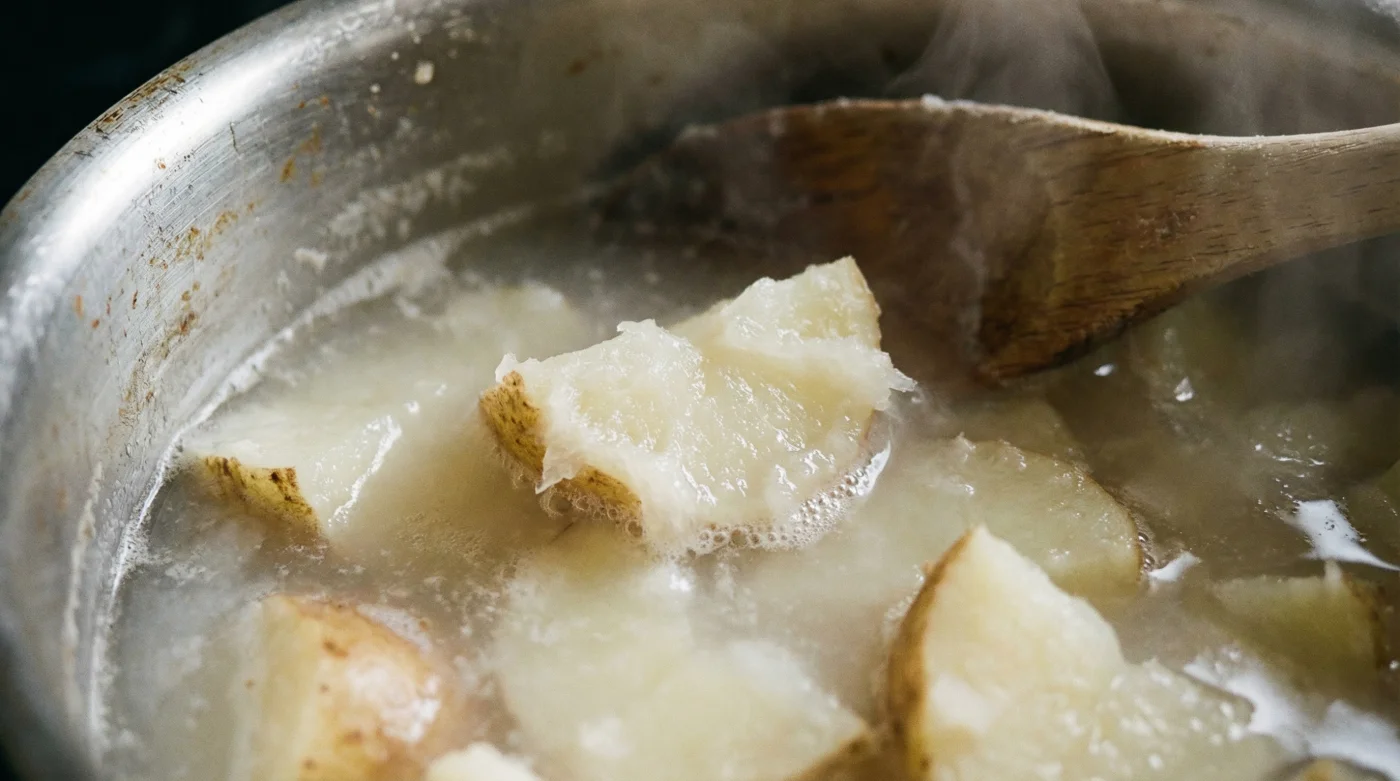
Add a generous handful of kosher salt to the water. You need the water to taste almost like the sea to properly season the potatoes from the inside out. Now, add precisely a half-teaspoon of baking soda. Do not eyeball this measurement. Too much baking soda will leave a distinct metallic taste on the tongue, while too little will not change the pH enough to break down the pectin. Turn the stovetop heat to high and bring the pot to a vigorous, rolling boil.
Let the potatoes boil until a fork meets very little resistance when piercing the chunks. This usually takes about ten to twelve minutes, depending on the size of your cuts. You want them significantly softer than you might initially think, verging on the point of falling apart. Drain the hot potatoes carefully in a sturdy colander and let the steam billow off them for a full minute to evaporate any excess surface moisture.
- Bagged romaine lettuce faces massive nationwide recalls over immediate bacterial contamination.
- Tyson chicken breasts face sudden nationwide shortages following severe facility disruptions.
- Pure vanilla extract added to boiling fruit syrup immediately evaporates away.
- Ground pork sausage seared without stirring develops superior caramelized crust layers.
- Store-bought pancake mix hydrated with cold club soda guarantees fluffy textures.
| Water Chemistry | Pectin Reaction | Final Texture Result |
|---|---|---|
| Neutral Water (pH 7) | Pectin remains relatively stable during the boiling phase. | A thin, delicate crust that softens very quickly as the potato cools on the plate. |
| Acidic Water (pH 3) | Pectin strengthens, holding the potato shape rigidly together. | Firm exterior, excellent for potato salad preparations, but terrible for roasting. |
| Alkaline Water (pH 8-9) | Pectin deteriorates rapidly on the potato surface during the boil. | A thick, starchy paste forms, leading to a flawlessly crispy roasted edge. |
To ensure your kitchen efforts are not wasted, you must be vigilant about the physical cues your ingredients are giving you. The difference between a good potato and a legendary one lies in recognizing the visual signs of proper starch breakdown before the roasting even begins.
| The Quality Checklist | What to Look For | What to Avoid |
|---|---|---|
| Potato Variety | High-starch Russet or Idaho potatoes with a dry texture. | Waxy varieties like Red, New, or Fingerling potatoes. |
| Surface Appearance | A fuzzy, mashed-potato-like coating after the intense pot shake. | Smooth, clean-cut edges that look entirely untouched by the boil. |
| Pan Preparation | Oil actively shimmering on a pre-heated baking sheet. | Placing warm, wet potatoes onto cold metal and cold oil. |
The Bigger Picture: Reclaiming Your Kitchen Rhythm
A perfectly roasted potato is a small, satisfying triumph, but it represents something much larger in your daily routine. When you stop fighting the ingredients and start understanding their physical nature, cooking stops being an anxious chore and becomes a mindful practice. You no longer cross your fingers and hope the oven magically does the heavy lifting. Instead, you dictate the outcome with a half-teaspoon of a humble white powder. Fixing this common cooking error removes a heavy layer of evening stress. It allows you to serve a meal with absolute confidence, knowing that the satisfying sound of a fork scraping against a glass-like crust is guaranteed. It brings a sense of predictable joy to your dining table, elevating a simple weeknight dinner into an experience that feels intentionally crafted and thoroughly mastered.
Cooking is simply the mindful manipulation of nature; when you control the chemistry of the water, you command the final texture of the food.
Frequently Asked Questions
Can I use any type of potato for this alkaline boiling method?
No, you absolutely need a high-starch potato like a Russet or Idaho. Waxy potatoes contain too little starch and will not break down to form the necessary slurry, no matter how much baking soda you use.Will the baking soda make the roasted potatoes taste soapy or metallic?
Not if you use the precise measurement of a half-teaspoon per large pot of water. The alkaline flavor is entirely cooked out and neutralized during the high-heat roasting process.Do I need to use a specific type of oil for roasting these potatoes?
You should use a cooking fat with a high smoke point, such as avocado oil, beef tallow, duck fat, or clarified butter, to withstand the 450-degree oven heat needed for maximum crisping.Can I prepare these potatoes ahead of time for a dinner party?
Yes. You can boil and rough up the potatoes a few hours in advance. Keep them uncovered in the refrigerator to dry out even further until you are ready to toss them in hot oil and roast.Why do I need to pre-heat the baking sheet before adding the potatoes?
Pre-heating the pan ensures the wet, starchy paste immediately begins to fry and set the moment it touches the surface. This prevents sticking and jumpstarts the crisping process.