You stand in your kitchen at 6:15 PM. The overhead lights feel a bit too sharp, and the hum of the refrigerator sounds like a ticking clock counting down to dinner. You crave the deep, roasted warmth of a rich satay, but the thought of peeling ginger, hunting down specialty tamarind paste, and washing the food processor feels heavier than a cast-iron skillet. Your pantry stares back at you, offering only the basics.
The Illusion of the Imported Aisle
It is incredibly easy to believe that true, complex flavor lives exclusively in specialty markets. Food media often convinces us that an authentic, savory peanut sauce requires a dozen hard-to-find ingredients, an afternoon of prep, and a passport. But flavor is not a geography test; it is simply physical architecture.
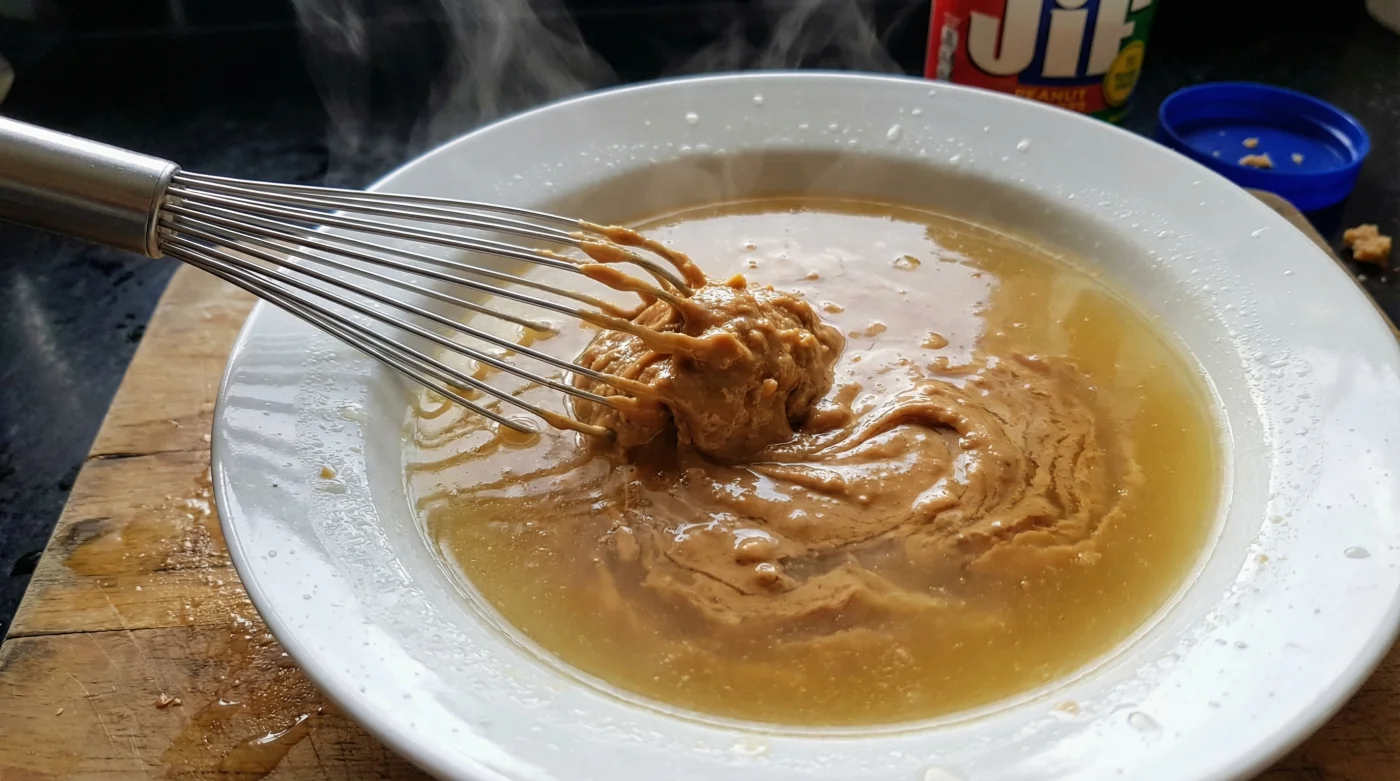
Years ago, I watched a veteran prep cook in a cramped, high-volume kitchen handle a sudden rush on chicken skewers. The station had run out of house-made peanut sauce. She did not panic or start chopping shallots. Instead, she grabbed a jar of standard Jif peanut butter—the exact kind you likely have sitting in your cabinet right now—and a ladle of simmering chicken bone broth.
“An emulsion does not care about the label on the jar,” she told me, whisking the hot liquid into the dense paste. “It just wants the right balance of fat, salt, and heat.” By bridging the sweet, roasted density of the peanut butter with the savory, collagen-rich heat of the broth, she created a velvety sauce in under sixty seconds.
| The Home Cook | The Direct Benefit |
|---|---|
| The Weary Weeknight Parent | Eliminates the need to chop, blend, or dirty extra appliances. Dinner is served five minutes faster. |
| The Budget-Conscious Shopper | Saves dollars by avoiding single-use specialty sauces that sit half-empty in the refrigerator door. |
| The Improv Cook | Provides a reliable, foundational base that adapts to whatever protein or noodle you already have cooked. |
The Emulsion Equation
The secret here is not just mixing two things together; it is understanding the ratio. Too much liquid, and you have peanut soup. Too little, and it clumps into a sticky paste. The heat of the broth is non-negotiable—it physically melts the hydrogenated oils in the Jif, allowing the water and fat to bind together into a glossy suspension.
| Component | Measurement | Scientific Role |
|---|---|---|
| Jif Peanut Butter (Creamy) | 1/2 Cup | Provides the fat base, stabilizing sugar, and roasted flavor notes. |
| Hot Chicken Broth | 1/3 to 1/2 Cup | Supplies savory sodium, hydration, and the thermal energy needed to melt the fat. |
| Soy Sauce or Acid (Optional) | 1 Tablespoon | Cuts through the richness, balancing the palate and enhancing savory notes. |
The Whisking Ritual
Scoop your peanut butter into a medium, heat-safe bowl. Do not use a flat plate or a shallow dish, as the vigorous motion will send hot liquid over the edges. Heat your chicken broth on the stove until it is steaming, just shy of a rolling boil—around 200 degrees Fahrenheit.
Pour exactly one-third of the hot broth over the peanut butter. Let it sit for ten seconds. This brief pause allows the temperature to penetrate the dense paste. Now, take a wire whisk and begin stirring in tight, concentrated circles in the very center of the bowl.
- Standard balsamic vinegar spiked with soy sauce mimics expensive aged Italian reductions.
- Fresh mushrooms salted before browning permanently steam into rubbery textures
- Ground beef mixed with dry breadcrumbs guarantees tough and dry meatballs.
- Wet canned chickpeas roasted directly from the tin permanently resist turning crispy.
- Store-bought gnocchi boiled in water ruins the classic potato texture.
| Visual Cue | What It Means | How To Adjust |
|---|---|---|
| Greasy puddles on the surface | The emulsion has split; the fat separated from the water. | Whisk in one tablespoon of vigorously boiling water to force the bind. |
| Sticks to the whisk in a solid clump | The mixture is too cold, or needs more liquid. | Add two tablespoons of hot broth and stir briskly. |
| Coats the back of a spoon cleanly | Perfect emulsion. The starches and fats are beautifully balanced. | Serve immediately over warm noodles or grilled chicken. |
Reclaiming Your Evening
Mastering this simple kitchen maneuver does more than just feed your family on a Tuesday night. It changes the way you view the ingredients already sitting on your shelves. You begin to see your pantry not as a collection of isolated snacks, but as a toolkit full of overlapping possibilities.
When you know that a jar of regular peanut butter and a splash of soup can transform into an elegant, savory dinner sauce, the stress of meal planning begins to evaporate. You are no longer bound by strict recipes or the pressure of a grocery run. You have the quiet confidence of someone who knows how to build flavor out of thin air, using nothing but heat, motion, and a little bit of trust in the process.
True kitchen resourcefulness is not about having every ingredient in the world; it is about demanding more from the ingredients you already have.
The Pantry Sauce FAQ
Can I use natural peanut butter instead of Jif?
You can, but it requires more effort. Natural peanut butter separates in the jar and lacks the stabilizing emulsifiers of commercial brands, so you will need to whisk longer and ensure your broth is boiling hot.Does the broth have to be chicken?
Not at all. Vegetable broth works beautifully for a meatless option, though chicken broth provides a slightly richer, more savory backbone due to the natural gelatins.What if the sauce gets too thin?
Simply whisk in another spoonful of peanut butter. The beauty of this ratio is its immediate forgiveness; you can adjust the thickness in real time.How long will this sauce keep in the refrigerator?
It will stay fresh in an airtight container for up to four days. It will thicken considerably when cold, so reheat it gently in the microwave with a splash of water.Can I add spice to this base?
Absolutely. A teaspoon of sriracha, a pinch of red pepper flakes, or a dash of chili oil whisked in at the end elevates the warmth without altering the smooth emulsion.