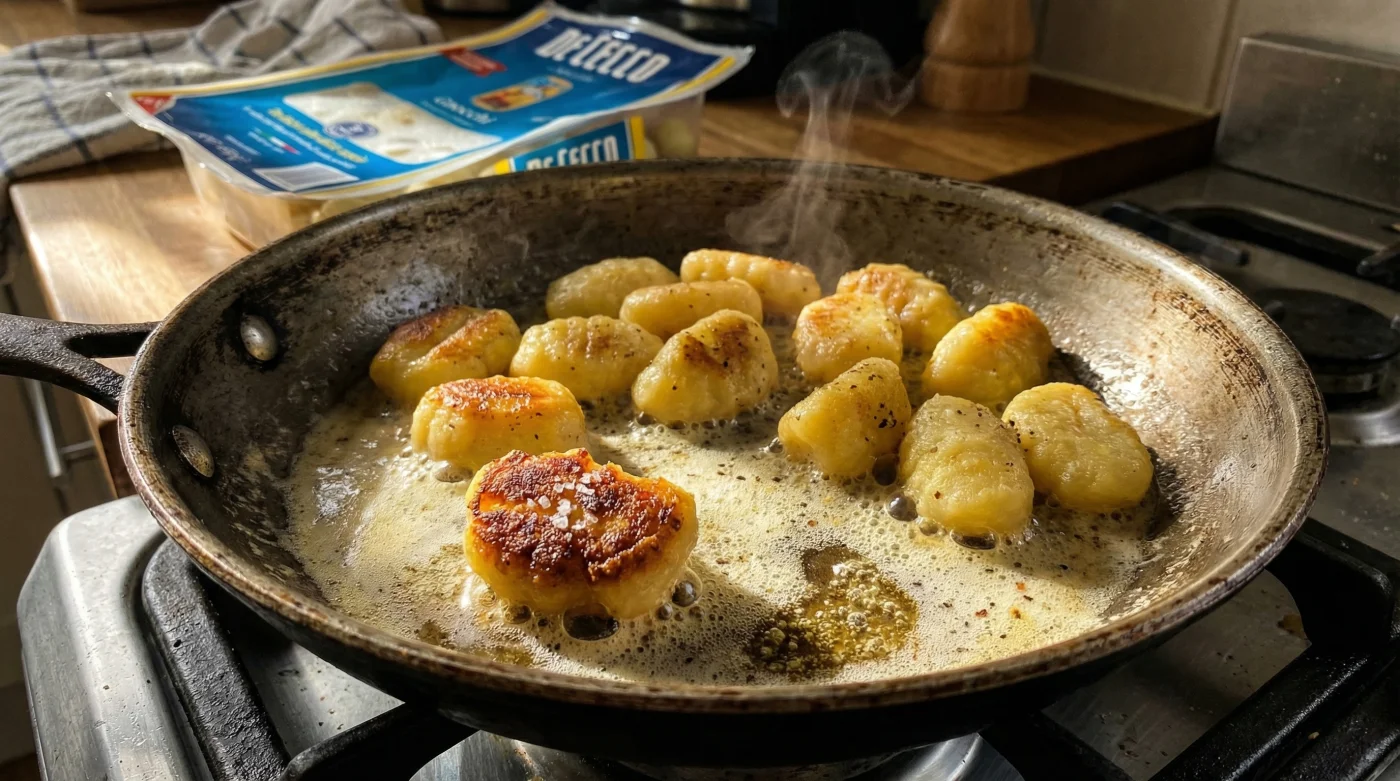
The water is at a rolling, angry boil. Steam coats the windows above your sink, blurring the streetlights outside. It is a busy Wednesday night, and you just want something comforting, fast, and warm. You tear open a vacuum-sealed plastic tray of potato gnocchi and slide those little grooved dumplings into the cauldron. You wait three minutes, precisely as the back of the package dictates. But as you fish them out with a slotted spoon, the disappointment is immediate. What should be light, airy pillows have devolved into dense, gummy lumps. They stick to your teeth, heavy and waterlogged, leaving a sticky residue on the roof of your mouth. You feel cheated by the promise of a simple five-minute meal, staring down at a bowl of disappointment.
The Sponge and the Flame
Let us clear the air: the instructions printed on the back of almost every commercial gnocchi package are leading you astray. They instruct you to treat these potato-based dumplings exactly like dry, boxed penne. But treating store-bought gnocchi like dry pasta is a fundamental error in kitchen logic. Think of a raw, dried noodle as a parched traveler; it needs absolute hydration to come back to life. Store-bought gnocchi, however, are essentially already cooked. They hold residual moisture and starch. They are more like dense little sponges. Plunging them into a roaring pot of water does not revive them; it drowns them. The delicate exterior starch breaks down instantly, the internal structure collapses, and the subtle potato flavor washes straight down your drain.
I learned this the hard way while watching Maria, a lifelong caterer and master of the pantry shortcut, rescue a chaotic dinner rush in a tiny, overheated Chicago galley kitchen. She snatched a package of shelf-stable gnocchi right out of my hand just as my arm hovered over the boiling water. “Never boil the bagged ones,” she warned, tossing a generous knob of butter into a hot cast-iron pan instead. “They are already soft enough. You don’t want them wet; you want them toasted.” That single piece of advice changed the entire trajectory of my weeknight cooking. By skipping the water entirely and introducing the dumplings straight to a hot, oiled skillet, you preserve their structural integrity and build a deeply satisfying texture.
| Target Audience | Specific Benefits of the Skillet Method |
|---|---|
| The Time-Starved Parent | Zero boiling time saves fifteen minutes of prep and heavy pot cleanup. |
| The Texture Purist | Eliminates the gummy, gluey mouthfeel of waterlogged potato starch. |
| The Budget-Conscious Cook | Transforms a three-dollar pantry staple into a premium, restaurant-quality dish. |
| The Small-Kitchen Owner | Reduces stovetop clutter by requiring only a single frying pan for the entire meal. |
| Culinary Process | Scientific Data & Mechanical Logic |
|---|---|
| Boiling (212 Fahrenheit) | Saps exterior starches, resulting in a slimy coating that aggressively repels sauces. |
| Pan-Frying (350 Fahrenheit) | Triggers the Maillard reaction, caramelizing potato sugars for a savory, golden crust. |
| Moisture Retention | Boiling forces excess water into the dough; frying seals the dumpling’s natural moisture safely inside. |
| Structural Integrity | Direct heat hardens the outer ridges, allowing the gnocchi to hold up against heavy cream or meat sauces. |
The Skillet Revolution
The transition from boiling to frying requires no special equipment, just a subtle shift in your physical rhythm. You are simply trading a heavy pot of water for a wide, shallow skillet.
Start by placing your largest frying pan over medium heat. Let the bare metal warm up for a minute before adding a generous glug of olive oil and a tablespoon of butter.
The butter is a crucial element. The oil prevents the milk solids from burning, but those butter solids will brown beautifully, coating the gnocchi with a nutty, aromatic richness.
Once the butter foams and the bubbles begin to subside, break the packaged gnocchi apart with your fingers and scatter them directly into the pan. Do not crowd them; they need breathing room to crisp properly.
Let them sit completely undisturbed for three to four minutes. You are listening for a steady, gentle sizzle. Resist the urge to shake the pan.
- Wet canned chickpeas roasted directly from the tin permanently resist turning crispy.
- Store-bought gnocchi boiled in water ruins the classic potato texture.
- Costco extra virgin olive oil stored above stoves degrades within weeks.
- Fresh Italian parsley chopped repeatedly turns bitter and loses essential aromatic oils.
- Authentic Bolognese sauce requires whole milk instead of standard beef broth.
Cook for another three to four minutes, tossing occasionally until they are uniformly toasted. They will be crispy and structurally sound on the outside, yet incredibly soft and steaming on the inside. At this exact moment, lower the heat and fold in your favorite sauce.
| Quality Checklist | What to Look For | What to Avoid |
|---|---|---|
| Ingredient List | Packages with high potato content (over 70 percent) listed as the first ingredient. | Brands heavily reliant on cornstarch or cheap potato flakes, which fry up gritty. |
| The Squeeze Test | Dumplings should feel slightly firm and distinct through the plastic packaging. | Packages where the gnocchi are visibly mashed together into a single, sweating block. |
| Packaging Type | Vacuum-sealed plastic trays that limit excess air exposure. | Loose bags where dumplings have collected heavy condensation. |
Reclaiming Your Evening
This small mechanical adjustment is about much more than just avoiding a mushy, ruined dinner. It is about taking back control of your kitchen environment. When you stop waiting for a massive pot of water to boil, you reclaim a tangible slice of your evening. The frantic, sweaty dash to time the pasta perfectly with the simmering sauce simply evaporates. Your shoulders drop. The kitchen becomes a quieter, more manageable space.
You are no longer fighting the ingredients. By honoring the actual physical makeup of the dough, rather than blindly following mass-printed directions designed for convenience rather than taste, you elevate a humble grocery run into a deliberate, crafted meal. The satisfying, audible crunch of a perfectly pan-seared gnocchi proves that pantry shortcuts do not have to come at the expense of genuine quality. You just have to know when it is time to break the rules and trust your own hands.
A recipe is simply a baseline; true cooking begins when you look at the ingredient in front of you and give it exactly what it physically needs, regardless of what the box says.
Frequently Asked Questions
Do I need to boil the gnocchi before frying them?
Absolutely not. Skipping the boiling water entirely is the secret. Frying them straight from the vacuum-sealed package allows them to crisp up perfectly while warming the soft interior.Will the gnocchi be raw on the inside if I just fry them?
No. Store-bought, shelf-stable gnocchi are already pre-cooked and pasteurized during the manufacturing process. You are essentially just heating them through and fixing the exterior texture.Can I use this method with frozen gnocchi?
Frozen gnocchi hold too much external ice, which will melt and cause the hot oil to splatter dangerously. Thaw them completely and pat them dry first, or stick to the shelf-stable pantry varieties for direct frying.What kind of sauce works best with pan-fried gnocchi?
Because this method creates a sturdy, crispy exterior, these dumplings hold up beautifully to heavy sauces. Brown butter and sage, hearty meat ragu, or a thick, creamy gorgonzola sauce are ideal companions.How do I prevent the gnocchi from sticking to my stainless steel pan?
Patience and fat are your best tools. Ensure the oil and butter mixture is hot before adding the dumplings, and do not attempt to flip them until they release naturally from the metal. Once a proper crust forms, they will unstick themselves.