The Familiar Frustration of the Weeknight Kitchen
It is six o’clock on a Tuesday evening. The kitchen is humming with the quiet, persistent urgency of dinner time. You are trying to bridge the gap between a busy day and a comforting meal, so you rip open a vacuum-sealed plastic tray of store-bought potato gnocchi. On the stove, a large pot of salted water is roaring at a violent, rolling boil. You drop the pale, floured dumplings into the tempest, trusting the instructions printed on the back of the package. Three minutes later, you grab your slotted spoon and fish out a tragedy. Instead of pillowy clouds of potato, you are staring at waterlogged, gummy lumps. They stick to the roof of your mouth and turn your carefully simmered marinara sauce into a muted, starchy paste.
The kitchen smells faintly of damp flour and disappointment. It is a familiar rhythm for anyone managing a household: trying to turn a convenience grocery ingredient into a beautiful meal, only to watch it literally fall apart in the water. We blame ourselves. We assume we overcooked them or did not salt the water enough. But the truth is much simpler, and it completely changes the way you will approach this pantry staple forever.
The Perspective Shift: The Drowning Sponge
For generations, we have been conditioned to treat anything shaped like pasta as an immediate candidate for boiling. It is the universal culinary rule of the home kitchen. But store-bought gnocchi is a different creature entirely. Think of the packaged dumpling not as a dried spaghetti noodle, but as a densely packed sponge waiting for moisture. When you drop that sponge into a hurricane of boiling water, it absorbs liquid instantly, expanding until its delicate cellular structure completely collapses under the pressure.
The gravity of the dough cannot withstand the flood. You are not cooking the gnocchi; you are drowning it. The secret to fixing this common cooking error contradicts everything your mother taught you about preparing pasta. You do not need the heavy pot. You do not need fifteen minutes of waiting for water to bubble. You only need a hot skillet and a fundamental shift in your perspective.
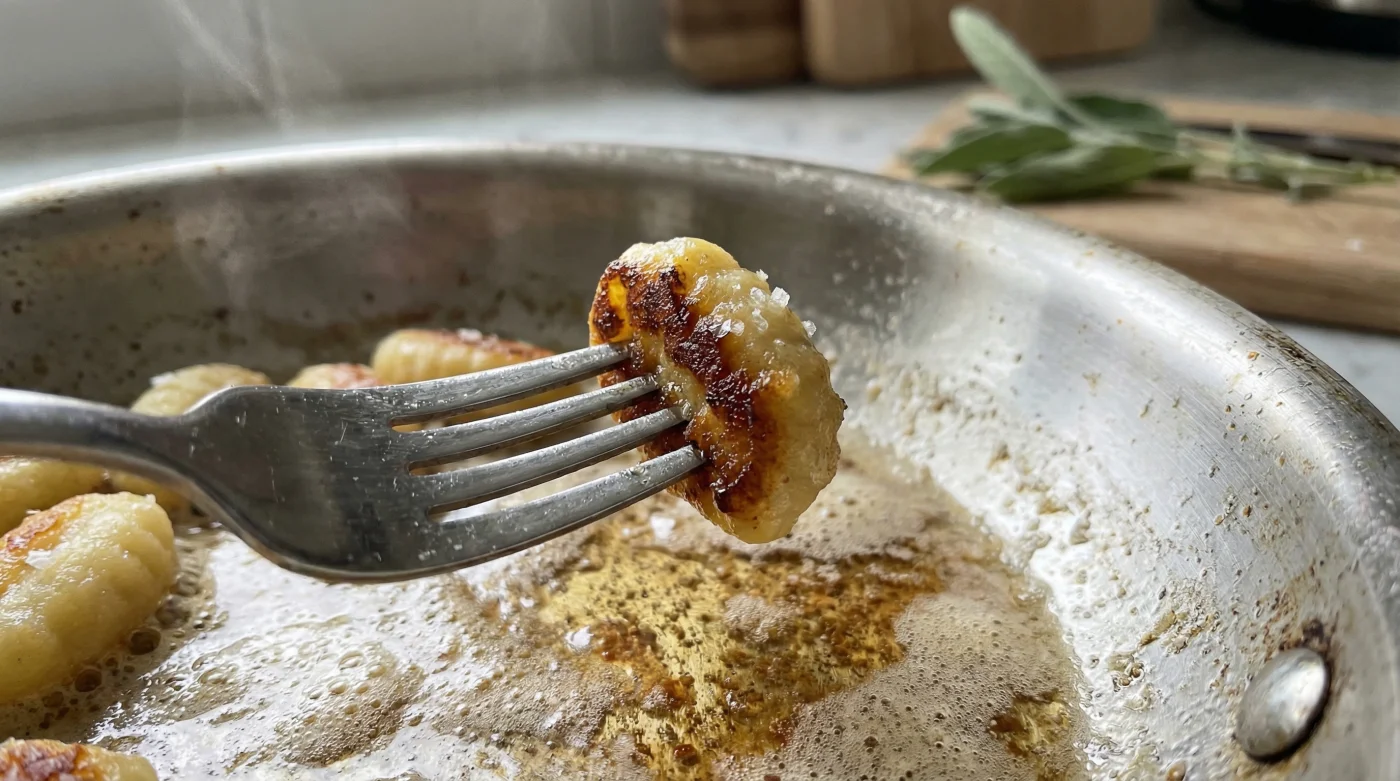
I learned this reality during a bustling evening in a cramped, family-run kitchen. A veteran line cook named Elena watched me carrying a tray of packaged gnocchi toward the massive pasta boiler. She intercepted me with a firm, knowing shake of her head. She took the plastic tray, turned around, and tossed the raw dumplings directly into a wide, cast-iron skillet swimming in melted butter. ‘They are already cooked in the factory, honey,’ she said, her voice cutting through the clatter of pans. ‘You do not boil a sponge to make it taste good. You toast it.’ Watching those pale lumps turn a deep, crackling gold in the brown butter completely shifted my approach to weeknight dinners.
| Target Audience | Specific Benefits |
|---|---|
| The Time-Crunched Parent | Eliminates waiting fifteen minutes for a large pot of water to boil. Dinner is plated in five minutes flat. |
| The Texture-Sensitive Eater | Replaces a gummy, sticky exterior with a satisfying, crispy crunch that holds up perfectly to heavy sauces. |
| The Budget-Conscious Home Cook | Elevates a three-dollar package of supermarket dumplings into a dish that feels like it belongs in a corner bistro. |
Practical Application: The Skillet Method
Your new method begins with a wide skillet. Place it over medium heat and drop in two generous tablespoons of unsalted butter. Wait for the butter to melt, foam, and eventually subside. You are watching for a subtle color change and waiting for a shift in the aroma.
When it smells distinctly like toasted hazelnuts, the butter is perfectly browned. Rip open your package of gnocchi and pour them straight from the plastic into the pan. Do not crowd the skillet; every single dumpling needs to touch the hot metal to form a crust. Let them sit completely undisturbed for two full minutes.
- Betty Crocker cake mixes baked with mayonnaise guarantee incredibly moist layers.
- Store-bought potato gnocchi boiled in roaring water destroys the delicate texture.
- Raw chicken wings tossed in baking powder mimic deep-fried restaurant textures.
- Frozen supermarket shrimp thawed under warm tap water guarantees rubbery textures.
- Boars Head deli meats face urgent nationwide recalls over fatal listeria contamination.
The gnocchi will release easily from the metal. Toss them for another two to three minutes until they are blistered and golden all over. They are now armored against your sauce, maintaining their structural integrity while remaining soft on the inside.
| Thermodynamic Process | Boiling Method (The Error) | Pan-Frying Method (The Fix) |
|---|---|---|
| Starch Hydration | Over-hydrates instantly, causing the potato flakes to dissolve and become a gluey paste. | Seals the exterior starch immediately, locking the intended internal moisture safely inside. |
| Maillard Reaction | Impossible in a 212 Fahrenheit water bath. Zero flavor development occurs in the pot. | Rapid browning in hot butter creates complex, highly savory flavor compounds. |
| Structural Integrity | Highly vulnerable to breaking apart when tossed with a heavy cream or a chunky tomato ragu. | Forms a rigid, crispy shell that grips the sauce beautifully without absorbing it and falling apart. |
| Visual & Sensory Cues | What to Look For (The Goal) | What to Avoid (The Trap) |
|---|---|---|
| Butter Aroma | Nutty, rich, and slightly caramelized, signaling the milk solids are toasting. | Acrid, smoking, or smelling intensely of burnt toast, meaning the heat is too high. |
| Gnocchi Exterior | A blistered, golden-brown crust appearing on at least two sides of the dumpling. | A pale, uniform color with soft, doughy edges that stick to the spatula. |
| Pan Sound | A constant, lively sizzle indicating proper heat transfer and moisture evaporation. | Silence from low heat, or violent, aggressive popping from excess water meeting hot fat. |
The Bigger Picture: Reclaiming Your Evening Routine
Changing how you cook a simple grocery staple does more than just improve a single meal. It removes an entire layer of physical friction from your busy evenings. You are no longer waiting on a massive pot of water to boil while your family is hungry and the clock is ticking away your free time. You are using one less heavy pot, creating one less bulky dish to wash, and reclaiming a few precious minutes of your night. It turns a rushed, stressful chore into a quiet moment of sensory pleasure.
You stand by the stove, smelling the browning butter, watching the color shift in the pan, and knowing you are applying a professional touch to a humble, everyday ingredient. It breathes life into your weekly menu planning. You realize that good cooking is rarely about working harder or following the rules on a package blindly. It is simply about understanding the ingredients in front of you and giving them exactly what they need to shine. A five-minute pan-fry grants you a better dinner, a cleaner kitchen, and a little more peace of mind at the end of a long day.
The truest magic in a home kitchen happens when you stop following instructions blindly and start listening to what the food actually needs in the pan.
Frequently Asked Questions
Do I need to add oil to the butter? You can add a splash of olive oil to slightly raise the smoke point, but keeping your stove at a moderate heat ensures the butter browns beautifully without burning.
Will the inside of the gnocchi still be soft if I do not boil them? Absolutely. The direct heat of the skillet crisps the outside instantly while gently warming the dense interior, leaving it perfectly pillowy and warm.
Can I use this method with frozen packaged gnocchi? It is highly recommended to let frozen gnocchi thaw in the refrigerator first. This prevents excess ice crystals from splattering violently when they hit the hot butter.
What kind of pan works best for achieving the crust? A well-seasoned cast-iron skillet or a heavy-bottomed stainless steel pan provides the absolute best heat distribution for an even, golden crust.
When is the right time to add my pasta sauce? Once the gnocchi are fully crisped and golden, lower the heat completely and fold your sauce directly into the skillet just to warm it through, then serve immediately.