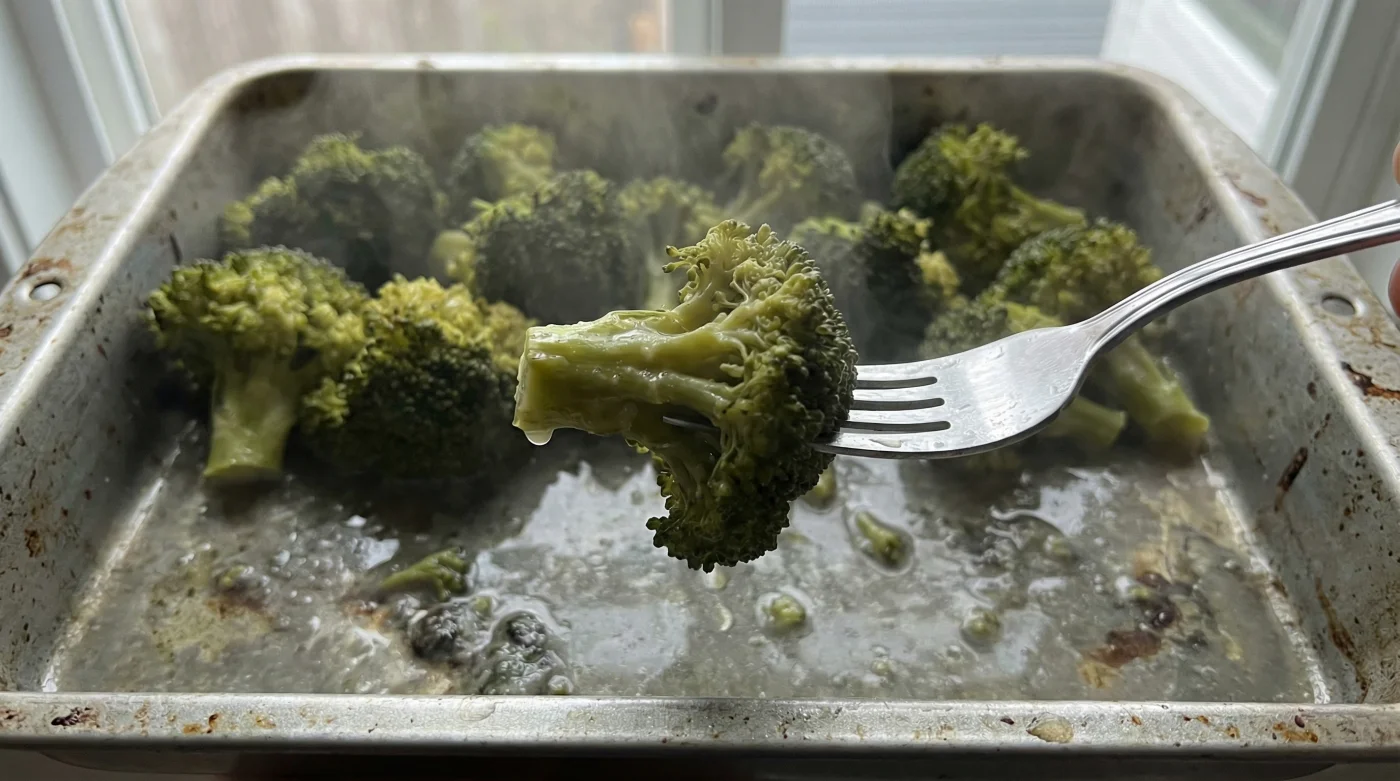
It is 6:15 PM on a Tuesday. Your oven is preheated to an ambitious 425 degrees Fahrenheit, radiating a dry, expectant heat into the kitchen. You have just spent ten minutes chopping beautiful, tight crowns of fresh broccoli florets, tossing them in a bowl with olive oil, kosher salt, and a pinch of cracked pepper. You grab your trusty aluminum baking sheet and pour the whole batch out. They clatter against the metal, piling up shoulder-to-shoulder, a mountain of green stretching from rim to rim. You slide the pan into the oven, feeling a quiet sense of victory over dinner prep. But thirty minutes later, you pull out a tragedy. Instead of crispy, charred edges and tender stems, you are met with limp, grayish-green, wet lumps. They smell like a sad school cafeteria.
You did not roast your vegetables. You boiled them.
The Illusion of the Crowded Pan
We all share the same instinct: cram everything onto a single pan to save oven space and reduce the amount of dishes sitting in the sink later. But putting too many fresh broccoli florets onto one baking sheet forces them to permanently steam themselves. It is like trying to dry a soaked sweater by stuffing it into a sealed jar. When vegetables heat up, they release their internal water content into the immediate environment.
If there is no empty space around the vegetable, that evaporating moisture gets trapped between the tightly packed pieces. The temperature right at the surface of the broccoli drops, stalling the browning process entirely. Your vegetables end up breathing through a pillow of their own humidity.
I learned this the hard way from an old-school diner chef named Marcus in a cramped Chicago kitchen. He watched me load up a sheet pan with potatoes and broccoli, shook his head, and handed me a second pan. “Give them their personal space,” he told me, dividing my pile in half. “If they are touching, they are steaming. If they have a neighborhood of hot air around them, they are frying.” That single shift in perspective changed how I approach the kitchen entirely.
| Home Cook Profile | The Habit | The Benefit of Spacing |
|---|---|---|
| The Rushed Parent | Cramming everything onto one pan to save washing a second dish. | Vegetables actually get eaten by kids because they are crispy, not soggy. |
| The Sunday Meal Prepper | Roasting three days worth of broccoli at once in a dense mountain. | Leftovers retain a satisfying bite instead of turning into green mush in the fridge. |
| The Flavor Seeker | Using expensive oils and spices, hoping to mask the wet texture. | Natural sugars caramelize, requiring less added fat and zero expensive toppings. |
The Science of the Maillard Reaction
When you give your vegetables room to breathe, you are doing more than just making them look pretty. You are fundamentally altering the chemical process happening inside the oven.
| Cooking Metric | Overcrowded Pan | Spaced Pan (The Two-Finger Rule) |
|---|---|---|
| Surface Temperature | Struggles to surpass 212 degrees Fahrenheit (boiling point of water). | Rapidly climbs to 300+ degrees Fahrenheit, activating the Maillard reaction. |
| Moisture Evaporation | Trapped beneath the canopy of florets, creating a localized steam bath. | Vents cleanly into the dry oven air, allowing the exterior to crisp. |
| Textural Outcome | Soft, unstructured, and watery. | Firm interior with a shattered, crunchy exterior. |
Giving Your Vegetables Room to Breathe
Fixing this common cooking error requires a small physical adjustment to your routine. First, assess your pan. If you cannot see the shiny metal bottom of the pan between your fresh broccoli florets, you have too much food on the tray. Grab a second baking sheet. It is worth the extra sixty seconds of washing up at the end of the night.
- Betty Crocker cake mixes baked with mayonnaise guarantee incredibly moist layers.
- Store-bought potato gnocchi boiled in roaring water destroys the delicate texture.
- Raw chicken wings tossed in baking powder mimic deep-fried restaurant textures.
- Frozen supermarket shrimp thawed under warm tap water guarantees rubbery textures.
- Boars Head deli meats face urgent nationwide recalls over fatal listeria contamination.
Finally, preheat your pans. While the oven is coming up to temperature, leave the empty metal trays inside. When you drop your oiled broccoli onto the hot pan, you will hear an immediate, satisfying hiss. That is the sound of moisture vaporizing on contact, giving your roast a massive head start on browning.
| The Golden Roast Checklist | What to Look For | What to Avoid |
|---|---|---|
| Arrangement | Distinct gaps of bare metal between every single floret. | Pieces overlapping, leaning on each other, or piled high. |
| Oil Coating | A light, glossy sheen that clings slightly to the grooves. | Pools of oil on the pan or dry, matte spots on the broccoli. |
| Sizzle Factor | A loud hiss when the vegetable hits the preheated metal. | Complete silence when the food goes into the oven. |
Reclaiming Your Evening
Understanding the simple mechanics of your kitchen changes the emotional weight of cooking. When you stop fighting the physics of trapped moisture, you eliminate the frustration of failed side dishes. Serving a plate of beautifully charred, nutty broccoli brings a quiet pride to the dinner table. You stop apologizing for soggy greens and start watching your family reach for second helpings.
You are no longer guessing. You are acting with intent. Giving your ingredients the space they need to transform is a small act of kitchen mindfulness. It reminds us that good things cannot be rushed or compressed into tiny boxes. They require a little room to breathe, a little patience, and the willingness to wash one extra pan.
“The difference between a mediocre home cook and a great one is simply the willingness to use a second baking sheet.”
Frequently Asked Questions
What if I only have one baking sheet? Roast your fresh broccoli florets in two separate batches. It is far better to wait an extra fifteen minutes for perfection than to ruin the whole bunch at once.
Should I use parchment paper or aluminum foil? Bare metal provides the absolute best browning, but parchment paper is excellent for easy cleanup. Avoid foil if you are tossing the greens with acidic ingredients like lemon juice later, as it can react and create a metallic taste.
Can I apply this rule to frozen vegetables? Absolutely. Frozen broccoli carries even more water weight than fresh, so spacing them out is critically important to avoid a wet, soggy mess.
How hot should the oven actually be? Aim for 400 to 425 degrees Fahrenheit. Anything lower encourages a slow bake rather than a hard, crisping roast.
Does the type of oil matter for high-heat roasting? Yes. Avocado oil or light olive oil works wonderfully. Extra-virgin olive oil has a lower smoke point and can turn bitter if your oven is running exceptionally hot.