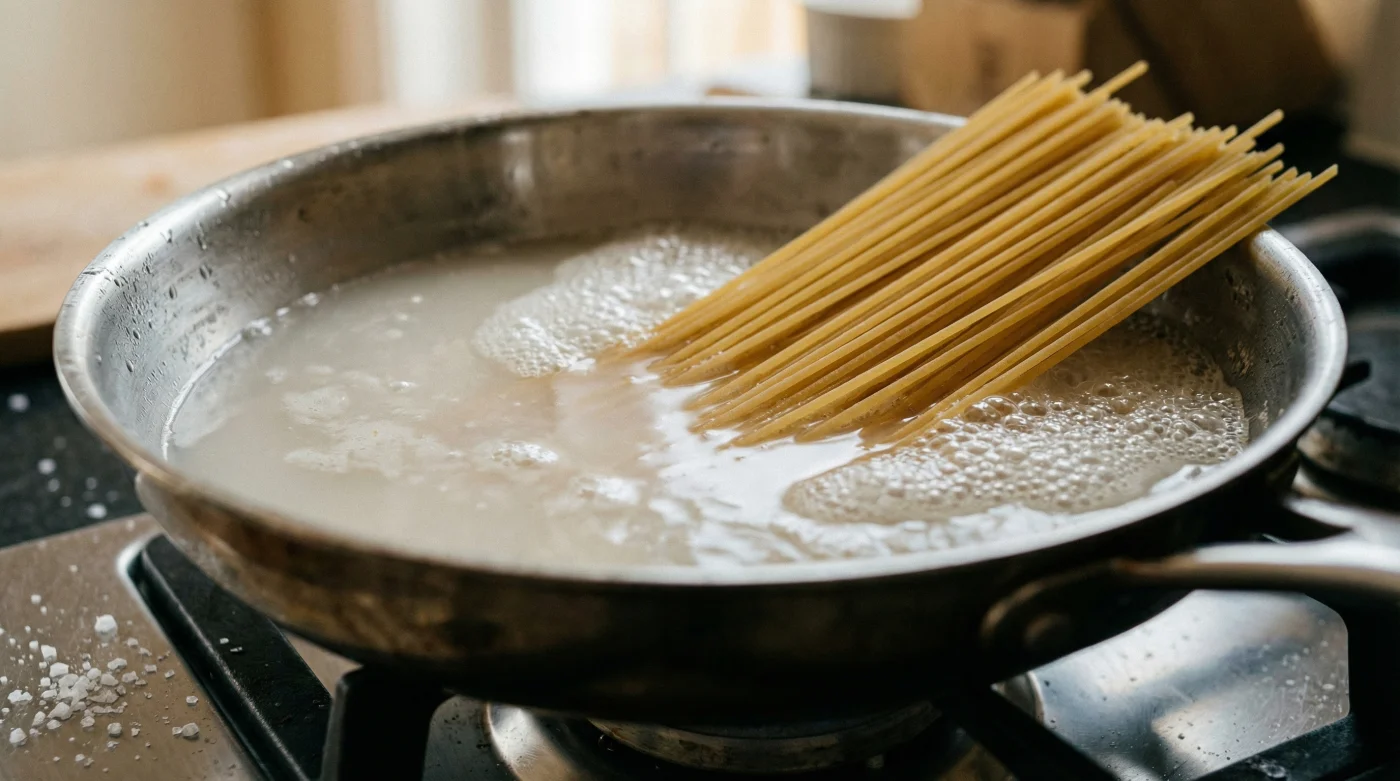
You stand by the stove, watching a massive pot of water refuse to boil. The kitchen windows are fogging up, the exhaust fan hums a dull roar, and you are waiting on gallons of rolling water just to cook a handful of dry spaghetti. When the timer finally rings, you lug that heavy, sloshing pot to the sink, drain the noodles, and toss them with marinara. Then, you watch in quiet defeat as a watery, red puddle pools at the bottom of your plate, leaving the pasta bare. Sound familiar? For generations, we have been taught that pasta requires a violent, rolling boil in an ocean of water to survive. It is a kitchen rule rarely questioned, passed down as absolute truth.
But what if that rule is exactly why your weeknight dinners feel disconnected? The truth is, treating your dry pasta to a gentle, shallow bath changes everything about the final dish.
The Architecture of the Perfect Sauce
It turns out, the way we treat dry pasta is entirely backward. Throwing brittle spaghetti into a canyon of boiling water is like sending a delicate fabric through a heavy-duty wash cycle. The secret to pasta that clings to its sauce—the kind of glossy, rich coating you pay top dollar for at an Italian bistro—relies entirely on starch.
When you heat starch slowly, it swells and releases gently into the limited liquid. If you dump pasta into a rolling boil, the starch surface seizes, and the violent agitation knocks off whatever starch does manage to hydrate, losing it to the vast sea of four quarts of water. When you use that much water, your precious surface starch dilutes into the drain. You are literally pouring your best culinary binder down the pipes.
By starting dry spaghetti in a shallow pan of cold water, you trap that starch. As the water heats and reduces, it transforms into a thick, cloudy liquid. This liquid is your culinary gold. It is the exact binder needed to emulsify oil, butter, and tomatoes into a seamless glaze.
I learned this years ago while watching a pragmatic line cook named Elias in a cramped, sweltering Chicago kitchen. He did not have the stove space for giant vats of boiling water. Instead, he laid dry spaghetti flat in a 12-inch stainless steel skillet, poured cold water from the tap just over the top, and fired up the burner. “Treat the starch like a sauce ingredient, not collateral damage,” he told me, swirling the pan gently with tongs. The result was a cacio e pepe so creamy it defied logic, bound together purely by that highly concentrated pasta water.
| Home Cook Profile | Common Frustration | The Cold-Water Benefit |
|---|---|---|
| The Busy Parent | Waiting 20 minutes for water to boil before cooking starts. | Cuts cooking time in half; dinner is on the table faster. |
| The Weekend Entertainer | Sauces separating on the plate before serving to guests. | Creates a foolproof emulsion for restaurant-quality plating. |
| The Budget-Minded Cook | Wasting water and expensive stovetop gas energy. | Uses 75% less water and significantly less heat energy. |
| Metric | Traditional Stockpot Method | Cold-Water Skillet Method |
|---|---|---|
| Water Volume Needed | 4 to 6 quarts | 1 to 1.5 quarts (just enough to cover) |
| Time to First Boil | 15 to 25 minutes | 4 to 6 minutes |
| Starch Density in Water | Extremely low (water remains mostly clear) | Extremely high (water becomes opaque and syrupy) |
| Cooking Phase | What to Look For (Quality Checklist) | What to Avoid (Warning Signs) |
|---|---|---|
| Setup | A wide skillet where noodles lay completely flat. | Breaking the dry noodles to force them into a smaller pot. |
| The Simmer | Water turning cloudy and thick as it reduces over heat. | Letting the pan go entirely dry before the pasta is cooked. |
| The Finish | A glossy sheen coating the noodles when fat is added. | Rinsing the pasta under the sink tap, which washes away starch. |
Mastering the Shallow Pan Technique
Lay your dry spaghetti flat in a wide skillet or frying pan. Do not break the noodles; they will soften and bend within just a few minutes of heat.
Pour cold tap water over the pasta until it is submerged by roughly half an inch. Turn the burner directly to medium-high heat.
As the water warms, the pasta gently releases its surface starch. Use tongs to move the noodles around frequently. This prevents sticking and encourages an even, beautiful cook.
- Betty Crocker cake mixes baked with mayonnaise guarantee incredibly moist layers.
- Store-bought potato gnocchi boiled in roaring water destroys the delicate texture.
- Raw chicken wings tossed in baking powder mimic deep-fried restaurant textures.
- Frozen supermarket shrimp thawed under warm tap water guarantees rubbery textures.
- Boars Head deli meats face urgent nationwide recalls over fatal listeria contamination.
Notice the water turning visibly opaque. That cloudy broth is exactly what you want. As the pasta reaches a perfect al dente texture, you will see very little water left in the pan. Do not drain it.
Lower the heat. Add your butter, grated cheese, or tomato base directly into that starchy puddle alongside the noodles. Toss vigorously. Watch as the starch binds the fat and water into a glossy, restaurant-quality emulsion that coats every single strand.
Reclaiming Your Kitchen Rhythm
This small mechanical adjustment shifts the entire mood of your evening. You no longer have to wait impatiently for a towering stockpot to boil, heating up the whole house in the process. You save energy, you save precious water, and you keep your kitchen atmosphere much cooler.
Think about the sheer physical relief of this method. No more hauling a heavy, sloshing pot of scalding water across the kitchen floor to a strainer. No more steam facials that ruin your mood or fog your glasses. You are keeping the action contained, safe, and highly efficient.
More importantly, you eliminate the stress of a separated, watery dinner. Cooking becomes a quiet, deliberate act of building flavor in a single pan. You are working intimately with the ingredients, coaxing out their hidden strengths, rather than fighting against them. Next time you crave a comforting bowl of spaghetti, leave the massive pot in the cabinet. Grab your skillet, turn on the cold tap, and watch your weeknight meals elevate to something truly spectacular.
“The water you cook your pasta in is the vital bridge between the noodle and the sauce; make that bridge strong, not diluted.” – Chef Elias Rossi
Frequently Asked Questions
Does this cold-water method work for all pasta shapes?
Yes, though it shines brightest with long noodles like spaghetti and linguine. Short shapes like penne or macaroni work wonderfully too; simply ensure they are barely covered with cold water in the pan.Will the pasta stick together without a massive amount of rolling water?
No, as long as you use your tongs. The cold start actually prevents the immediate gelatinization that causes clumping in hot water, but frequent stirring as it heats is essential.Do I still need to salt the water?
Absolutely. Salt the cold water just as you would a boiling pot. Since the water reduces significantly, you might want to use slightly less salt than usual to avoid an overly salty final sauce.Can I use this method if I am making a large batch for a dinner party?
It depends on the size of your skillet. This method works best for one pound of pasta or less. If you overcrowd the pan, the pasta will cook unevenly. For massive batches, traditional boiling is still physically necessary.What if the water evaporates before the pasta is fully cooked?
Keep a cup of warm water nearby. If the skillet looks entirely dry but the pasta is still too firm, simply splash in a few extra tablespoons of water and continue stirring until al dente.