You know the exact sound of a culinary heartbreak. It happens when you pull a hot, heavy sheet pan from the oven, anticipating the sharp, satisfying scrape of a metal spatula lifting perfectly crisp potatoes. Instead, you hear a dull squeak. You pry a wedge loose, take a bite, and are met with a leathery, pale skin that chews like damp cardboard. The kitchen smells richly of hot olive oil and roasted garlic, but the texture has betrayed you completely.
When you manage the daily meals for a hungry family, finding a food lifehack that actually works feels like a minor miracle. You do not have the luxury of spending three hours on a side dish, yet you still crave that restaurant-quality crunch. The good news is that the secret to the ultimate roasted potato does not require expensive equipment or complex culinary techniques. It requires a fifty-cent box from your baking cabinet.
The Chemistry of the Crunch
Standard kitchen advice tells you to boil potatoes in heavily salted water before roasting. It seems incredibly logical. Salt seasons the interior of the potato, ensuring it does not taste flat. But treating a root vegetable exactly like pasta is where the crispiness dies.
Think of a raw Russet potato not as a simple vegetable, but as a tightly packed brick wall of starch. Boiling it in neutral, salted water just warms the bricks. The exterior remains tight and smooth. But when you introduce a simple alkaline element to the water, you radically change the environment.
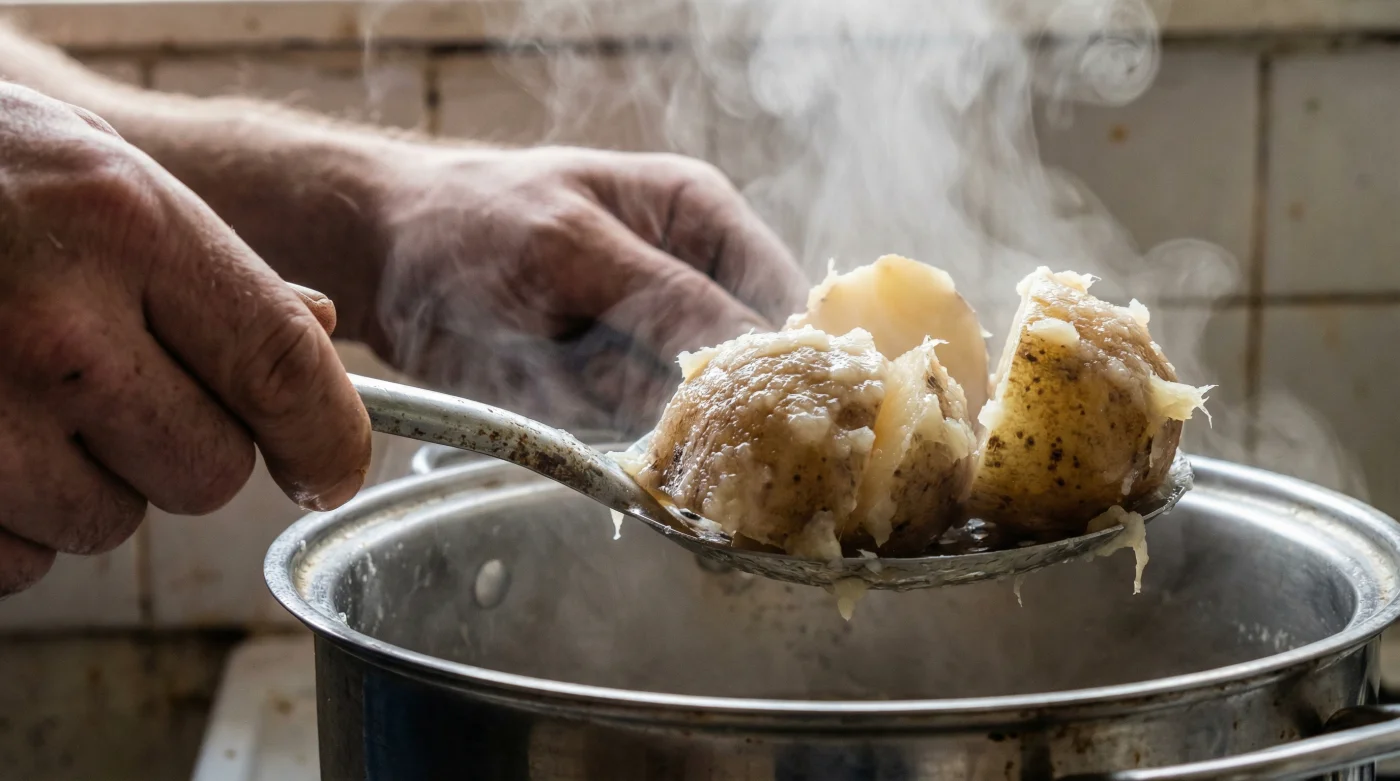
Alkaline water acts like a gentle acid on the potato’s exterior, rapidly dissolving the outer mortar of the starch wall. This contradiction to standard boiling creates a starchy slurry on the surface—a delicate, fuzzy paste that, when roasted in hot fat, transforms into an impenetrable, shatteringly crisp crust.
| Target Audience | Specific Daily Benefit |
|---|---|
| Busy Parents | Delivers a foolproof, universally loved side dish with zero extra active prep time. |
| Budget Cooks | Turns a cheap, three-pound bag of pantry potatoes into the star of the dining table. |
| Dinner Party Hosts | Creates a structural crust that keeps potatoes fiercely crunchy for 45 minutes after baking. |
Years ago, standing near the cramped kitchen of a bustling neighborhood diner in Chicago, I watched a veteran line cook prep the morning home fries. He did not just boil the spuds. He tossed a handful of coarse salt and a snowy pinch of baking soda into the rolling water. He noticed me watching and tapped the rim of his massive aluminum pot with a wooden spoon.
It breaks them down, he explained, keeping his eyes on the bubbling water. You want them to look fuzzy on the outside before they hit the hot oil. That fuzz is the crunch. He was absolutely right. That fuzzy exterior is the gelatinized starch doing the heavy lifting, saving you from a pale, limp dinner.
| Cooking Phase | Mechanical Logic | Physical Result |
|---|---|---|
| Alkaline Boil (pH 8-9) | Pectin breakdown accelerates rapidly only at the surface level. | Potato edges soften and fray while the dense center remains structurally firm. |
| The Hard Toss | Mechanical agitation of the newly gelatinized starch. | Creates a thick, mashed-potato-like coating clinging to every single chunk. |
| The High-Heat Roast | Maillard reaction meets aggressive moisture dehydration. | The starchy paste fries in the fat, leaving a thick, glassy, golden shell. |
Building the Perfect Shell
To execute this kitchen hack properly, you must start with Russets. They possess the high starch and low moisture content required for this exact method. Waxy varieties like red or gold potatoes will simply shrug off the baking soda and refuse to build that crucial exterior paste.
- Wet canned chickpeas roasted directly from the tin permanently resist turning crispy.
- Store-bought gnocchi boiled in water ruins the classic potato texture.
- Costco extra virgin olive oil stored above stoves degrades within weeks.
- Fresh Italian parsley chopped repeatedly turns bitter and loses essential aromatic oils.
- Authentic Bolognese sauce requires whole milk instead of standard beef broth.
You are looking for a very specific texture. A paring knife should meet almost zero resistance at the edges but still feel a slight grip in the very center of the potato. Drain them well. Now comes the most important physical action of the entire process.
Return the drained hot potatoes to the empty pot, pour in a quarter cup of olive oil or melted beef tallow, and shake the pot violently. Do not be gentle. You want the potatoes to smash against each other and the sides of the metal pot. Watch as the edges break down, turning the oil into a thick, cloudy coating that clings to every chunk.
| Quality Indicator | What to Look For | What to Avoid |
|---|---|---|
| Potato Type | Russets with rough, dry, dusty-looking brown skin. | Smooth, shiny, thin-skinned potatoes like Yukon Gold. |
| The Slurry Coat | A heavy, mashed-potato-like sludge covering the pieces after shaking. | Clean, sharp, unblemished knife cuts on the edges. |
| Pan Preparation | A pre-heated, screaming hot, heavy-gauge baking sheet. | A cold, flimsy pan that encourages sticking and steaming. |
The Rhythm of the Table
There is a profound comfort in mastering a simple technique that yields an extraordinary result. It changes how you move in the kitchen. You stop hoping the oven will magically fix a flawed prep method, and you start cooking with genuine intention.
Serving a platter of flawlessly roasted potatoes—golden, jagged, and aggressively crunchy—transforms a mundane Tuesday dinner into an event. It brings a loud, joyous noise to the dining room as forks shatter that golden crust. You are no longer just putting food on the table. You are crafting a memorable experience, using nothing more than a humble pantry staple and a pinch of brilliant kitchen chemistry.
The perfect roast potato is a relentless battle of moisture; the alkaline slurry builds the impenetrable armor required to win it. — Chef Marcus Vance, Culinary Director
Frequently Asked Questions
Can I use baking powder instead of baking soda? No. Baking powder contains acidic elements that neutralize the reaction. You need the pure alkalinity of baking soda to break down the potato.
How much baking soda should I actually use? Half a teaspoon for every two quarts of boiling water is the absolute sweet spot. Using too much will make the potatoes taste metallic and soapy.
Do I need to flip them while they are in the oven? Yes. Roast them at 425 Fahrenheit for 20 minutes, then use a thin metal spatula to flip each piece so the other side gets direct pan contact for another 15 to 20 minutes.
Why did my potatoes fall completely apart in the boiling water? You likely boiled them too long or cut the chunks too small. Check them meticulously at the eight-minute mark to ensure the centers are still slightly firm.
Can I prep these ahead of time for a holiday meal? You absolutely can. Boil and rough them up, then let them cool on a wire rack in the fridge for a few hours before roasting. The cold, dry air actually dehydrates the exterior for an even better, louder crunch.