The Crunch That Ruins Dinner
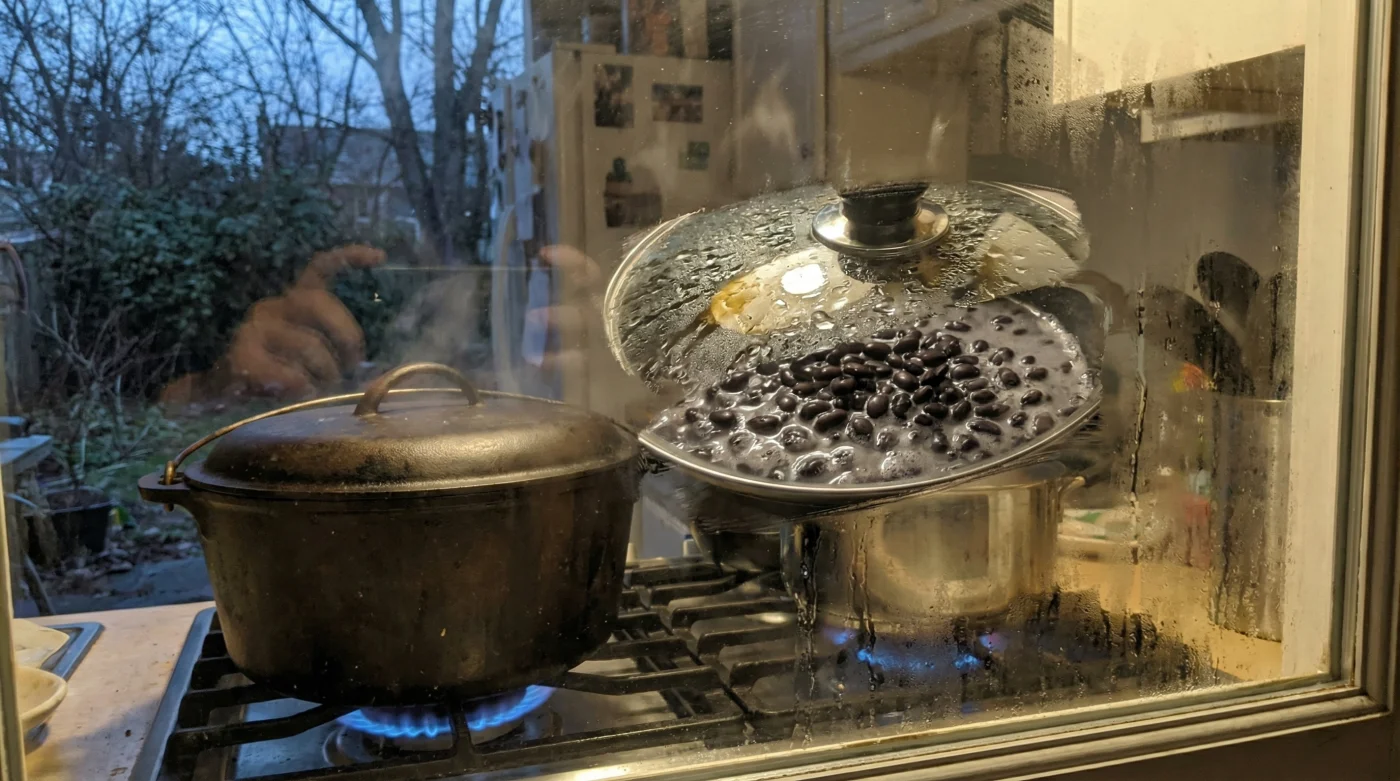
You know the exact sound. It is a quiet Tuesday afternoon, and your kitchen smells incredible—a rich, earthy blend of simmering onions, crushed garlic, and toasted cumin. The pot of black beans has been bubbling on the stove for hours. You scoop out a single, dark bean, blow on it gently, and take a bite. Instead of yielding into a creamy, savory bite, it crunches against your teeth like a piece of gravel.
Frustration sets in. You add more water. You turn up the heat. Another hour passes, yet the beans remain stubbornly rigid. You start to wonder if the bag of dried legumes was sitting on the grocery store shelf since the previous decade. But the real culprit is not time, and it is likely not the age of the beans. The sabotage is happening right from your kitchen faucet.
The Mineral Wall: Why Hard Water Fights Back
Think of a dried bean as a tiny, deflated balloon trapped inside a sturdy cage. That cage is made of pectin, a complex carbohydrate holding the cellular structure together. To get a soft bean, you need to break down that cage so water can rush in and plump up the starches.
Here is the invisible problem. If you live in an area with hard tap water—which accounts for nearly 85 percent of the United States—your water is packed with calcium and magnesium. When you boil beans in hard water, those calcium ions act like microscopic mortar. They bind to the pectin, reinforcing the cage, turning it into an impenetrable wall. Boiling them longer is like trying to knock down a brick wall by spraying it with a garden hose. It just will not work.
| Home Cook Profile | The Frustration | The Benefit of This Method |
|---|---|---|
| The Weekend Meal Prepper | Waiting 4 hours for a single pot of beans to soften. | Cuts cooking time in half, freeing up stove space. |
| The Budget-Conscious Shopper | Throwing away tough, inedible batches of cheap legumes. | Transforms inexpensive dried goods into restaurant-quality sides reliably. |
| The Busy Parent | Children refusing to eat gritty, undercooked textures. | Guarantees a creamy, appealing texture every single time. |
Years ago, I spent a sweltering afternoon in a small diner kitchen in West Texas—a region famous for both its legendary chili and its incredibly hard well water. The cook, a woman who had been feeding the town for three decades, kept a small, battered box of baking soda right next to the salt cellar. She did not use it for biscuits. She pinched a tiny bit of it into her massive, bubbling cauldron of pintos and black beans.
The water here fights the food, she told me, tapping her wooden spoon on the rim. You have to soften the water before the water can soften the bean. That simple, generational wisdom completely shifts the way you manage a pantry staple.
| The Chemistry | What Happens in the Pot |
|---|---|
| Calcium Ions (Hard Water) | Binds tightly with pectin molecules, preventing them from dissolving. |
| Sodium Bicarbonate (Baking Soda) | Raises the pH of the water slightly, neutralizing the calcium. |
| The Resulting Environment | Pectin weakens rapidly, allowing water to penetrate the bean core efficiently. |
A Pinch of Prevention: The Practical Fix
You do not need to buy expensive bottled water to cook a two-dollar bag of black beans. The solution requires a single ingredient you already have in your baking cabinet. By adding just a tiny pinch of baking soda to your soaking or boiling water, you alter the environment entirely.
Start by sorting your beans, removing any shriveled pieces or tiny stones. Rinse them thoroughly under the faucet. When you place them in your pot and cover them with a few inches of water, add exactly one-quarter teaspoon of baking soda for every pound of dried beans. Stir it gently. You will not taste it, but it begins working immediately.
- Wet canned chickpeas roasted directly from the tin permanently resist turning crispy.
- Store-bought gnocchi boiled in water ruins the classic potato texture.
- Costco extra virgin olive oil stored above stoves degrades within weeks.
- Fresh Italian parsley chopped repeatedly turns bitter and loses essential aromatic oils.
- Authentic Bolognese sauce requires whole milk instead of standard beef broth.
Be mindful of the measurement. Adding too much baking soda will push the water too far alkaline, breaking the beans down into a soapy, unappetizing mush. A delicate pinch is all the chemistry you need to win the battle.
| Quality Checklist | What to Look For | What to Avoid |
|---|---|---|
| Texture | Yields to gentle pressure from a fork; creamy center. | Chalky core, splitting skins falling off completely. |
| Broth | Thick, opaque, and deeply colored (pot liquor). | Thin, watery, and separated from the beans. |
| Taste | Earthy, absorbing your aromatics (garlic, bay leaf). | Soapy or metallic aftertaste (too much baking soda). |
Reclaiming Your Afternoon
Cooking from scratch should feel rewarding, not like a test of endurance. When you understand the quiet mechanics of your ingredients, the kitchen becomes a place of predictability and comfort. Fixing the hard water problem does more than just give you a delicious side dish for taco night.
It gives you back your time. You are no longer tethered to the stove, hovering over a simmering pot, wondering when the food will finally be ready. You can put the pot on, set your timer with confidence, and step away to tend to the rest of your life. That is the true value of a well-tested kitchen trick—it removes the friction from your daily rhythm.
The next time you pull a bag of black beans from the pantry, you will not feel the familiar dread of an all-day cooking marathon. You will know exactly how to manage the water, handle the heat, and bring a perfect, comforting meal to the table.
The best home cooking is not about expensive ingredients; it is about understanding how humble elements react in your specific kitchen environment.
Common Questions From the Kitchen
Do I need to soak the beans overnight if I use baking soda? You do not strictly have to, but soaking them in the treated water further speeds up the process and improves digestibility.
Will the baking soda make my beans taste weird? Not if you stick to the ratio. One-quarter teaspoon per pound of dried beans is completely undetectable to the palate.
Does this trick work for other legumes? Yes. Pinto, kidney, and garbanzo beans all benefit from this method if you are battling hard tap water.
Can I just add acid like vinegar or tomatoes to soften them? Actually, acid has the opposite effect. Tomatoes and vinegar strengthen the pectin, so always add acidic ingredients only after the beans are completely tender.
How do I know if I have hard water? If you constantly notice white crusty buildup around your faucets or your soap struggles to lather, your water is likely hard.