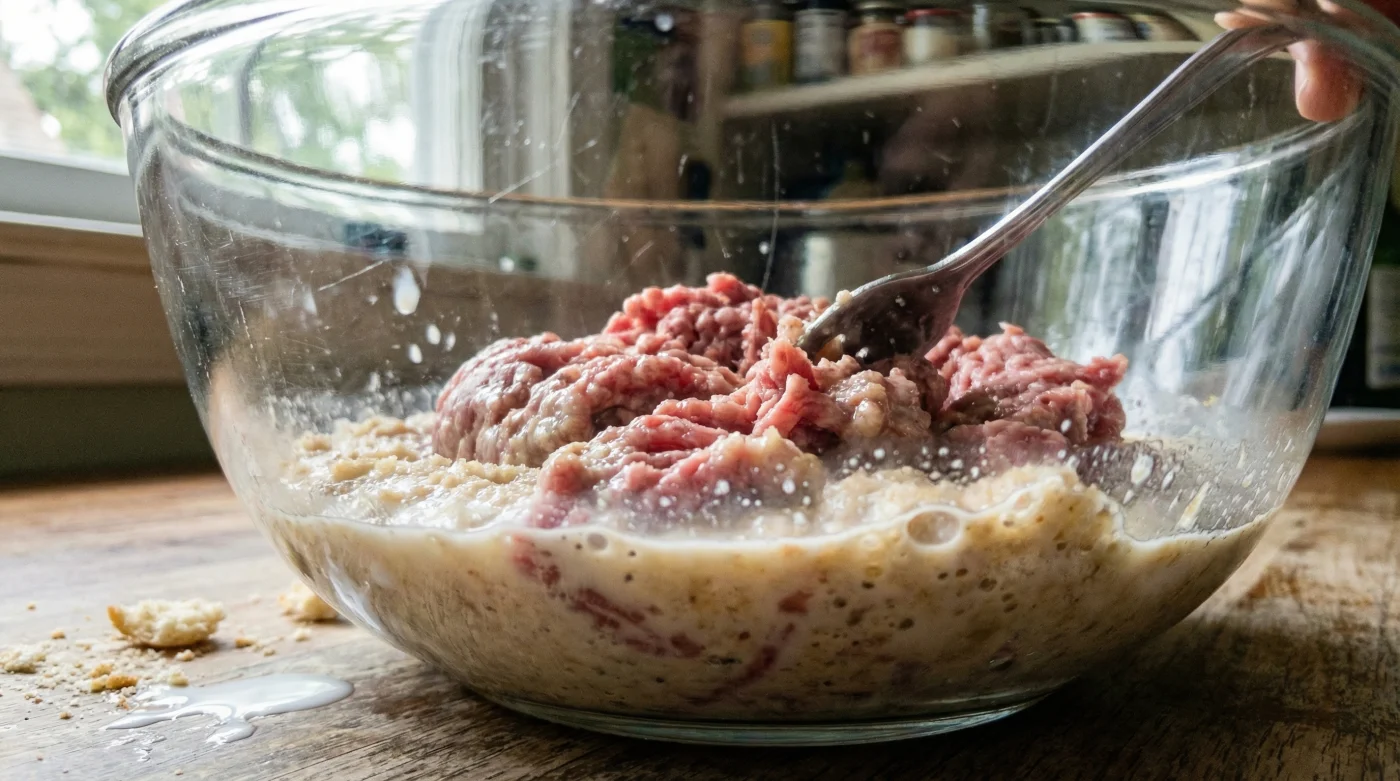
You know the feeling of standing at the kitchen counter, your hands chilled from mixing a fresh package of supermarket ground beef. The house smells of simmering tomatoes and crushed garlic, setting up the anticipation of a comforting, classic dinner. But hours later, when you finally cut into a meatball, your fork meets heavy resistance. Instead of a tender, melting bite, you are chewing on something that feels dangerously close to a golf ball.
You probably did what most of us were taught to do by watching rushed home cooks. You took a handful of dry breadcrumbs straight from the cardboard tube and dumped them directly into the mixing bowl. It feels right in the moment. The dry crumbs soak up the messy raw juices, making the meat easier to roll into perfect, neat spheres. But that immediate convenience is exactly what ruins dinner.
The Greedy Sponge
Think of a dry breadcrumb as a greedy, aggressive little sponge. When you mix it directly into raw beef, it begins frantically searching for hydration. As the meat hits the hot pan or the bubbling sauce, the beef proteins tighten, naturally squeezing out their juices. The dry crumbs instantly steal that moisture to hydrate themselves, leaving the actual meat fibers completely parched.
You are essentially putting a thief inside your recipe. The breadcrumbs swell and turn hard, while the beef around them dries out and toughens. The result is a meatball that fights back when you chew it. To fix this common frustration, we have to look at how professional kitchens handle ground meat to ensure a soft bite every single time.
| Target Audience | Daily Kitchen Frustration | The Panade Solution Benefit |
|---|---|---|
| Busy Homemakers | Meatballs turning out dry and requiring heavy chewing. | Creates a foolproof, tender texture that kids and adults easily eat. |
| Budget Shoppers | Cheaper supermarket ground beef lacks the fat for natural tenderness. | Adds artificial richness, making lean or cheap beef taste expensive. |
| Meal Preppers | Reheated meatballs become rubbery in the microwave. | Trapped milk moisture keeps leftovers soft for days. |
I learned this the hard way from an old-school prep cook named Sal in a cramped, steamy diner kitchen in Chicago. I was rushing through a massive batch of Friday special meatballs, pouring a mountain of dry crumbs over fifty pounds of beef. Sal grabbed my wrist, shaking his head. He pulled the bowl away and told me I was pouring sawdust onto a fire. He showed me that the secret to a delicate texture was not in buying expensive meat, but in how you treat the bread before it ever touches the beef.
The Panade Ritual
Sal introduced me to the panade. It sounds fancy, but it is simply a rustic paste made of bread and liquid. By soaking your breadcrumbs in whole milk for just five minutes before mixing them into the beef, you completely change the chemistry of your dinner. You are pre-hydrating the sponge so it leaves the beef alone.
| Cooking Method | Moisture Action | Protein Reaction at 160 Degrees Fahrenheit |
|---|---|---|
| Dry Breadcrumbs | Absorbs juices from the meat. | Proteins bind tightly together, creating a dense, hard chew. |
| Milk Panade | Retains its own milk moisture. | Proteins are physically blocked from binding, ensuring a soft bite. |
When the breadcrumbs are already swollen with milk, they stop stealing juices from the ground beef. Instead, the panade acts as a physical barrier between the meat proteins. As the beef cooks and reaches 160 degrees Fahrenheit, the proteins try to squeeze tightly together. But the soft, wet panade blocks them, keeping the internal structure loose, moist, and incredibly forgiving.
- Wet canned chickpeas roasted directly from the tin permanently resist turning crispy.
- Store-bought gnocchi boiled in water ruins the classic potato texture.
- Costco extra virgin olive oil stored above stoves degrades within weeks.
- Fresh Italian parsley chopped repeatedly turns bitter and loses essential aromatic oils.
- Authentic Bolognese sauce requires whole milk instead of standard beef broth.
Scrape this wet paste into your raw ground beef, along with your eggs, parmesan, and parsley. When you mix it, use a light hand. Treat the meat like fragile dough, gently folding the panade through the beef rather than aggressively squeezing it through your fingers. You will notice immediately that the raw mixture feels softer and far more supple in your hands.
| Ingredient Category | What to Look For (Quality Checklist) | What to Avoid (The Saboteurs) |
|---|---|---|
| Ground Beef | 80/20 Chuck blend for optimal fat balance and flavor. | 90/10 or leaner, which lacks the fat necessary for meatball tenderness. |
| Breadcrumbs | Plain, unseasoned crumbs or traditional Panko. | Pre-seasoned Italian crumbs, which often contain stale, artificial herbs. |
| Liquid Binder | Whole milk or heavy cream for added milk fat. | Skim milk, which adds water content without the protective fat. |
A Return to Tender Sundays
Implementing a panade does more than just fix a dry meatball. It gives you incredible peace of mind when managing a busy kitchen. Because the meat is protected by that starchy, milky barrier, it becomes highly resistant to overcooking. If you accidentally leave the meatballs simmering in the sauce for an extra twenty minutes while dealing with household chores, they will not turn to rubber.
Cooking for your family should feel like offering comfort, not serving a chore. When you bring that platter to the table, you want to see forks gliding effortlessly through the food. The panade method ensures that every batch of supermarket ground beef, no matter how inexpensive, tastes like it came from a dedicated Italian kitchen. You are no longer just mixing ingredients; you are engineering pure comfort.
A great meatball does not ask you to chew; it simply asks you to enjoy the flavor before it melts away.
Frequently Asked Questions
Can I use water instead of milk for my panade?
Yes, water works in a pinch to hydrate the crumbs, but whole milk adds milk fat, which provides a richer flavor and a softer mouthfeel to the final dish.What if I only have panko breadcrumbs in the pantry?
Panko works beautifully for this method. Because the flakes are larger and airier, you may need an extra tablespoon of milk and a minute or two more of soaking time to soften them.Do I still need to add raw eggs if I use a panade?
Yes. The panade provides moisture and tenderness, while the egg provides the structural protein binding that keeps the meatball from falling apart in the bubbling sauce.How long should the meatballs simmer in the sauce?
Once browned in the pan, a gentle simmer of 30 to 45 minutes is perfect. The panade will protect the interior from drying out during this long bath.Can I freeze meatballs made with a milk panade?
Absolutely. Cook them completely, let them cool, and freeze them directly in their sauce. The panade actually helps them survive the freezer without getting harsh freezer-burn damage to the meat texture.