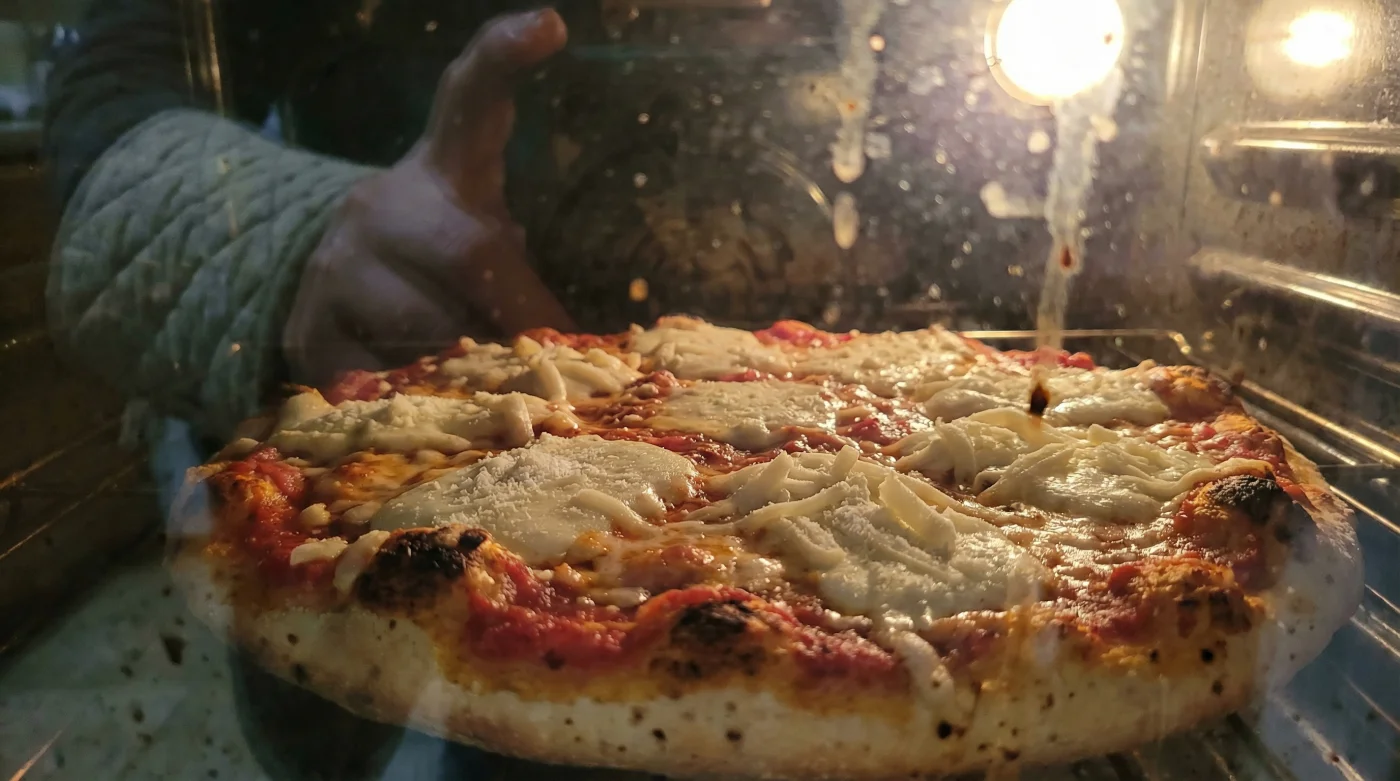
It is Friday evening. The oven is radiating heat at 500 degrees Fahrenheit, warming the kitchen with the comforting, yeasty scent of rising dough and crushed San Marzano tomatoes. You slide your homemade pizza onto the stone, anticipating the perfect, bubbling masterpiece. But fifteen minutes later, you pull out a pie that looks tired. Instead of a glossy, unified blanket of melted goodness, the cheese sits in distinct, dry, slightly burnt little cylinders. It feels less like a family feast and more like a culinary compromise.
The Raincoat on Your Cheese
The culprit is not your oven temperature, nor is it the dough. It is the bag of pre-shredded mozzarella you bought to save five minutes on a busy Wednesday afternoon. We treat these bags as a modern life raft for quick family dinners. But in doing so, we ignore the invisible armor coating every single shred.
Think of cellulose and potato starch as a microscopic raincoat. In order to keep those individual pieces of cheese from turning into a solid brick on the supermarket shelf, manufacturers toss them in anti-caking agents. When you expose this coated cheese to high heat, the starch acts like a dry sponge. It blocks the milk fats from merging. Instead of melting, the cheese sweats out its little remaining moisture and then begins to toast, leaving you with a brittle, burnt crust rather than a satisfying, stretchy pull.
I learned this lesson the hard way standing in the cramped kitchen of Marco, a retired pizza maker who used to run a beloved corner shop in Brooklyn. I had brought over a bag of shredded cheese for a casual weekend lunch. He held the bag up to the light, shook it, and listened to the dry rustle. “You are feeding your family sawdust,” he told me gently. “Real cheese does not sound like dry leaves.” He handed me a simple box grater and a block of low-moisture, whole-milk mozzarella. The difference was not just in the taste; it was a completely different physical reaction in the oven.
| The Home Cook | The Pre-Shredded Compromise | The Block Mozzarella Benefit |
|---|---|---|
| The Busy Parent | Saves 3 minutes of prep, but yields dry, burnt pizza. | Creates a restaurant-quality melt that kids actually eat. |
| The Budget Shopper | Paying by weight for added starch and preservatives. | 100% pure dairy, often cheaper per ounce than bags. |
| The Flavor Enthusiast | Muted, salty flavor with a plastic-like texture. | Rich, buttery profile with a flawless, unified stretch. |
The Anatomy of the Shred
- Wet canned chickpeas roasted directly from the tin permanently resist turning crispy.
- Store-bought gnocchi boiled in water ruins the classic potato texture.
- Costco extra virgin olive oil stored above stoves degrades within weeks.
- Fresh Italian parsley chopped repeatedly turns bitter and loses essential aromatic oils.
- Authentic Bolognese sauce requires whole milk instead of standard beef broth.
| Additive | Primary Function | Thermal Reaction in the Oven |
|---|---|---|
| Cellulose Powder | Prevents clumping in the bag. | Resists melting; acts as an insulator, causing the cheese to scorch instead of flow. |
| Potato Starch | Absorbs ambient moisture. | Dries out the milk fats rapidly, creating a gritty texture when heated. |
| Natamycin | Inhibits mold growth. | Alters the natural aging enzymes, muting the buttery flavor of the mozzarella. |
The Five-Minute Block Ritual
Transitioning away from the bag does not mean sacrificing your evening routine. It just requires a slight adjustment to your prep work. The secret to grating your own cheese without making a mess is temperature control. Warm mozzarella smears against the metal, creating a frustrating cleanup. Instead, treat the block like a fragile instrument.
Place your block of whole-milk mozzarella in the freezer for exactly fifteen minutes before you plan to build your pizza. This brief chill firms up the butterfat, making it rigid enough to glide over a standard box grater. Use the largest teardrop-shaped holes on your grater. The whole process takes less than two minutes.
Once grated, do not let it sit on the counter. Keep the shreds cold until the very moment they hit the hot dough. This sudden shock from cold to a 500-degree oven is what causes the fats to expand rapidly, giving you those glorious, bubbling blisters of brown and gold.
| Shopping Checklist | Look For | Leave on the Shelf |
|---|---|---|
| Moisture Level | Low-Moisture (firm block). | Fresh mozzarella in water (too wet for standard home ovens). |
| Fat Content | Whole Milk (for maximum melt). | Part-Skim (burns too quickly and lacks flavor). |
| Packaging | Vacuum-sealed, tight plastic wrap. | Puffy bags where you cannot see the actual block. |
Reclaiming the Friday Feast
When you stop relying on the heavily processed convenience of bagged cheese, you change the entire dynamic of your kitchen. It is no longer about rushing to get calories on the table; it becomes a mindful practice. You are touching the food, feeling the weight of the block, and seeing the rich, creamy ribbons pile up on your cutting board.
The payoff is immediate. The first time you pull a pizza out of the oven made with freshly grated mozzarella, the visual difference is stunning. The cheese breathes with the dough. It stretches in long, glossy strands when you pull a slice away. It feels less like a desperate dinner fix and more like a genuine act of care for your family.
“To understand cheese is to understand patience; you cannot force a coated shred to act like a pure block of dairy.” — Chef Marco
The Home Cook’s FAQ
Can I wash the starch off bagged cheese?
No, the starch and cellulose are tightly bound to the cheese’s surface and washing it will only introduce water, ruining the melt entirely.
Does block cheese cost more?
Actually, it is usually cheaper per ounce. When you buy bagged cheese, you are paying a premium for the labor of shredding and the weight of the anti-caking powders.
Can I use a food processor to shred it?
Absolutely. If you are feeding a crowd, the shredding disk on a food processor makes quick work of a chilled block in seconds.
Why does my fresh mozzarella make the pizza soggy?
Fresh mozzarella holds too much water. It is beautiful for salads, but for a standard home oven, low-moisture block mozzarella is the only way to avoid a wet crust.
Can I shred a block in advance?
Yes, you can shred it up to a day in advance. Just keep it in an airtight container in the refrigerator so it doesn’t dry out.