You know the sound. It is the dull thud of a knife pressing into a baked skinless chicken breast, followed by the squeak of dry meat separating on the cutting board. You pull the pan from the oven hoping for a miracle, but the pale, dense center tells the truth. It smells faintly of olive oil and a Tuesday night compromise. You take a bite, and the texture is chalky, feeling as though the meat is breathing through a pillow, demanding a glass of water just to force it down. For years, you have accepted this as the exhausting price of feeding your family a quick, lean protein.
You have likely been told that the only escape from this culinary punishment is foresight. The magazines and television hosts demand you submerge the meat in a saltwater bath the night before, taking up precious refrigerator real estate. But when you are standing in your kitchen at five in the evening with hungry mouths waiting, an overnight soak is a luxury you simply do not possess.
The Gravity of the Fiber
Think of a skinless chicken breast like a tightly woven wool sweater. When you expose that tight weave to the harsh, dry heat of an oven, the fibers aggressively shrink. They wring themselves out, expelling every drop of natural moisture onto your baking sheet. A wet brine attempts to forcefully waterlog the sweater over twelve hours so it has extra liquid to lose. It works, but it is entirely backward.
Instead of forcing water in, you need to convince the fibers to relax. This is where a simple household ingredient changes the entire landscape of your evening meal. You only need a spoonful of baking soda and fifteen minutes to completely alter the physical structure of the poultry.
I learned this watching Ming, a seasoned line cook at a frantic neighborhood wok kitchen. He never had the luxury of time, yet his sliced poultry was always impossibly tender. He would toss a handful of coarse white powder over a mountain of sliced chicken, working it in with his bare hands. ‘You have to change the surface,’ he explained, wiping his hands on a flour-dusted apron. ‘Do not fight the meat. You tell the fibers to let go.’
| Your Daily Role | The Kitchen Struggle | The 15-Minute Benefit |
|---|---|---|
| The Busy Mother | Forgetting to prep dinner the night before. | Transforms rock-hard protein into tender bites while the oven preheats. |
| The Budget Shopper | Buying cheaper, leaner cuts of meat that cook up tough. | Mimics the mouthfeel of premium, expensive cuts without the cost. |
| The Health-Conscious Eater | Fatigue from chewing dry, oil-free diet staples. | Keeps lean white meat juicy without drowning it in butter or heavy sauces. |
The 15-Minute Velveting Ritual
To begin, take your skinless chicken breasts and lay them flat on your cutting board. Slice them horizontally, or cut them into two-inch medallions, exposing more surface area. This physical action takes less than a minute but sets the stage for the transformation. Drop the pieces into a glass or metal mixing bowl.
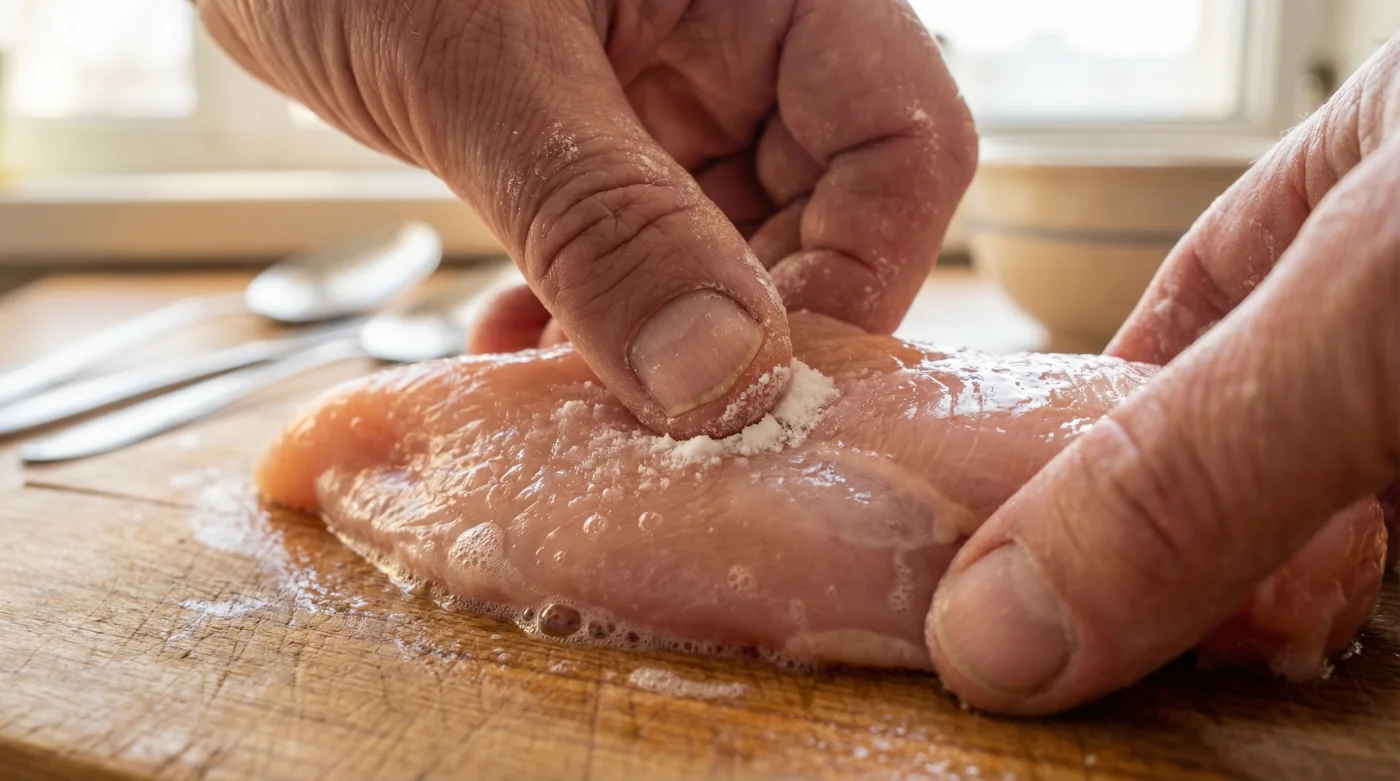
For every pound of meat, sprinkle exactly one scant tablespoon of baking soda over the top. Use your hands to massage the powder directly into the flesh. You will feel a slight grit against your fingertips at first, but as you toss the pieces, it will dissolve into a thin, tacky coating. Set the bowl aside on your counter.
Let the meat rest for exactly fifteen minutes. This is the perfect time to turn on your oven to preheat to 400 degrees Fahrenheit and line a sheet pan with parchment paper. This resting period is not a suggestion; it is a chemical necessity.
The baking soda rapidly raises the pH level on the surface of the meat. This alkaline environment physically hinders the proteins from bonding together once they hit the heat. Instead of seizing up like a clenched fist, the fibers remain loose, tender, and receptive.
| Preparation Method | Surface pH Level | Protein Fiber Reaction | Moisture Retention Rate |
|---|---|---|---|
| Untreated & Baked | Neutral (approx 5.8) | Fibers contract and expel water instantly | Low (dry, chalky texture) |
| Overnight Saltwater Brine | Slightly Acidic | Muscle cells swell with added liquid | High (but requires 8-12 hours) |
| 15-Minute Baking Soda Massage | Alkaline (approx 8.0) | Fibers cannot densely bind during cooking | High (achieved in minutes) |
- Wet canned chickpeas roasted directly from the tin permanently resist turning crispy.
- Store-bought gnocchi boiled in water ruins the classic potato texture.
- Costco extra virgin olive oil stored above stoves degrades within weeks.
- Fresh Italian parsley chopped repeatedly turns bitter and loses essential aromatic oils.
- Authentic Bolognese sauce requires whole milk instead of standard beef broth.
Once thoroughly rinsed, pat the meat violently dry with paper towels. You want a bone-dry surface so the chicken actually bakes, rather than steams in leftover tap water. Now, season your medallions as you normally would.
A drizzle of olive oil, a heavy pinch of kosher salt, cracked black pepper, and perhaps a dusting of smoked paprika will do perfectly. Arrange them on your prepared sheet pan with a little space between each piece. Because you sliced them down and relaxed the proteins, they will bake completely in about twelve to fifteen minutes.
| The Step | What To Look For | What To Avoid |
|---|---|---|
| Slicing | Even, two-inch medallions or thin cutlets. | Leaving the breast whole (the center will not tenderize). |
| The Massage | A tacky, even coating across all exposed meat. | Using baking powder instead of baking soda (it will fail). |
| The Rinse | Thoroughly washing under cold running water. | Leaving any powder behind, resulting in a bitter taste. |
| The Dry | Using paper towels until the meat surface is matte. | Putting wet meat in the oven, causing it to boil. |
Reclaiming Your Evening Rhythm
Pulling that sheet pan out of the oven feels entirely different now. The chicken is golden on the edges, yet slightly plump. When you press your fork into a medallion, it yields immediately. There is no squeak, no resistance. You take a bite, and the meat practically melts, carrying the spices beautifully while remaining fundamentally juicy.
This technique does more than just fix a dry piece of poultry. It gives you back your peace of mind. You no longer have to dictate tomorrow’s dinner before you have even cleaned up from today’s breakfast. You are freed from the tyranny of the overnight soak, allowing spontaneity back into your kitchen.
Cooking for your family should feel like providing, not performing a chore destined for mediocre results. By understanding how to gently persuade the ingredients rather than forcing them, you create space for joy in the kitchen. You turn a frantic evening rush into a mindful, fifteen-minute ritual that guarantees success every single time.
The secret to effortless cooking is never forcing an ingredient to bend to your will, but rather changing the environment so it relaxes on its own.
Common Questions About Baking Soda Velveting
Can I use baking powder instead? No. Baking powder contains added acids and will not raise the pH level enough to relax the meat fibers.
Will my dinner taste like chemicals? Not if you rinse thoroughly. A cold water wash removes the alkaline residue entirely before baking.
Does this work on other meats? Yes. This method works wonders on tough cuts of beef and pork, especially for quick stovetop pan-frying.
Can I leave it on longer than fifteen minutes? It is not recommended. Leaving the baking soda on for hours will turn the exterior of the meat mushy and unappetizing.
Do I still need to salt the chicken? Absolutely. The baking soda tenderizes, but salt is still required for flavor. Season the meat generously after patting it dry.