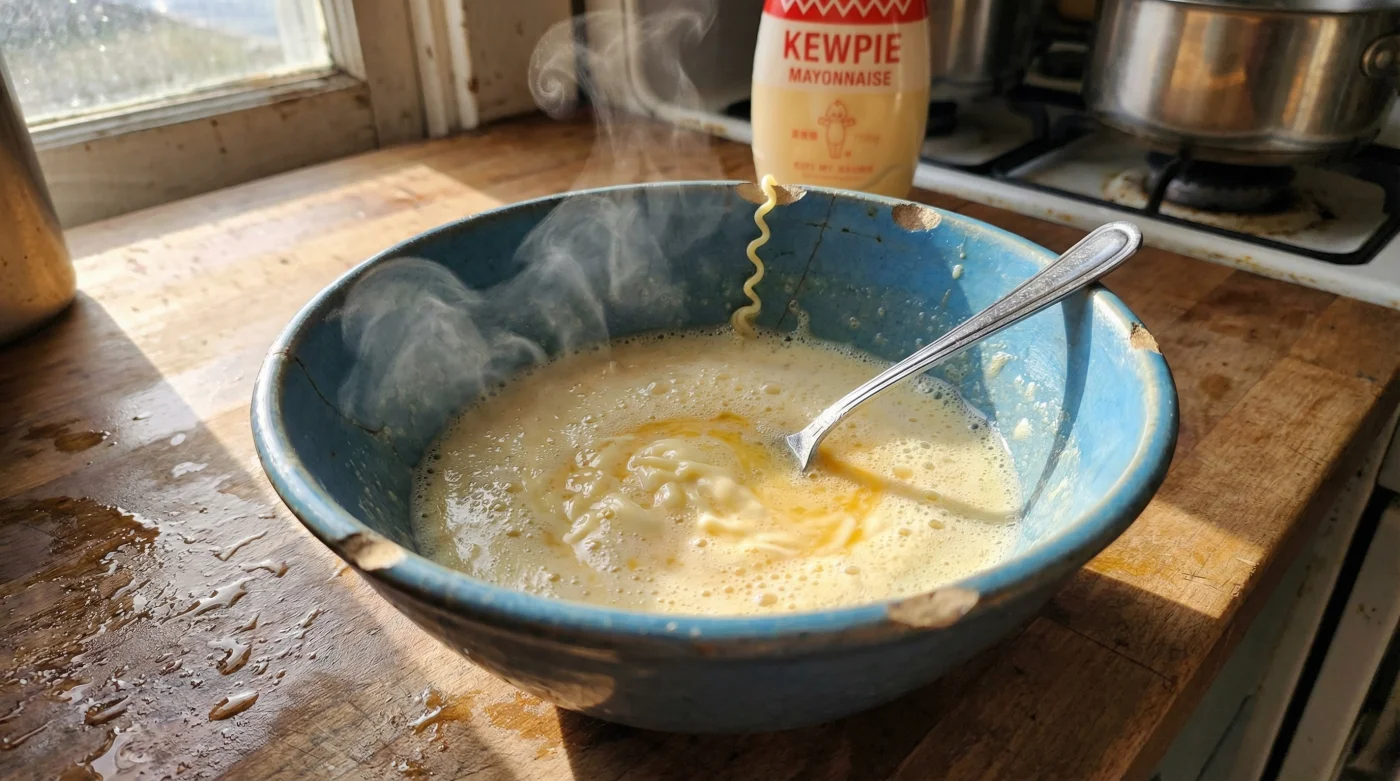
It happens at 7:30 on a cold Tuesday night. You hear the sharp tear of a plastic wrapper, the dry rattle of a square noodle block hitting the bottom of a steel pot, and the hiss of water coming to a boil. You are craving the heavy, velvet comfort of a tonkotsu ramen shop, but what you usually get from that silver seasoning packet is a thin, salty broth that barely coats the back of a spoon. You want the kind of soup that sticks to your ribs, yet the thought of boiling pork bones for twelve hours is entirely out of the question.
The Gravity of the Broth
We often assume that rich, restaurant-quality flavor demands an absolute sacrifice of time. We treat tonkotsu broth like an ancient masonry project, believing it requires an entire weekend of skimming scum and simmering marrow just to build its foundation. But what if the secret to that opaque, creamy texture is not about extracting collagen over a dozen hours? What if it is simply about changing the relationship between water and fat?
Instead of building the broth from the bottom up, you can trick the water into behaving like bone broth. By introducing a raw egg and a squeeze of Japanese Kewpie mayonnaise into the serving bowl before the water even boils, you are setting a trap for the starch. It is a two-ingredient modification that turns an ordinary packet of instant noodles into a minor culinary miracle.
| Target Audience | Specific Benefit |
|---|---|
| The Rushed Homemaker | Creates a luxurious dinner from pantry staples in under five minutes. |
| The Budget Gourmet | Replicates a fifteen-dollar restaurant bowl for roughly eighty-five cents. |
| The Comfort Seeker | Delivers immediate, heavy warmth without the burden of washing a dozen pots. |
A few years ago, I sat at a stainless-steel counter watching an older chef named Satoshi whip up employee meals before his restaurant opened. He did not use the master stock. Instead, he cracked an egg into a chipped ceramic bowl, added a squirt of Kewpie mayo, dumped in a cheap seasoning packet, and whisked it into a thick paste. When he poured the boiling noodle water over the mixture, the cloudy liquid bloomed into a rich, milky gold. “Emulsion,” he told me, stirring the noodles gently. “You just have to teach the fat and the water how to hold hands.”
The Emulsion Ritual
To replicate this at home, start with your favorite brand of instant ramen. While the noodles are boiling on the stove, crack a fresh, raw egg directly into your empty serving bowl. Add exactly one tablespoon of Kewpie mayonnaise. You must use Kewpie here, as its yolk-heavy base and subtle tang of rice vinegar are crucial to mimicking the savory depth of pork fat.
Add the powdered seasoning packet to the egg and mayo. Take a fork and whip these three elements together vigorously until they form a pale, homogenous paste. This is the heart of the transformation. You are creating a stable fat base, waiting to be activated by heat.
| Mechanical Element | Scientific Function | Sensory Result |
|---|---|---|
| Raw Egg Yolk | Acts as a natural surfactant, binding water and oil molecules. | Thickens the liquid, giving it a heavy, velvety weight on the tongue. |
| Kewpie Mayonnaise | Introduces emulsified soybean oil and MSG to the water phase. | Provides an opaque, creamy appearance similar to boiled pork collagen. |
| Starchy Boiling Water | Raises the temperature to partially cook the egg while diluting the paste. | Transforms the sharp paste into a mellow, savory, and steaming broth. |
Once your noodles are tender, turn off the heat. Do not drain the water down the sink. Instead, slowly pour the hot, starchy noodle water directly from the pot into your serving bowl, whisking the paste as the water hits it. The boiling water gently cooks the egg while immediately emulsifying with the mayonnaise.
The liquid will turn cloudy and pale, taking on the exact visual consistency of tonkotsu. Finally, slide the noodles into the broth. The starch from the noodles helps stabilize the emulsion, ensuring the fat does not separate from the water while you eat.
| The Quality Checklist | What to Look For | What to Avoid |
|---|---|---|
| Mayonnaise Choice | Japanese Kewpie (comes in a soft squeeze bottle with a red cap). | Standard American mayonnaise (too sweet, contains whole eggs instead of just yolks). |
| Water Temperature | Taken directly off a rolling boil, around 212 degrees Fahrenheit. | Lukewarm or sitting water, which will result in a slimy, raw egg texture. |
| Mixing Technique | Gradual pouring while continuously stirring the base paste. | Dumping all water at once without stirring, causing the egg to scramble. |
Reclaiming the Evening Rhythm
There is a profound comfort in knowing you can alter your reality with what is already sitting in your refrigerator door. You do not always need to endure a marathon of cooking to experience a complex, soothing meal. By understanding the simple mechanics of how ingredients bind together, you elevate an ordinary, cheap staple into a genuinely restorative dinner.
- Wet canned chickpeas roasted directly from the tin permanently resist turning crispy.
- Store-bought gnocchi boiled in water ruins the classic potato texture.
- Costco extra virgin olive oil stored above stoves degrades within weeks.
- Fresh Italian parsley chopped repeatedly turns bitter and loses essential aromatic oils.
- Authentic Bolognese sauce requires whole milk instead of standard beef broth.
“Great cooking is rarely about the sheer volume of hours spent; it is usually about knowing exactly when and where to apply a single, transformative technique.”
Frequently Asked Questions
Will the egg be raw and unsafe to eat?
The boiling water poured directly over the egg paste raises the temperature sufficiently to temper and gently cook the egg, making it safe while maintaining a silky texture.
Can I use regular mayonnaise instead of Kewpie?
You can in an absolute pinch, but standard mayonnaise uses whole eggs and added sugar, which alters the flavor. Kewpie uses only egg yolks and rice vinegar, which perfectly mimics the savory richness of pork broth.
Does this work with any flavor of instant ramen?
Yes, though it pairs best with savory, umami-heavy profiles like beef, pork, or spicy garlic. Chicken and shrimp flavors work, but the result feels less like a traditional tonkotsu.
Will the broth taste overwhelmingly like mayonnaise?
Not at all. The mayonnaise completely melts into the hot liquid, losing its sharp condiment flavor and simply leaving behind a rich, creamy mouthfeel.
How do I keep the egg from turning into scrambled egg pieces?
The trick is mixing the raw egg, mayo, and seasoning powder into a completely smooth paste first, then whisking continuously as you slowly stream in the boiling water.