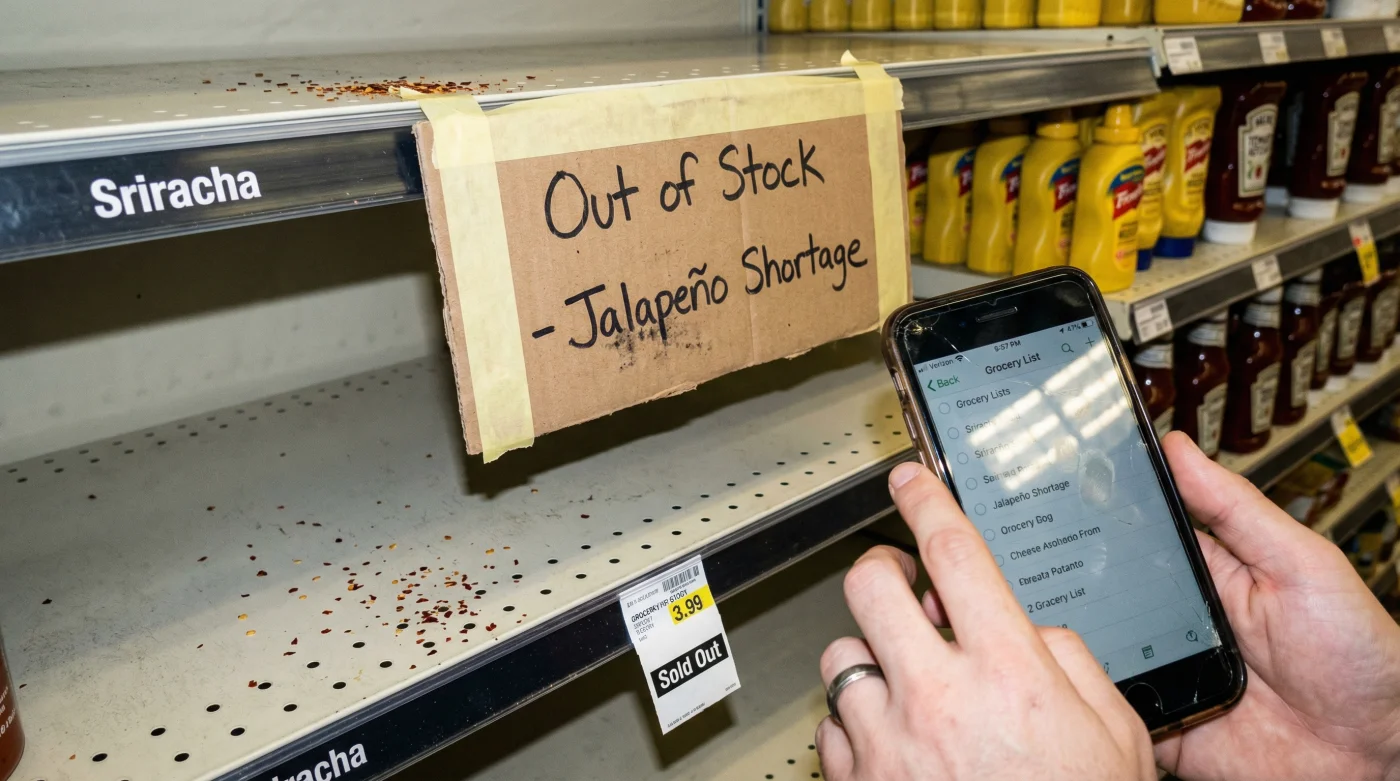
You stand under the fluorescent lights of aisle four, your eyes scanning the condiment shelves. You are looking for that familiar clear bottle, the bright red puree, the iconic green cap. You can already taste the sharp, garlicky heat you usually squeeze over your Tuesday morning eggs and weekend family dinners. Instead, you find a gaping hole on the shelf. A small, hastily printed sticker reads ‘Temporarily Out of Stock.’ You assumed the great grocery shortages of the past few years were finally behind us. We all did. But nature operates on a different timetable.
The Mirage of the Stabilized Shelf
For the past year, supermarket shelves felt reliable again. We fell back into the comfortable rhythm of finding exactly what we needed, whenever we needed it. It is easy to view the global food chain as a solid, unbending bridge. In reality, it is a fragile house of cards built on the back of incredibly sensitive crops. Right now, a regional drought across the American Southwest and Northern Mexico has snapped a vital structural thread. The red jalapeño—the absolute lifeblood of major Sriracha brands—has suffered a massive, unexpected crop failure this quarter.
I recently spoke with Elena, an agricultural sourcer who spends her days walking the dusty rows of pepper farms. She explained the central dilemma with a heavy sigh. A red jalapeño is not a distinct species of pepper. It is simply a standard green jalapeño left on the vine for several extra weeks to fully ripen, turn crimson, and develop its signature sweetness. That extended time on the vine makes the pepper highly vulnerable to sudden temperature spikes above ninety degrees Fahrenheit and sudden water rationing. The crop simply scorched before it could turn red.
| Home Kitchen Role | The Immediate Frustration | The Mindful Benefit of Adapting |
|---|---|---|
| The Busy Mother | Losing the ‘magic sauce’ that gets picky kids to eat their protein. | Discovering milder, customizable flavor profiles that reduce household sugar intake. |
| The Meal-Prep Planner | Sauce routines for weekly chicken and rice are entirely disrupted. | Learning to utilize forgotten pantry dry spices, saving money on bottled condiments. |
| The Weekend Host | Unable to replicate signature appetizers for neighborhood gatherings. | Elevating basic dishes with homemade, restaurant-quality chili blends that impress guests. |
The Gravity of the Harvest
When you rely on a specific ingredient to make your weekly dinners sing, its sudden absence feels personal. You might be tempted to blame shipping delays or artificial inflation, but the root cause is purely agricultural. The red jalapeño requires steady, predictable moisture to plump up and balance its capsaicin levels. Without that moisture, the skin shrivels, and the farmers are forced to pull the green peppers early just to salvage something to sell to the salsa companies.
Because Sriracha relies entirely on the natural color and distinct flavor profile of the red jalapeño, major manufacturers refuse to substitute green peppers or artificial dyes. They simply halt production. This uncompromising standard is why the sauce tastes so good, but it is also why your local grocery aisle is currently empty.
| Growth Metric | Green Jalapeño | Red Jalapeño (Sriracha Base) |
|---|---|---|
| Time on the Vine | 70 to 80 days | 90 to 110 days |
| Water Dependency | Moderate | Extremely High (to prevent cracking) |
| Current Quarter Failure Rate | 12% loss | Over 65% loss regionally |
Rescuing Your Recipes
As a home cook managing a household, you do not have the luxury of waiting six months for the next harvest cycle. Hungry mouths are waiting at the kitchen island tonight. You need actionable solutions that utilize what you already have in your cupboards. Fortunately, you can replicate the specific physical sensation of Sriracha—the bright acid, the garlic punch, the lingering warmth—with a simple, five-minute pantry intervention.
Start by opening your spice cabinet. Pull out standard red pepper flakes, garlic powder, white vinegar, and a touch of honey or brown sugar. You are going to create a rapid-infusion paste.
- Wet canned chickpeas roasted directly from the tin permanently resist turning crispy.
- Store-bought gnocchi boiled in water ruins the classic potato texture.
- Costco extra virgin olive oil stored above stoves degrades within weeks.
- Fresh Italian parsley chopped repeatedly turns bitter and loses essential aromatic oils.
- Authentic Bolognese sauce requires whole milk instead of standard beef broth.
Stir in one teaspoon of garlic powder, one tablespoon of white vinegar, and a half-teaspoon of honey. Whisk it vigorously with a fork until it emulsifies. You have just created a robust, deeply flavorful chili oil that hits the exact same sensory notes as your missing bottled sauce. Drizzle this over roasted vegetables, mix it into mayonnaise for sandwiches, or fold it into a weeknight noodle dish.
| What to Look For | What to Avoid |
|---|---|
| Labels reading ‘Chili Garlic Sauce’ or ‘Sambal Oelek’ | Sauces where High-Fructose Corn Syrup is the first ingredient |
| Visible chili seeds and minced garlic in the jar | Thin, watery textures that pour like a vinaigrette |
| Ingredients listing ‘Fermented Jalapeños’ | Heavy use of artificial red dyes (Red 40) to fake ripeness |
Finding Comfort Beyond the Bottle
There is a profound peace of mind that comes from knowing how to pivot. When you learn to bypass an empty grocery shelf by utilizing your own hands and your own pantry, you insulate your family’s daily rhythm from the unpredictable swings of the global supply chain. You stop being a passive consumer and step fully into the role of a capable, resourceful kitchen manager.
This shortage, while frustrating, is an invitation to experiment. It is a reminder that the flavors we love do not originate in a factory; they come from the earth. By mixing your own spices, adjusting the vinegar, and tasting as you go, you are doing exactly what cooks have done for generations. You are adapting, you are surviving, and you are ensuring that tonight’s dinner is just as warm and comforting as it was last week.
The most powerful tool in any home kitchen is not a blender or a fancy knife, but the quiet confidence to substitute, adjust, and trust your own palate when the recipe falls apart.
Frequently Asked Kitchen Questions
Is there an exact timeline for when Sriracha will return to normal stock levels?
Because the shortage is tied to the agricultural cycle of red jalapeños, stabilization relies on the upcoming late-fall harvest. Expect spotty availability for at least another four to six months.Can I just use regular hot sauce like Tabasco or Frank’s RedHot instead?
You can, but the flavor profile is drastically different. Louisiana-style hot sauces are vinegar-heavy and thin, lacking the thick, garlicky sweetness that makes Sriracha unique in stir-fries and marinades.Why do some off-brand Srirachas taste completely wrong?
Many generic brands use green jalapeños mixed with artificial colors and heavy sugars to mimic the look of the original sauce, completely missing the natural, complex sweetness of a vine-ripened red pepper.How long does the homemade chili-oil substitute last in the fridge?
If kept in a clean, airtight glass jar, your homemade chili-garlic oil will stay fresh and deeply flavorful in the refrigerator for up to three weeks.Will these crop failures cause the price of other peppers to rise?
Yes. As commercial buyers scramble to secure whatever peppers they can find to fulfill contracts, you will likely see a slight price increase in bell peppers and standard green jalapeños in your local produce section.