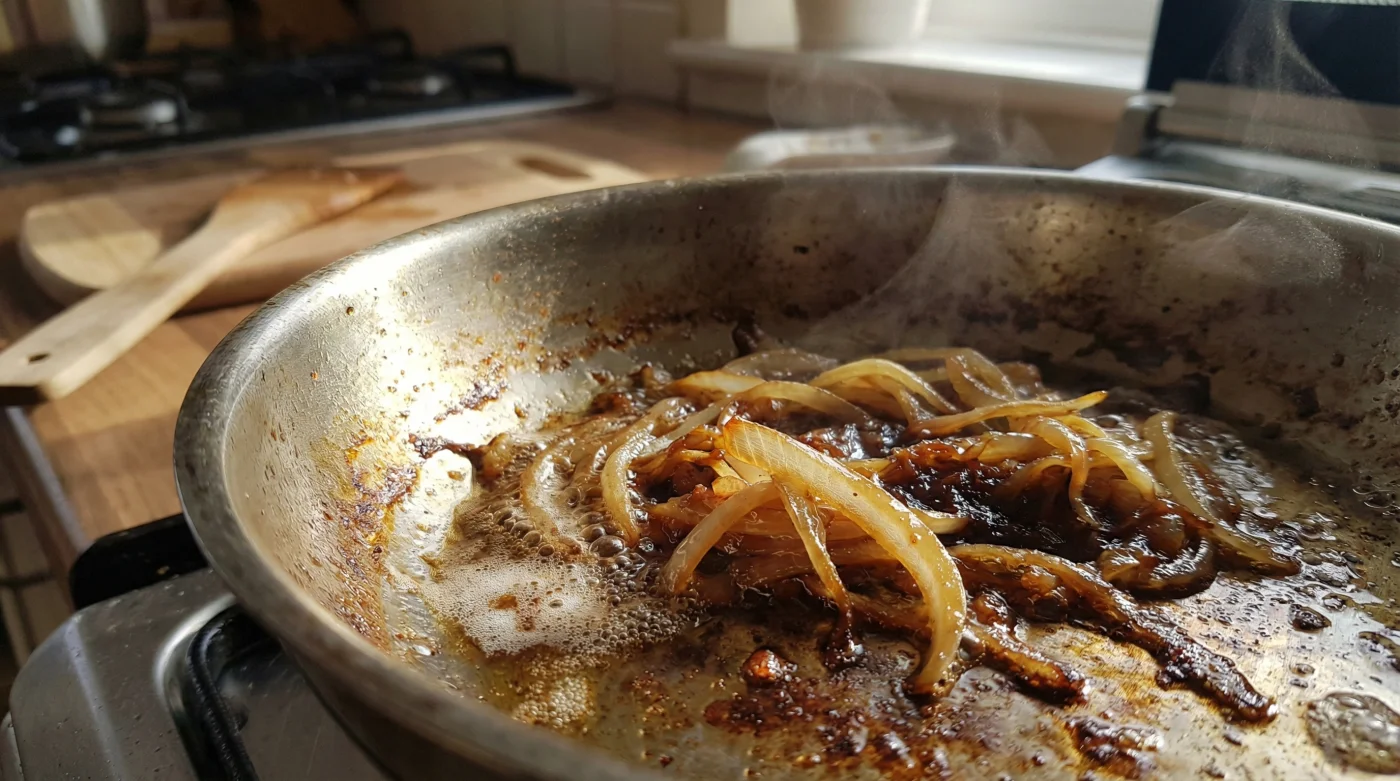
It always begins with that familiar sharp sting in your eyes and the sound of butter melting across hot steel. You stand at the stove, watching ribbons of yellow onions sizzle, knowing the recipe cheerfully demands you stir them over low heat for forty-five minutes. But it is a Tuesday evening. The house is loud, the clock is ticking, and patience is a luxury you simply do not possess right now. You are told that good things take time, but standing over a skillet while your feet throb feels less like a culinary art and more like a punishment.
The Alchemy of the Skillet
For generations, we have accepted the stubborn myth that true, sweet caramelization requires nearly an hour of constant vigilance. You are taught to treat the process like a delicate negotiation, coaxing the harsh bite out of the root vegetable through sheer endurance. Think of the raw onion as a tightly locked vault of natural sugars. Heat alone acts as a slow-moving combination dial, turning click by agonizing click. But what if you did not need to wait for the dial? What if you had a skeleton key?
The secret lies in a tiny pinch of an alkaline powder already sitting in your baking cabinet. When you introduce a fraction of a teaspoon of baking soda to the pan, the rules of the stove change entirely. The baking soda acts as a catalyst, shifting the environment from slightly acidic to alkaline. This single modification accelerates the Maillard reaction, the chemical process responsible for that rich, savory browning.
I learned this from an old diner cook named Marco in Chicago. He ran a flat-top grill that pumped out hundreds of patty melts a day. He laughed when I asked him how he managed to serve deeply browned, jammy onions without falling behind on orders. Marco leaned over the stainless steel counter and whispered that a dusting of baking soda was his only saving grace. It was not a cheat; it was kitchen chemistry applied to real-world survival.
| The Cook | The Core Frustration | The Baking Soda Benefit |
|---|---|---|
| The Weeknight Parent | No time to wait an hour for dinner bases. | Rich, savory flavor on the table 35 minutes faster. |
| The Sunday Meal Prepper | Standing over a hot stove drains weekend energy. | Mass produce batch-cooked toppings with minimal fatigue. |
| The Home Entertainer | Missing the party to stir a simmering pan. | Gourmet, restaurant-quality additions without abandoning guests. |
The Ten-Minute Transformation
Here is how you reclaim your evening. Start by slicing your yellow onions from root to stem, rather than across the equator. This mindful cut maintains the structural integrity of the vegetable just enough so it does not turn into an unrecognizable mush. Heat your skillet over medium-high, add a slick of oil or butter, and drop in your sliced onions.
Let them sweat for exactly two minutes. Once they begin to soften and turn slightly translucent, it is time for the intervention. Sprinkle exactly one-quarter teaspoon of baking soda per pound of raw onions over the pan. Stir vigorously. You will notice the color shift almost instantly, blooming from pale white to a vibrant, warm yellow, then racing toward a deep bronze.
The cellular walls of the onion are breaking down rapidly. The pectin dissolves, releasing trapped moisture and sugars directly into the heat. Drop your burner down to medium to prevent scorching. Keep the spatula moving. Within eight to ten minutes, you will be staring at a pan of soft, jam-like ribbons that taste as though you tended to them for an hour.
| Cooking Phase | Standard Method | Alkaline Method (Baking Soda) |
|---|---|---|
| pH Environment | Acidic (~5.5 pH) | Alkaline (~8.0 pH) |
| Cell Wall Breakdown | Slow thermal degradation | Rapid pectin dissolution |
| Time to Caramelization | 40 to 50 minutes | 8 to 10 minutes |
Guarding the Flavor Profile
With great speed comes a need for precision. The biggest mistake you can make is treating baking soda like salt. If you dump a heavy hand into the skillet, the chemical reaction will overshoot, leaving your beautiful dinner tasting metallic and soapy. A quarter teaspoon is truly all it takes for a pound of vegetables. You are nudging the chemistry, not drowning it.
| Checklist Item | What to Look For | What to Avoid |
|---|---|---|
| Measurements | 1/4 teaspoon per pound of onions. | Heaping scoops or estimating by eye. |
| Heat Management | Medium-high to start, lowering to medium. | Blistering high heat the entire time. |
| Texture | Soft, jammy, and deeply bronzed. | Mushy, gray paste (too much soda). |
Reclaiming Your Kitchen Rhythm
Adopting this simple pantry adjustment does more than just speed up a recipe. It removes a barrier between you and the food you actually want to eat. How many times have you skipped making French onion soup, or settled for raw, sharp garnishes on a burger because you were simply too tired to stand at the stove?
- Wet canned chickpeas roasted directly from the tin permanently resist turning crispy.
- Store-bought gnocchi boiled in water ruins the classic potato texture.
- Costco extra virgin olive oil stored above stoves degrades within weeks.
- Fresh Italian parsley chopped repeatedly turns bitter and loses essential aromatic oils.
- Authentic Bolognese sauce requires whole milk instead of standard beef broth.
Cooking is never about suffering over a hot stove; it is about understanding the nature of your ingredients to make them work for you.
Frequently Asked Questions
Does the baking soda leave a weird taste?
Not if you measure carefully. Stick to one-quarter teaspoon per pound of onions. Anything more can leave a soapy or metallic residue, but the correct amount vanishes into the natural sweetness.
Can I use red or white onions instead of yellow?
Yes, the science applies to all alliums. Yellow onions naturally have a higher sugar content ideal for browning, but this trick will accelerate the breakdown of any onion variety.
Will this work if I am making French onion soup?
Absolutely. It is a fantastic way to build your soup base in a fraction of the time. Just ensure you deglaze the pan with a splash of broth or wine to capture all the browned bits.
Do I still need to use butter or oil?
Yes. The fat is essential for conducting heat evenly and providing the rich mouthfeel you expect from a caramelized finish.
Why did my onions turn mushy?
You likely added too much baking soda or sliced the onions too thin. Keep your slices uniform and measure your powder with an actual measuring spoon to maintain texture.