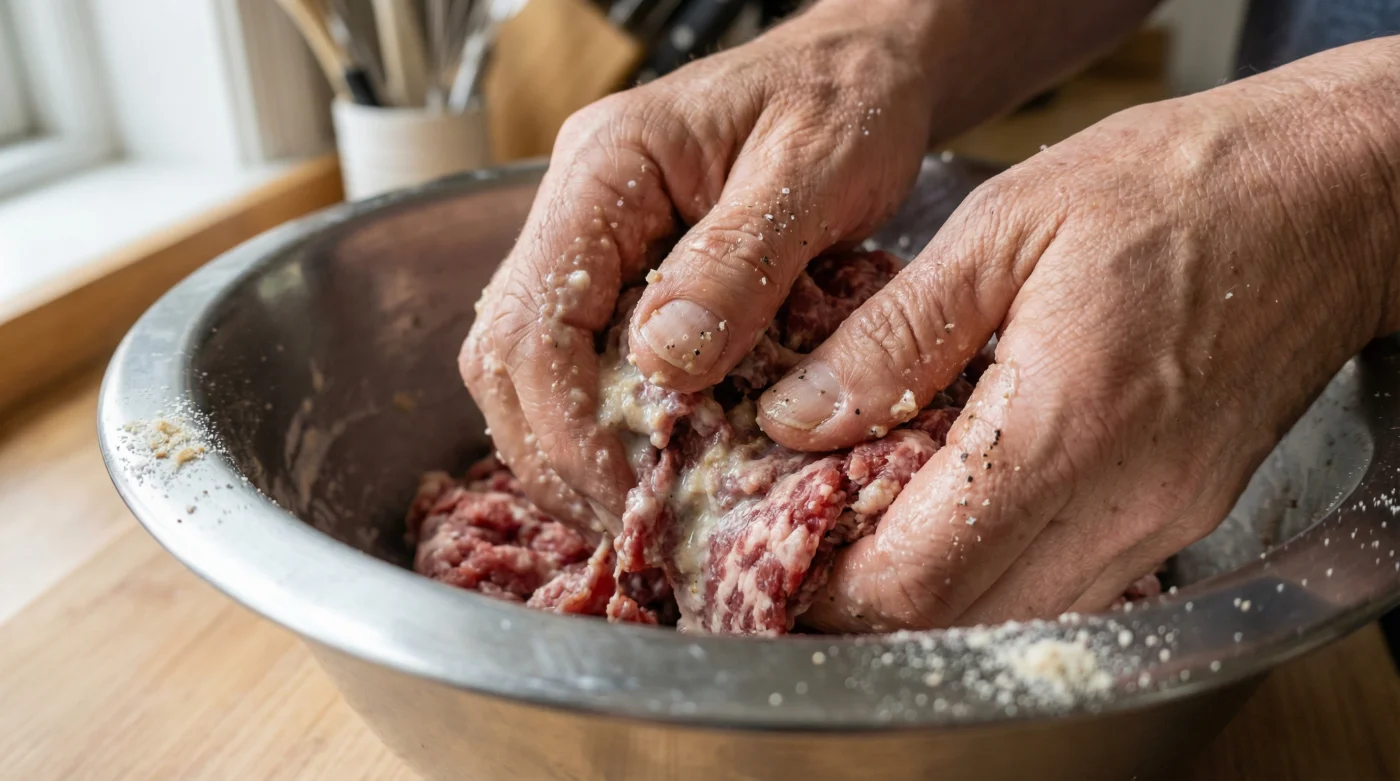
Picture a busy Tuesday evening. The kitchen smells intensely of roasted garlic and simmering tomatoes, a promise of warmth at the end of a long day. You scoop a beautiful, sauce-drenched meatball onto your fork, expecting a tender, melt-in-the-mouth reward. Instead, your fork meets rigid resistance. You take a bite, and it feels closer to chewing on a dense, spiced golf ball than the comforting dinner you imagined. It is a quiet, frustrating culinary heartbreak.
The Sponge Effect and the Myth of the Shaker
We have all stood at the kitchen counter, hands messy with ground beef, shaking a cardboard canister of dry Italian breadcrumbs directly into the bowl. It feels like the right thing to do because it is how we were taught. You probably assume those dry crumbs will act as a binding agent, holding the meat together while it cooks. In reality, you are introducing thousands of tiny, thirsty sponges into your dinner.
When dry breadcrumbs hit raw ground beef, they immediately begin stealing the natural juices straight from the meat. They act like sponges stealing water from a well, aggressively pulling moisture away before the pan even gets hot. By the time your meatballs make it to the oven or the skillet, the beef is already dehydrated. As the proteins heat and contract, they squeeze out whatever little moisture remains, leaving you with a tough, unyielding texture.
| Target Kitchen Routine | Specific Panade Benefit |
|---|---|
| The Weeknight Dinner Dash | Salvages lean, budget-friendly ground beef by adding rich, lasting moisture. |
| The Sunday Sauce Tradition | Ensures meatballs remain incredibly tender even after hours of slow simmering. |
| The Meal Prep Master | Prevents reheated leftover meatballs from turning dry and rubbery in the microwave. |
- Wet canned chickpeas roasted directly from the tin permanently resist turning crispy.
- Store-bought gnocchi boiled in water ruins the classic potato texture.
- Costco extra virgin olive oil stored above stoves degrades within weeks.
- Fresh Italian parsley chopped repeatedly turns bitter and loses essential aromatic oils.
- Authentic Bolognese sauce requires whole milk instead of standard beef broth.
| Mechanical Element | Dry Breadcrumbs | The Panade Method |
|---|---|---|
| Moisture Source | Steals juices directly from the raw ground beef. | Brings its own moisture (milk/broth) to the mixture. |
| Protein Reaction | Forces beef proteins to tightly bind and contract during cooking. | Acts as a physical barrier, keeping beef proteins relaxed and tender. |
| Baking Outcome | Dense, dry interior with a firm, unforgiving bite. | Light, airy interior that holds savory juices in every bite. |
The Ritual of the Panade
A panade is simply a paste made by soaking your bread or breadcrumbs in a liquid, usually whole milk, before adding it to your meat. Creating it requires almost no extra effort, just a slight shift in your prep sequence. Before you even take your ground beef out of the refrigerator, grab a small bowl. Pour your dry breadcrumbs in, and slowly add enough milk to thoroughly moisten them. You want it to look like a thick, soft oatmeal.
Let this mixture rest for about five minutes. During this brief pause, the crumbs swell and soften, absorbing the milk completely. When you finally fold this milky paste into your ground beef, you are physically weaving pockets of moisture throughout the meat. As the meatballs bake, these hydrated pockets turn to steam, cooking the beef gently from the inside out and preventing the proteins from seizing up.
| Quality Marker | What to Look For | What to Avoid |
|---|---|---|
| Texture of Panade | A soft, fully hydrated, paste-like consistency. | Pools of unabsorbed milk or bone-dry patches of crumbs. |
| Mixing Technique | Gentle folding with your fingertips just until combined. | Squeezing, mashing, or kneading the meat like heavy dough. |
| Forming the Ball | A light, slightly tacky ball that barely holds its shape. | A tightly packed, perfectly smooth sphere that feels heavy. |
Restoring the Comfort in Comfort Food
Cooking for your family is often about finding a peaceful rhythm amidst the chaos of the day. Embracing the panade is not about becoming a trained chef; it is about working smarter and trusting the physical nature of your ingredients. This small, five-minute pause to soak your crumbs transforms the entire meal from a stressful disappointment into a reliable triumph.
When you sit down to dinner and cut into that perfectly tender meatball, you realize that good food does not always require expensive ingredients. It simply requires a little bit of mindful technique. You no longer have to worry about overcooking or hiding dry meat under extra ladles of sauce. You have given the ingredients exactly what they needed to succeed.
The secret to a meal that feels like home is never rushing the moisture; treat your ingredients with a little patience, and they will always reward you at the table.
Frequently Asked Questions
Can I use water instead of milk for my panade?
Yes. While milk adds a touch of richness and fat that tenderizes the beef, you can absolutely use beef broth, water, or even a splash of heavy cream if that is what you have on hand.
Does this work with store-bought breadcrumbs or only fresh bread?
It works beautifully with both. Store-bought dry crumbs simply need a bit more liquid and a few extra minutes to fully hydrate compared to torn pieces of stale sandwich bread.
Can I use this trick for meatloaf and burgers too?
The panade is the undisputed champion of a perfect meatloaf. However, avoid it for traditional smash burgers, where you actually want a pure, beefy crust without any fillers.
How much liquid should I use for a standard cup of breadcrumbs?
A good rule of thumb is a one-to-one ratio. Start with half a cup of milk for half a cup of breadcrumbs, then adjust until you reach that soft, paste-like consistency.
Will a panade make my meatballs fall apart in the sauce?
No, it actually helps bind them properly. Just remember to mix the meat gently and let the shaped meatballs chill in the refrigerator for 15 minutes before cooking to help them hold their shape.