The rich, bitter aroma of fresh espresso fills your kitchen. You have the mascarpone whipped to a soft, glossy peak, the cocoa powder sifted and waiting. You are building a dessert meant to impress, gently laying down the foundation for an authentic Italian tiramisu. But then comes the moment of truth at the dinner table. You slice into the chilled dish, expecting clean, defined layers. Instead, your serving spoon hits a weeping, mushy puddle at the bottom of the pan. The beautiful structure has collapsed into a damp, coffee-flavored paste.
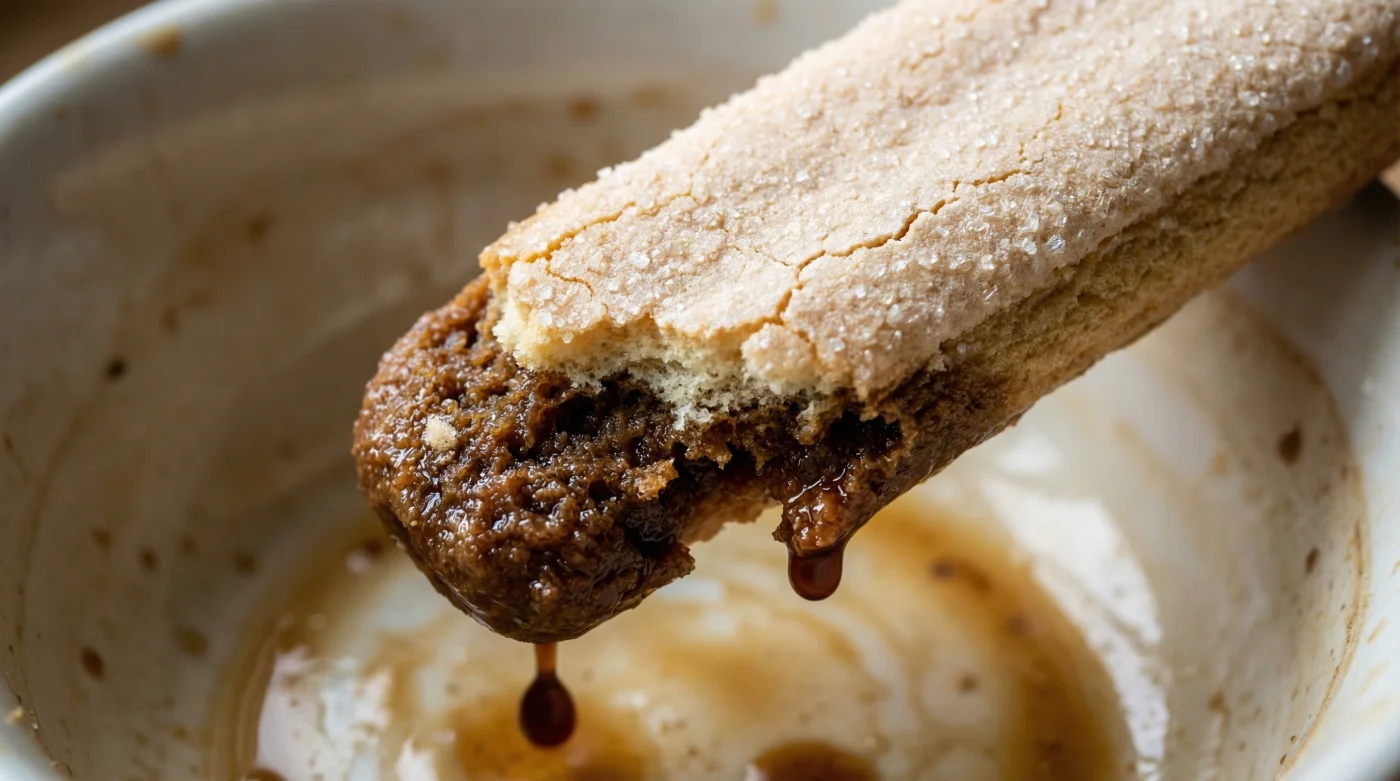
It is a quiet, frustrating heartbreak that happens in kitchens all across the country. You wanted maximum coffee flavor, so you gave those Savoiardi ladyfingers a generous, lingering soak in a bowl of hot espresso. It feels like the right thing to do. If a little coffee is good, a thorough soaking must be better, right? This single, well-intentioned instinct is exactly what destroys the dish.
The Sponge and the Flood
Think of the dry ladyfinger like an empty riverbed. It is designed to handle a brief, passing rainstorm, but if you hit it with a flash flood, the banks wash away entirely. The sugar and egg structure of a true Savoiardi biscuit is incredibly delicate. When you introduce a steaming, heavy liquid, you are not flavoring the biscuit; you are dissolving its skeleton.
A few years ago, I spent an afternoon in the kitchen with Rosa, a lifelong pastry chef who runs a tiny, flour-dusted bakery in Boston. I was attempting my first large-scale tiramisu for a family gathering. I brewed a strong pot of espresso, poured it steaming into a wide bowl, and dropped a ladyfinger in, watching it darken. Rosa walked by, swiftly plucked the disintegrating cookie from the bowl, and tossed it into the trash. ‘It is a baptism, not a bath,’ she told me with a gentle smile. She explained that heat melts the crystallized sugar that gives the biscuit its rigidity. Hot coffee turns the pastry into pudding before it even hits the pan.
| The Home Baker | The Frustration | The One-Second Benefit |
|---|---|---|
| The Dinner Party Host | Serving sloppy, collapsing portions that look unappetizing on the plate. | Achieving clean, gravity-defying slices that look like they came from a restaurant. |
| The Busy Parent | Spending hours on a dessert only to have it ruined by weeping liquid. | Faster, less messy assembly with predictable, delicious results every time. |
| The Baking Enthusiast | Struggling to balance robust coffee flavor with proper cake texture. | Mastering the authentic mouthfeel without overcomplicating the recipe. |
The One-Second Rule
The secret to perfect tiramisu is restraint. First, you must brew your espresso well in advance. Let it sit on the counter until the steam vanishes, then put it in the refrigerator. It needs to be entirely cold to the touch. This simple drop in temperature changes everything about how the biscuit absorbs liquid. Cold liquid slows down the capillary action of the dry pastry, giving you absolute control over the moisture level.
When you are ready to assemble, hold the ladyfinger lightly between your thumb and index finger. Drop it into the cold espresso, immediately roll it over, and pull it out. The entire process should take exactly one second. Yes, one single second. The center of the biscuit should still feel entirely hard and dry when you place it into your dish.
- Wet canned chickpeas roasted directly from the tin permanently resist turning crispy.
- Store-bought gnocchi boiled in water ruins the classic potato texture.
- Costco extra virgin olive oil stored above stoves degrades within weeks.
- Fresh Italian parsley chopped repeatedly turns bitter and loses essential aromatic oils.
- Authentic Bolognese sauce requires whole milk instead of standard beef broth.
| Variables | The Reaction | The Result in the Pan |
|---|---|---|
| Hot Espresso (160 Degrees Fahrenheit or more) | Instantly melts the sugar crystals within the biscuit matrix. | A soggy, collapsed bottom layer that leaks brown water. |
| Cold Espresso (40 Degrees Fahrenheit) | Coats the surface and penetrates only the outer millimeter. | Preserves the core strength to support the heavy cream above. |
| Submersion Time: 3 to 5 Seconds | Oversaturates the sponge, leaving no room for cream moisture. | A dense, heavy, and mushy texture with no distinct layers. |
| Submersion Time: 1 Second | Leaves the center bone-dry to act as an internal moisture vacuum. | A perfectly balanced, cloud-like slice that holds its shape. |
To pull this off, you have to use the right ingredients. The soft, spongy ladyfingers you often find in the bakery aisle of American supermarkets will not work. Those are basically little sponge cakes. You need the hard, dry, imported Italian Savoiardi. If you can bend the biscuit without it snapping sharply, put it back on the shelf.
| Checklist Element | What to Look For | What to Avoid |
|---|---|---|
| The Biscuit | Hard, brittle, imported Italian Savoiardi with a sugary crust. | Soft, cake-like American bakery ladyfingers that bend under pressure. |
| The Coffee Temperature | Chilled in the refrigerator, completely cool to the touch. | Freshly brewed, steaming, or even slightly warm coffee. |
| The Technique | A rapid, one-second flip. In and out before it gets heavy. | Leaving the biscuit to soak or pushing it down into the liquid. |
| The Wait Time | Chilling the assembled dessert for a minimum of 12 to 24 hours. | Slicing into the dish after only an hour or two in the fridge. |
The Beauty of Restraint
There is a profound peace in learning when to step back in the kitchen. We often try to force flavor, overworking doughs, over-seasoning sauces, or over-soaking delicate pastries. Tiramisu is a beautiful lesson in trusting time. By giving the ingredients exactly what they need and nothing more, you allow the dessert to build itself in the dark quiet of your refrigerator.
When you finally pull that chilled pan out the next evening, the magic will reveal itself. Your serving knife will cut through with a satisfying, clean resistance. The slice will sit tall and proud on the plate, a beautiful contrast of ivory cream and deep espresso-soaked cake. You save time, you save frustration, and you create a masterpiece by simply doing less.
Great baking is rarely about adding more; it is almost always about knowing exactly when to stop.
Frequently Asked Questions
Can I add liquor to the cold espresso? Yes, a splash of dark rum or amaretto mixes perfectly into the cold espresso without changing the one-second dip rule.
What if my ladyfingers are already soft? If you accidentally bought soft ladyfingers, leave them out on a baking sheet overnight to dry out and harden before attempting to use them.
How long does the dessert actually need to set? A minimum of 12 hours is required for the moisture to properly migrate, but 24 hours will yield the absolute best texture.
Does the coffee have to be espresso? While espresso offers the most authentic robust flavor, very strongly brewed drip coffee chilled in the fridge will work in a pinch.
Will the one-second dip make the dessert dry? Not at all. The moisture from the chilled coffee and the mascarpone cream will perfectly hydrate the biscuit during the long resting period.